Written By | News Agencies
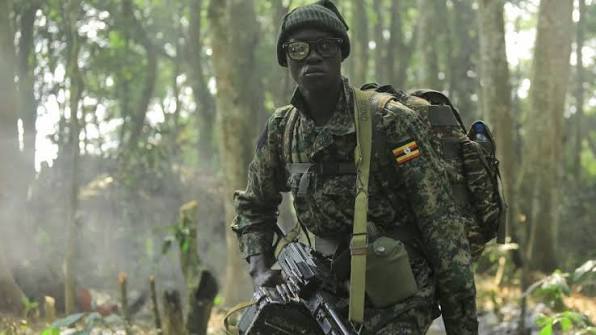
Uganda's army said Friday it will begin withdrawing its forces from the town of Lubero in eastern Democratic Republic of Congo within two weeks and hand security there to the Congolese military.
Central and East Africa
Uganda's army said Friday it will begin withdrawing its forces from the town of Lubero in eastern Democratic Republic of Congo within two weeks and hand security there to the Congolese military. The announcement comes three days after Kinshasa summoned Uganda's top diplomat to explain social media posts by Gen. Muhoozi Kainerugaba, Uganda's chief of defense forces and the son of President Yoweri Museveni. The posts appeared to endorse a rebel advance on Walikale, a mineral-rich territory in North Kivu province.
The timing makes the dispute more than an episode of online provocation. Uganda has been Congo's partner in a five-year joint offensive against an Islamic State-linked militia. It also borders the eastern provinces where a new rebel coalition led by former Congolese President Joseph Kabila now controls large areas. If Kampala is seen as supporting that coalition, even unofficially, the regional politics of the war would change. Friday's statement did not resolve the question. It announced a partial pullback while restating Uganda's security claims in terms Kinshasa is unlikely to accept.
The posts that started the dispute
The trouble began on Muhoozi's X account, which had nearly 1.4 million followers before it became inaccessible this week, according to Africa Briefing. In posts reported by Uganda's Nile Post, he wrote: "We approve the FRN's capture of Walikale. UPDF will not oppose them." He added: "If FRN wastes a lot of time, we shall capture Walikale ourselves."
The FRN, or Front for the Refoundation of the Nation, is the rebel movement Kabila announced in rebel-held Goma on Oct. 12. Its deputies include Corneille Nangaa, founder of the Alliance Fleuve Congo (AFC), and Bertrand Bisimwa, leader of the M23 rebel group. The FRN replaced the M23-led alliance last month, according to IntelliNews, and holds large parts of North and South Kivu, including the provincial capitals Goma and Bukavu and border crossings with Rwanda and Uganda. Kabila, who ruled Congo from 2001 to 2019, was sentenced to death in absentia by a Congolese military court last year for treason, war crimes and crimes against humanity.
In other posts, Muhoozi said, "We are not interested in minerals or anything else in Walikale," IntelliNews reported. He accused the FDLR, a Rwandan Hutu rebel group, of targeting the Bahema, a community he described as his people, attacked "white mercenaries" fighting alongside the Congolese army and called Rwanda Uganda's "twin." Africa Briefing noted that his allegations against the FDLR have not been independently substantiated. The BBC reported that Muhoozi also declared this week: "My tweets in Uganda are directives that must be obeyed."
Kinshasa's response
On Nov. 24, Congolese Foreign Minister Thérèse Kayikwamba Wagner summoned Uganda's head of mission in Kinshasa, according to a ministry statement reported by the state news agency ACP. "These remarks, which are particularly serious, have caused a major media incident," the ministry said, according to IntelliNews. It said it expected Uganda to "clarify its official position" and that Congo would defend its dignity and institutions against "any form of provocation or interference."
Kinshasa's demand was specific. It wanted to know whether the army chief's statements reflected Ugandan state policy, and it wanted assurances that they would not be repeated. Through Thursday, neither the Ugandan government nor the Uganda People's Defence Forces (UPDF) had responded publicly.
Kampala's answer: a pullback with conditions
That changed Friday. Col. Chris Magezi, the UPDF's acting director of defense public information, said in a statement from Kampala that "the UPDF will soon withdraw its forces out of Lubero Town in eastern Democratic Republic of Congo." The withdrawal "will start in the next two weeks," he said, and security will pass to the Congolese armed forces, known as FARDC.
Ugandan troops have been in Lubero since January 2025. Magezi said they were deployed to counter Allied Democratic Forces (ADF) remnants who "sought to escape pressure of joint military operations in North Kivu and Ituri provinces." The ADF is a militia of Ugandan origin linked to the Islamic State. Uganda says the group is no longer present in the Lubero area.
The statement did not mark a broader retreat. Magezi said "the UPDF remains resolved to pursue ADF remnants and their leaders wherever they take refuge, including in Isiro," the capital of Haut-Uélé province, according to Watchdog Uganda. Spain's Demócrata, citing agency reports, said Muhoozi had earlier signaled his intention to pursue ADF leader Musa Baluku to a hideout there.
Magezi also raised concerns about Wazalendo, armed groups allied to the Congolese government. He cited attacks on women and children, including members of the Bahema and Tutsi communities in Ituri and North Kivu, and said "the UPDF retains the responsibility to extend protection to such vulnerable communities." He said Uganda would not support foreign mercenary forces working with militias. He ended on a conciliatory note: "The UPDF, and by extension the Government of Uganda, fully supports a peaceful resolution of the conflict in eastern DRC."
The statement did not directly address Muhoozi's Walikale posts or explain whether they represent policy. Uganda's Daily Monitor described Kampala's response as backing the general on eastern Congo security.
Why Walikale matters
Walikale territory lies west of Goma and contains some of Congo's most valuable mineral deposits. It includes several major gold mines and the Bisie tin mine, operated by Alphamin Resources, which produces about 20,000 metric tons of contained tin a year, according to Africa Briefing. On Nov. 9, Alphamin agreed to supply up to 3,600 metric tons of tin concentrate a year to U.S. company Nathan Trotter for an initial two years, nearly a fifth of Bisie's output. The AFC/M23 alliance briefly seized Walikale town in March 2025 before withdrawing, and Bisie suspended operations because of insecurity before resuming the following month.
The FRN is now pressing toward the area again. On Wednesday, FRN fighters tried to get around positions held by Wazalendo militias on the Bukumbirwa-Munsanga axis in Walikale territory to reach Pinga, a strategic town with an airstrip. They were pushed back to their starting position, the Congolese outlet Actualité.cd reported, citing several unnamed sources.
Africa Briefing found no evidence that mineral interests motivated Muhoozi's remarks, and he has denied any such interest. But public encouragement from a foreign army chief for a rebel advance on one of Congo's most important mining areas was bound to alarm Kinshasa.
The wider context: alliances under strain
Operation Shujaa, the joint Uganda-Congo offensive against the ADF, began in November 2021 with Kinshasa's consent after a series of ADF attacks, including bombings in Uganda. It has since expanded across North Kivu and Ituri. As recently as Nov. 22, North Kivu's military governor, Maj. Gen. Somo Kakule Evariste, and Ugandan Maj. Gen. Stephen Mugerwa jointly visited troops at Cantine to review operations, Africa Briefing reported. Neither government has announced any change to the operation itself.
The relationship has a difficult history. An International Court of Justice ruling requires Uganda to compensate Congo for damage caused by its earlier military intervention. In 2024, UN experts said Ugandan officials had provided support to M23, the rebel group most closely associated with Rwanda. Both Uganda and Rwanda deny backing M23.
The dispute also threatens fragile peace efforts. Kinshasa and Kigali signed a U.S.-brokered peace agreement in June 2025. The Congolese government and AFC/M23 agreed to a framework deal in Doha in November 2025, and Presidents Félix Tshisekedi and Paul Kagame signed the Washington Accords in December. Bram Verelst of the Institute for Security Studies told Al Jazeera that the FRN's creation threatens the Doha process, in which AFC/M23 had been Kinshasa's negotiating partner. A Ugandan army chief publicly endorsing the FRN's advance further complicates those talks.
The war is also hampering one of the world's most urgent public health responses. Confirmed cases in Congo's Ebola outbreak have topped 12,000, and nearly half of those infected have died, OkayAfrica reported this week. Renewed fighting between the army and rebels at Iga-Barrière, near Bunia, has disrupted the response.
Analysis: provocation, policy or succession politics?
Muhoozi's outbursts are not new. In 2022, Museveni apologized to Kenya after his son posted that he could capture Nairobi. In February 2025, Muhoozi threatened to seize Bunia, the capital of Ituri. Each time, Kampala distanced itself from his words without disciplining him.
This episode is harder to dismiss because of who Muhoozi now is. He commands Uganda's armed forces, and he has publicly declared his intention to run for president in 2031. Africa Briefing noted resistance within the ruling National Resistance Movement to a father-to-son transfer of power. His statement that his tweets are "directives that must be obeyed" makes it difficult for Kampala to describe them as personal opinion.
Friday's statement allows both readings. The Lubero pullback can be presented to Kinshasa as a concession and to Ugandan audiences as a routine redeployment after the ADF left the area. The vow to pursue the ADF into Isiro and the language about protecting the Bahema and Tutsi communities suggest that Uganda still claims a right to operate across a wide area of eastern Congo for reasons it defines itself.
What to watch