Written By | Staff Writer
A closed-door vote on who should follow President Museveni reportedly collapsed amid open dissent
POLITICS
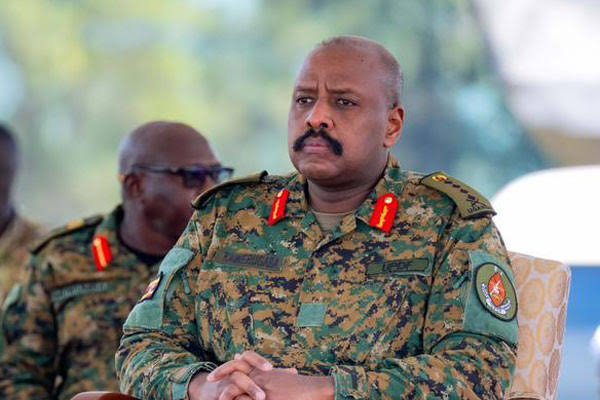
Uganda's long-muffled succession question came into the open this month. Senior figures in the ruling National Resistance Movement (NRM) reportedly declined to endorse Gen Muhoozi Kainerugaba, the army chief and the President's son, as Yoweri Museveni's successor. The party leadership then publicly denied that any rejection had taken place.
Within a week Gen Muhoozi was back on X. He restated that he will run for president after his father and warned that media outlets 'insulting or belittling' the first family would be jailed. Together, these events are the clearest sign yet that the transition from Africa's longest-serving leaders is contested inside the ruling party itself, and not only by the opposition.
What happened at the 10 November meeting
On 11 November, AFP reported that the NRM's Central Executive Committee (CEC) had met behind closed doors the previous day to consider a successor. The agency cited five party sources. The meeting reportedly ended without a decision. Several of the committee's 28 members spoke against the proposal to position Gen Muhoozi as the party's future flag-bearer, and some were loudly cheered.
According to the accounts carried by Sahara Reporters and Capital FM, four members had backed Gen Muhoozi and three had opposed him when the vote was called off. Other outlets put the outcome as just four votes in his favour out of 28. One source quoted by AFP said 'the combative nature of the (army chief) has created uneasiness among some people'. Another said he should build support through persuasion rather than coercion.
The most striking intervention attributed to the meeting came from NRM Vice-Chairman Calvin Echodu. He reportedly advised President Museveni to move his son out of the army and into a civilian role to prepare him for leadership. He also suggested the President consider running again in 2031, saying Gen Muhoozi 'is not yet ready'.
The reported reception followed a move by the President himself. In late October, Museveni first raised succession by presenting party leaders with a paper arguing that his son had the right credentials. Attendees described the pushback as an unprecedented show of defiance against the party chairman.
The party's denial
On the evening of 12 November, NRM Secretary General Richard Todwong called the reports 'completely false' in a statement posted on the party's official X account. He said the CEC meets regularly to discuss political, social and economic matters. Any decisions, he said, will be communicated through official party channels 'at the appropriate time', and he urged the public to disregard unofficial accounts.
The Patriotic League of Uganda (PLU), the political movement associated with Gen Muhoozi, also disputed that the NRM had rejected his 2031 bid. The denials do not settle the matter. They leave two incompatible narratives in circulation, and the party has not given its own account of what the CEC discussed or decided.
The army chief's response
On Tuesday, 17 November, Gen Muhoozi reactivated his X account after a period of silence. 'Any media from wherever insulting or belittling Mzee, Maama, Afande Saleh, or me will be imprisoned for 10 years,' he wrote. The names refer to his father, his mother, and his uncle Gen Salim Saleh. He said he would soon announce a policy on foreign media operating in Uganda, declaring that 'their days of insulting our country are over'. He suggested that foreign media personnel he regards as agents of foreign interests could face court martial.
In the same posts he restated his intention to stand for president after his father. He also addressed the case of his former deputy, Lt Gen Peter Elwelu, who was arrested on 2 November over allegations of activities aimed at destabilising the country. Gen Muhoozi said he had earlier demoted Elwelu to private but had now restored his rank, so that Elwelu would face court martial as a Lieutenant General.
He had deactivated his account after posting threats against Vice President Jessica Alupo over her alleged links to the plot he attributes to Elwelu. He had said action would follow if she were found to have supported him. No public evidence of the alleged plot has been presented.
Background: a pattern of confrontation
President Museveni is 82 and has ruled since 1986. Gen Muhoozi, 52, heads the Uganda People's Defence Forces (UPDF), and his influence has grown as his father has taken a less hands-on role in day-to-day governance. His social media conduct has repeatedly caused diplomatic and domestic controversy.
In January 2026, after the disputed general election, he threatened opposition leader Robert Kyagulanyi (Bobi Wine) and claimed that security forces had killed 22 National Unity Platform 'terrorists'. He also threatened to cut military ties with the United States after accusing its ambassador of helping Kyagulanyi escape. Senator Jim Risch, chairman of the US Senate Foreign Relations Committee, rejected his subsequent apology and called for tougher measures against Uganda. Gen Muhoozi has also cited his past confrontations with Kizza Besigye, Kampala Lord Mayor Erias Lukwago and Bobi Wine as proof that his threats should be taken seriously.
A competing track: Saleh's 'consociational' plan
The succession dispute is running alongside a separate initiative from the President's brother. Gen Caleb Akandwanaho (Salim Saleh), national overseer of Operation Wealth Creation, is promoting a 137-page working paper titled Consociational Democracy Agreement, co-authored with his special assistant, Prof Ogenga Otunnu. It was first presented to political party representatives at a retreat in Jinja on 15–16 October.
The paper proposes that government, political parties and other groups jointly address historical grievances, political exclusion and inequalities. A National Consociational Council would coordinate the effort and turn agreed commitments into programmes, budgets and measurable targets. Saleh has also reportedly sought talks with Dr Besigye and Mr Lukwago, both of whom face treason charges and are reported to be unwell. The plan points to power-sharing and reconciliation. Gen Muhoozi's posts point to confrontation.
Why it matters
Succession is the central unresolved question in Ugandan politics. The NRM has never had to manage a handover of its top post, and the reported CEC episode suggests that senior members are willing to voice reservations about a dynastic transition, at least in private. That matters for business confidence, for the security services and for regional partners, all of whom are watching for signs of a predictable transfer of power.
Gen Muhoozi's threat of prison terms for media criticism raises separate concerns for press freedom, as does his promise of a new policy on foreign media. Ugandan law sets out offences and penalties through Parliament and the courts, not through statements by the military command. Any attempt to turn the posts into formal policy would likely face legal challenge.
What to watch next
Several things will show where this is heading. One is whether the NRM issues a formal statement on succession through the 'official channels' Todwong referred to. Another is whether Gen Muhoozi's promised foreign-media policy is published, and by which institution. The court-martial proceedings against Lt Gen Elwelu will be watched for what they reveal about the alleged plot and the Vice President's position. Finally, the reception of Saleh's consociational framework among opposition parties will indicate whether a negotiated path is gaining any ground. The 2031 election is still years away, but this month showed the contest over who comes after Museveni has already begun.