Novartis's Cosentyx becomes the first and only anti-IL-17 biologic approved for polymyalgia rheumatica, after a major trial found it doubled the odds of staying in remission while slashing the steroid doses that leave patients with brittle bones, diabetes and heart trouble.
HEALTH
Imagine waking up and being unable to lift your arms to brush your hair. Your shoulders feel locked in concrete. Your neck and hips ache so badly that climbing out of bed takes minutes, not seconds. You are over 50, otherwise healthy, and your doctor tells you the only reliable fix is a daily dose of steroids, possibly for years.
For close to a million Americans living with polymyalgia rheumatica, or PMR, that is not a nightmare. It is Tuesday.
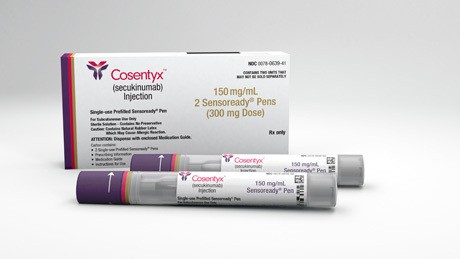
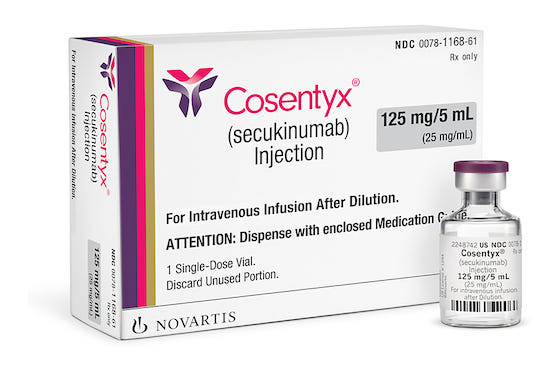
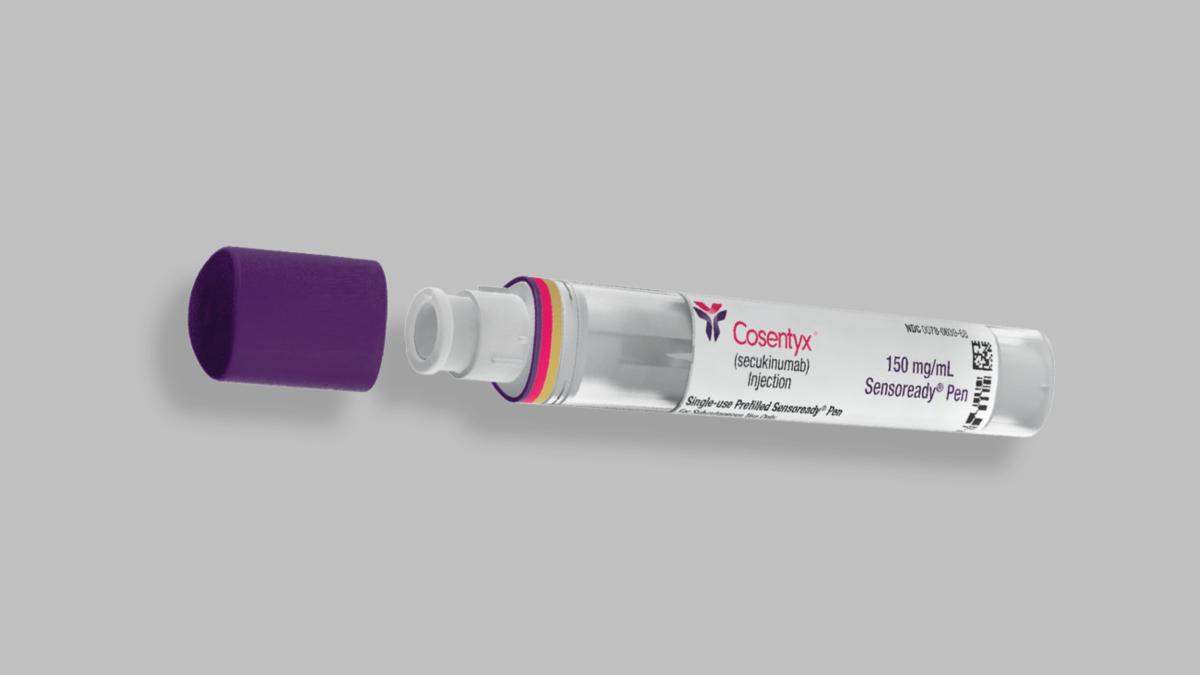
Today, those patients got news many have been waiting years to hear. The U.S. Food and Drug Administration has approved Novartis's Cosentyx (secukinumab) 150 mg for adults with PMR who have not responded well enough to corticosteroids or who cannot tolerate having their steroid dose tapered down. The company announced the approval on November 17, 2026.
It makes Cosentyx, a biologic already familiar to millions through psoriasis and arthritis ads, the first and only drug of its kind, an anti-IL-17 biologic, approved for PMR. It is the drug's 11th approved use in the United States.
The Hidden Epidemic of Pain
Polymyalgia rheumatica may be one of the most common diseases you've never heard of. According to Novartis, roughly 966,000 people in the U.S. live with it. It strikes mainly people over 50, causing sudden, severe pain and stiffness in the shoulders, neck and hips, typically worst in the morning.
The cause is inflammation, the body's immune system turning against its own tissues. For decades, the standard treatment has been glucocorticoids, steroids such as prednisone. They work quickly and often dramatically. The trouble is getting off them.
Up to 40 percent of patients relapse within their first year, according to Novartis, as doctors try to lower the dose. Each flare usually means going back up on steroids, and many patients end up taking them for years. Long-term steroid use carries a heavy price: osteoporosis and fractures, weight gain, high blood sugar and diabetes, cataracts, infections and cardiovascular disease. For an older population already at risk of many of these problems, that is a dangerous bargain.
"For too long, treatment options beyond glucocorticoids have been limited," said Professor John Stone, MD, MPH, of Harvard Medical School and Massachusetts General Hospital, who served as global principal investigator for the trial behind the approval.
Inside the REPLENISH Trial
The approval rests on REPLENISH, a large Phase III study run across 27 countries. Researchers enrolled 381 patients whose PMR had recently relapsed. All had been on steroids for at least eight weeks and had flared while their dose was being cut.
Patients were randomly assigned to receive Cosentyx 300 mg, Cosentyx 150 mg, or a placebo injection. Every patient, whatever group they were in, also followed a standardized 24-week prednisone taper, meaning the study tested whether adding Cosentyx could help people get off steroids and stay well.
The trial was double-blind, so neither the patients nor their doctors knew who was getting the real drug. The results were presented at the EULAR rheumatology congress in June 2026 and published in the New England Journal of Medicine.
Remission Rates Doubled
The headline number is simple: Cosentyx roughly doubled the chances of sustained remission.
At 52 weeks, 40.5 percent of patients on the approved 150 mg dose were in sustained remission, compared with 20.5 percent on placebo. The higher 300 mg dose performed similarly, with 41.2 percent in sustained remission versus 20.4 percent on placebo, according to data reported by the Australian Rheumatology Association.
The deeper measures were just as striking. At the 300 mg dose, 28.2 percent of patients reached complete sustained remission, meaning no symptoms and normal blood markers of inflammation, versus just 4.7 percent on placebo. Patients on the 300 mg dose went a median of 337 days before needing their treatment escalated, compared with only 157 days for placebo patients.
And then there are the steroids. Compared with placebo, patients on Cosentyx needed far less of them over a year: about 410 mg less with the 150 mg dose and about 490 mg less with 300 mg, on an adjusted annual basis. For patients and doctors who live in fear of steroid side effects, every milligram counts.
The trial met its primary endpoint and its key secondary endpoints, which included complete sustained remission, cumulative steroid dose, and time to first escape or rescue treatment.
What About Side Effects?
No drug that calms the immune system comes free of risk, and the safety data reflect that.
Serious adverse events occurred in 15.9 percent of patients on Cosentyx 150 mg, compared with 14.2 percent on placebo, a small difference. Hypersensitivity reactions, including eczema, dermatitis, rash and hives, appeared in 14 percent of patients on the drug versus 9 percent on placebo. Urinary tract infections were more common too, at 13 percent versus 7 percent, with one serious UTI in the 150 mg group.
Most seriously, Novartis reports that one patient treated with Cosentyx died of cryptococcal meningitis, a rare fungal infection of the brain lining that tends to strike people with weakened immune systems.
Overall, rates of adverse events and serious infections were broadly similar across the groups, and the profile was consistent with what doctors already know about secukinumab from its years of use in other diseases.
How a Psoriasis Drug Ended Up Treating Aching Shoulders
Cosentyx works by blocking interleukin-17A, or IL-17A, a chemical messenger that drives inflammation. It was first approved for plaque psoriasis and has since been cleared for psoriatic arthritis, ankylosing spondylitis and other inflammatory conditions. Its success in PMR suggests IL-17 plays a real part in this disease too.
Dr. Claire Owen, Director of Rheumatology at Austin Health in Melbourne, called REPLENISH "a major milestone in PMR therapeutic development." She noted that the clear gap between drug and placebo at both doses supports the role of IL-17 in PMR.
But she also flagged an intriguing twist. A sister trial, GCAPTAIN, which tested secukinumab in giant cell arteritis, a closely related inflammatory disease of the blood vessels that often overlaps with PMR, did not succeed. That, she suggested, may point to differences in the inflammatory pathways driving the two conditions.
Cosentyx is not the very first non-steroid option for PMR. Sanofi and Regeneron's Kevzara (sarilumab), which blocks a different inflammatory signal called IL-6, was approved for PMR in 2023. But Cosentyx is the first drug to target the IL-17 pathway in this disease, giving doctors a genuinely different weapon, especially for patients who don't do well on existing options.
Expert Perspective: "Too Few Treatment Options"
Patient advocates say the approval cannot come soon enough. "For years, patients have had too few treatment options," said Seth Ginsberg, co-founder and president of the Global Healthy Living Foundation and its patient community CreakyJoints.
Victor Bultó, president of Novartis US, framed the approval as part of a broader push. "This milestone reflects our commitment to continually investigate where our medicines can help patients most," he said.
Europe got there first. The European Union had already approved Cosentyx for PMR before today's U.S. decision, and regulatory reviews are under way in Japan and other countries.
Rheumatologists will now watch closely for longer-term data, including how patients feel day to day, how durable remissions are beyond a year, and how the drug compares with Kevzara. Experts have noted that full details on patient-reported outcomes were among the results observers were most eager to see.
What This Means for You
If you are over 50 and suffer sudden, persistent pain and stiffness in both shoulders, your neck or your hips, especially if it is worst in the morning and lasts more than 45 minutes, talk to your doctor. PMR is diagnosed through symptoms, an examination and blood tests for inflammation, and it responds well to treatment once identified.
If you already have PMR and keep flaring every time your steroid dose is lowered, or if steroid side effects are making your life miserable, this approval gives you something new to ask about. The approved label is for adults who have had an inadequate response to corticosteroids or who cannot tolerate a steroid taper, so it is not a first-line replacement for prednisone in newly diagnosed patients.
Ask your rheumatologist whether a biologic such as Cosentyx or Kevzara could help you cut down on steroids. Ask about the risks too, including infections and allergic-type skin reactions, and mention any history of serious infections. Biologics are usually expensive, so check what your insurance will cover.
Whatever you do, do not stop or cut back steroids on your own. Stopping suddenly can be dangerous, and any taper should be managed by your doctor.
And PMR patients should know the warning signs of giant cell arteritis, which can occur alongside PMR: new headaches, scalp tenderness, jaw pain while chewing, or any change in vision. Those symptoms need urgent medical attention, because GCA can cause sudden blindness.
Conclusion: Loosening Steroids' Grip
For generations, the story of polymyalgia rheumatica has been one of trade-offs. Patients could have relief from crippling pain, or they could avoid the slow damage of years on steroids, but rarely both.
Today's FDA decision does not erase that dilemma, and Cosentyx carries risks of its own. But for hundreds of thousands of older Americans who keep relapsing as their prednisone is tapered, a drug that doubles the odds of staying in remission while cutting the steroid load is a big deal.
After decades of little more than steroids, the message to PMR patients is finally different: you have options.
Published By | Features Editor