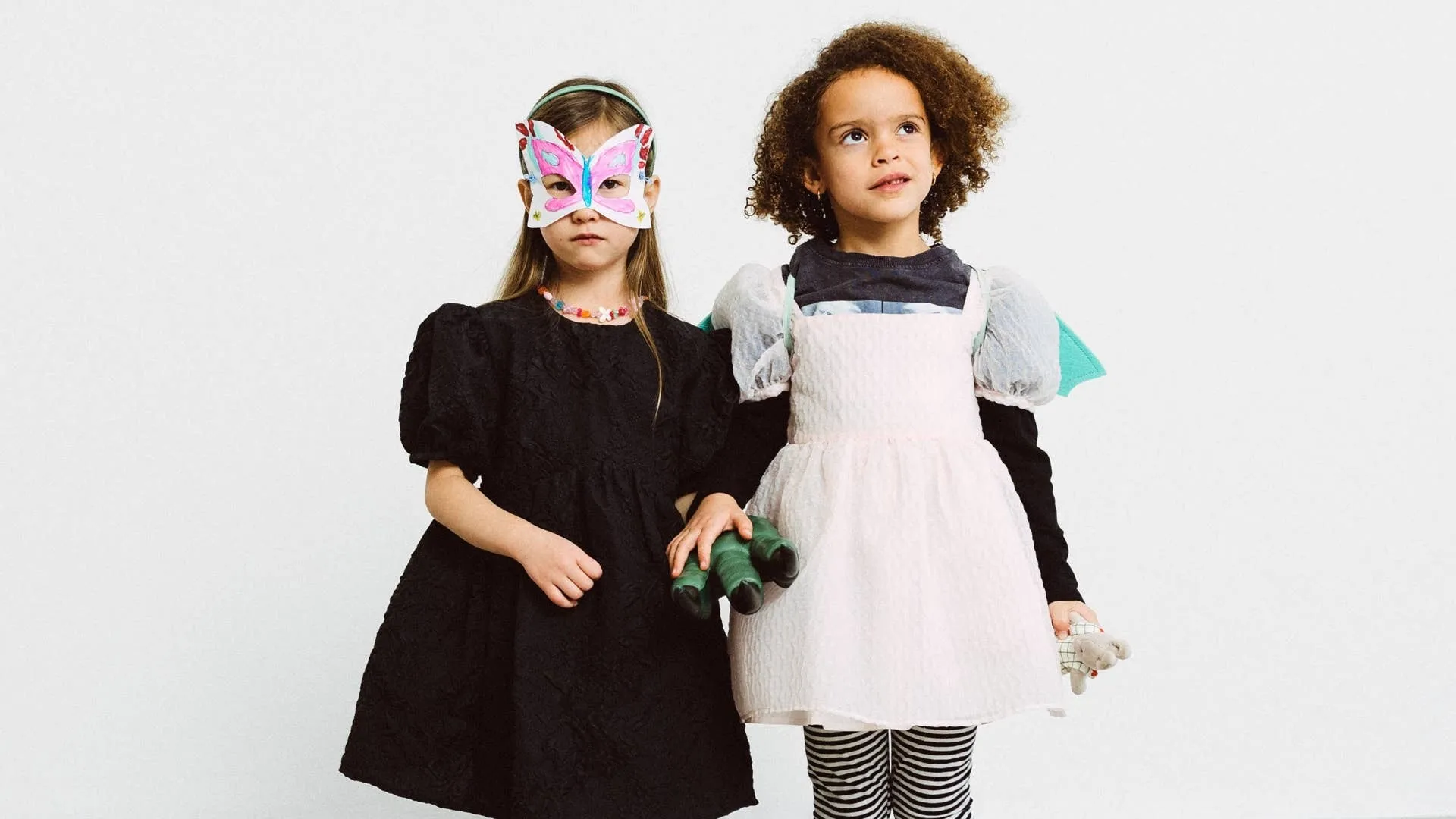
The Copenhagen designer known for sculptural, cloud-like dresses is turning her archive fabrics into a limited kidswear line for ages three to ten. It arrives Dec. 4, just in time for the most sentimental shopping season of the year.
FASHION
Some clothes look like they were dreamed up rather than designed. For more than a decade, Cecilie Bahnsen's quilted, puffed and smocked dresses have had that quality, part couture and part childhood memory, light enough to float but built with real structure. It makes sense, then, that the Danish label's newest venture is for children.
On Tuesday, the house announced its first own-label kidswear collection, according to FashionUnited. The limited-edition capsule is cut for children aged three to ten and made from the brand's archived textiles. It launches Dec. 4.
The Collection at a Glance
The details are as compact as the clothes. FashionUnited reports four core styles, priced from 400 to 490 euros, sold through Cecilie Bahnsen and select stockists worldwide. The edition is limited, and every piece uses fabric from the brand's own archive rather than new textiles, which keeps the launch tied to the label's heritage and keeps quantities small.
The campaign was shot by Danish photographer Nynne Henriksen. The brand has not yet released a full breakdown of individual pieces, so shoppers waiting for the full lineup should check the label's site and stockists closer to the launch date.

"A Dream of Mine for a Long Time"
For the designer, the project is personal. "Creating a universe of kidswear has been a dream of mine for a long time," Bahnsen said in the announcement, as reported by FashionUnited.
The word "universe" fits. Bahnsen's work has always leaned toward fantasy: voluminous silhouettes, delicate embroidery and fabrics that seem to hold air. Those qualities translate naturally to children's clothing, where a twirl test matters more than a trend forecast. Children have always responded to clothes that move, and a Bahnsen dress has always been, in part, about movement.
Strategy Beneath the Smocking
This isn't only about sentiment. Chief executive Mie Marie Ejdrup presented the launch as part of a wider category expansion for the company, according to FashionUnited. For an independent Scandinavian label, kidswear offers several advantages. It brings new customers in at a different price point than the main line. It adds a gift-friendly category ahead of the holidays. And it turns surplus or archived fabric into new product, a model that appeals to customers who want to know where their clothes come from.
The archive-fabric approach also fits a broader shift in the industry. Many designers are looking at deadstock and archive materials to cut waste and create limited, collectible runs. Using fabric that already exists gives each piece a built-in story, which can be reassuring for parents considering a few hundred euros for a garment a child may outgrow within a year or two.
There is a practical logic to the age range too. Three to ten covers the years when children are old enough to have opinions about what they wear but young enough that a party dress still feels like a costume. These are the years of school concerts, family photographs and holiday visits, the occasions when parents are most willing to spend on something special.
Luxury's Smallest Customers
Luxury kidswear is not new territory. Large fashion houses have long offered miniature versions of their signature looks, and children's ranges have become a regular extension for brands that want to stay present in family life. What is notable here is scale. Cecilie Bahnsen is not dressing children in logos. It is releasing a small, archive-driven edition that reads more like a collector's capsule than a mass licensing play.
That restraint could be its biggest selling point. Many parents who buy designer childrenswear want pieces that last and can be handed down to siblings, cousins or friends. A limited edition made from the brand's own textiles is designed for that kind of keeping.

Expert Perspective
Ejdrup's framing of the launch as part of category expansion is the key strategic signal. It suggests kidswear is a first step, not a one-off holiday novelty. For a label that has built its reputation on a tightly defined aesthetic, every new category tests whether that aesthetic can stretch without thinning out. Children's clothing is a gentle place to start, because the brand's romantic, playful codes already fit it.
It also lands during a busy week of fashion news. Elsewhere, FashionUnited reported that former Pantone and WGSN forecasters launched an open-source alternative to the Colour of the Year, and Hypebeast reported that Denim Tears is planning a Tokyo residency pop-up for December. Against that backdrop of big-brand collaborations and streetwear drops, a quiet kidswear capsule from a Copenhagen atelier stands out for its intimacy.
What This Means for You
If you're shopping for a special-occasion piece this season, whether for a holiday photo, a wedding or a family gathering, this is a rare chance to buy into a designer's world at a smaller size and lower price than the main collection. Mark Dec. 4 on your calendar. With only four core styles in a limited run, the most popular sizes may sell out quickly. Prices of 400 to 490 euros make these investment pieces, so treat them that way: consider sizing up for longevity, and keep the garments in good condition for future siblings or resale.
If you're a longtime fan of the label who doesn't have children to dress, watch the brand anyway. A CEO talking openly about category expansion usually means more launches are coming.
The Final Word
Cecilie Bahnsen has spent years making grown women feel like they are wearing something out of a storybook. Now it is making clothes for the children those storybooks were written for. With archive fabrics and a limited run, the first collection is small by design. If the response matches the brand's ambitions, it may be the start of something much larger.
Published By | FASHION