World Politics
While the world's attention has been fixed on the Strait of Hormuz, where Iran's Revolutionary Guards declared the waterway closed on October 26, a second maritime chokepoint has quietly slipped further out of the control of Gulf states and their allies. On Sunday, November 15, Yemen's Saudi-backed Southern Armed Forces announced they were withdrawing from Dhubab airport and the area overlooking the Bab el-Mandeb Strait, saying they needed to prioritise "securing the capital, Aden" and neighbouring governorates. The retreat leaves the Iran-aligned Houthis, formally known as Ansar Allah, in a commanding position over the narrow strait that links the Red Sea to the Gulf of Aden and, through the Suez Canal, connects Asia to Europe.
The development matters far beyond Yemen. With Hormuz largely shut, Saudi Arabia has rerouted most of its crude exports through its Red Sea port of Yanbu, and a large share of that oil must still pass through Bab el-Mandeb. Reuters reporting carried by The Jerusalem Post described the Houthi gains as creating a "potent pressure point on global shipping" that could further isolate Gulf oil producers from their main routes to market.
Background: Yemen's War Inside a Wider War
Yemen has been at war since 2014, when the Houthis swept into Sanaa and pushed the internationally recognised government south. A Saudi-led coalition intervened in 2015, and the conflict produced one of the world's worst humanitarian crises; the UN's humanitarian office said in April that 22 million Yemenis need assistance. A UN-brokered truce in 2022 largely froze the front lines for several years.
That truce has now collapsed as Yemen became one front in the broader U.S.-Israeli war with Iran, which is about nine months old. A Houthi truce with Saudi Arabia broke down in July, and since then the Houthis have attacked Saudi ports, airports and Saudi Aramco facilities, including the East-West Pipeline and the Yanbu export hub. Saudi Arabia, which had enjoyed relative calm early in the Iran war, has responded with airstrikes on Houthi targets.
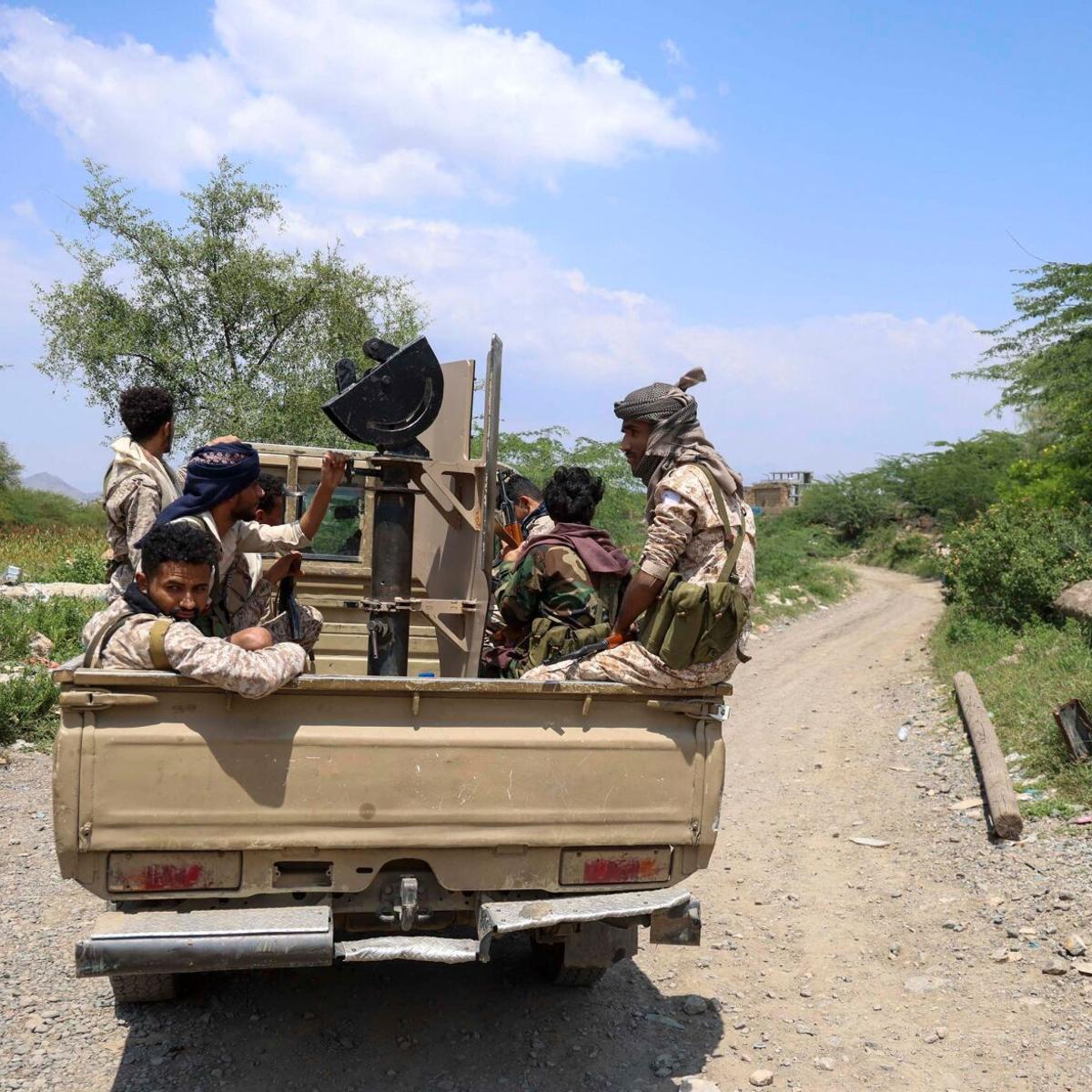
On the ground, the Houthis launched a major offensive in September aimed at seizing Yemen's entire Red Sea coast. In operations on September 10 and 11 they took Dhubab, Perim Island in the mouth of the strait, and the port of Mokha. In October government forces launched a counteroffensive backed by Saudi air power. The Southern Giants Brigades, Nation's Shield Forces and tribal fighters retook Dhubab and the strait area, but failed to dislodge the Houthis from Mokha and other parts of the coast. The Houthis have also pushed into highland areas north of Aden and have besieged Taiz, Yemen's third-largest city, for more than a month.
Key Developments: A "Redeployment" or a Defeat?
The two sides tell very different stories about what happened this weekend. The Southern Armed Forces described the move as a redeployment from Dhubab airport and the Bab el-Mandeb area west of Taiz Governorate, designed to strengthen Aden's defences and front lines in Lahij and to create an opportunity to relieve Taiz. A Yemeni presidency source told Asharq Al-Awsat that the troops had moved to more strategically advantageous positions and that the coastal front was not being abandoned. Al-Arabiya reported that the units fell back toward Khawr Amirah on Aden's western perimeter. The statement closed defiantly: "We will continue to confront the Houthis until their rebellion is ended and the state is restored."
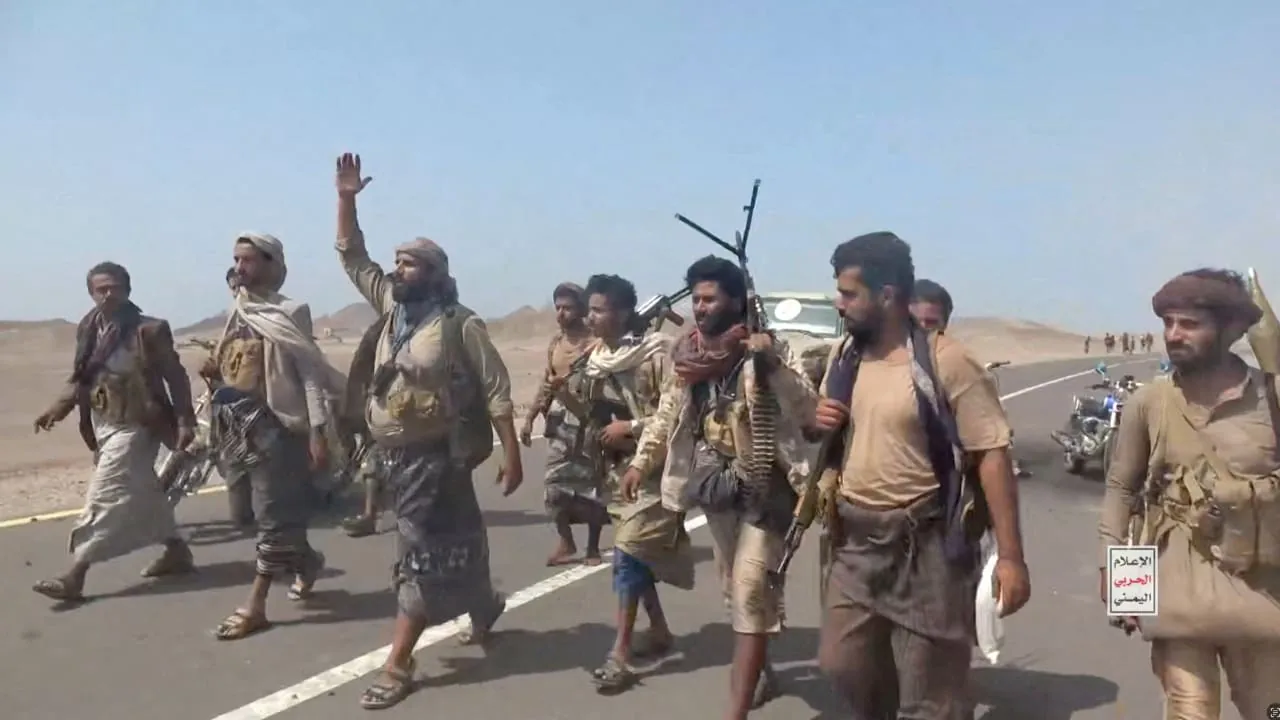
The Houthis, through their Saba news agency, claimed they forced the withdrawal with a flanking operation across more than 60 kilometres of mountainous terrain in Taiz and Lahij that cut the government troops' rear supply routes and pushed them back from Dhubab airport, the outskirts of Kahbub and the strait. The Maritime Executive called the handover "a major reverse" for the government, assessing that it currently lacks the forces to contest the area or counterattack, and that the Houthis appear to have advanced toward Aden from the northwest while tightening their grip on Taiz. The supply route from Aden to Taiz has been threatened at its southern end, the outlet said, leaving only mountain tracks.
Some uncertainty remains about the exact situation on the ground. At least one regional outlet tracking the story noted that it had found no formal Houthi statement claiming physical control of Dhubab itself, and that the characterisation of the area as Houthi-held rests largely on media reporting about the withdrawal. It is also unclear whether government forces ever recaptured Perim Island after the Houthis took it in September; no confirmed recapture has been reported.
Why the Strait Matters
Bab el-Mandeb is only about 18 miles wide at its narrowest point, according to the U.S. Energy Information Administration. Before the current disruptions it carried roughly 12 percent of global trade, about 11 percent of seaborne oil and around 8 percent of global liquefied natural gas trade, according to figures cited by Al Jazeera. IMF PortWatch data showed a pre-disruption baseline of about 20 tankers a day through the strait, falling to roughly eight a day in August 2026, a drop of more than half.
The stakes for Saudi Arabia are especially high. With Hormuz closed, the kingdom has leaned on the East-West Petroline, which its energy minister said reached 5.8 million barrels per day in early October, to move crude to Yanbu on the Red Sea. Kpler data showed Yanbu handled 92 percent of Saudi seaborne crude exports in June, and analyst Samriddhi Vij of the Observer Research Foundation's Middle East office estimates that 70 to 75 percent of Yanbu's exports must transit Bab el-Mandeb. Rerouting around Africa's Cape of Good Hope adds an estimated 10 to 14 days and $1.2 million to $1.8 million in fuel per round trip, and war-risk insurance premiums have reportedly risen more than 1,000 percent since the conflict began.
Control of the heights and of Perim Island would let the Houthis monitor traffic through the strait and the Maritime Security Transit Corridor and, according to The Maritime Executive, use armed speedboats to attack or board ships rather than relying only on long-range drones and missiles. Maritime expert Alexandru Cristian Hudisteanu offered a more measured view, saying the gains do not "fundamentally alter the Houthis' overall capability" but make targeting ships "simpler for them than before." The Houthis have recently said they target only Saudi- and Israeli-associated shipping, a position the United States, the European Union and major shipping lines have broadly accepted, and some container lines have resumed using the Red Sea. The Maritime Executive raised the possibility that a cash-strapped Houthi movement might try to charge transit fees, though that is speculation rather than a stated plan.
Reactions
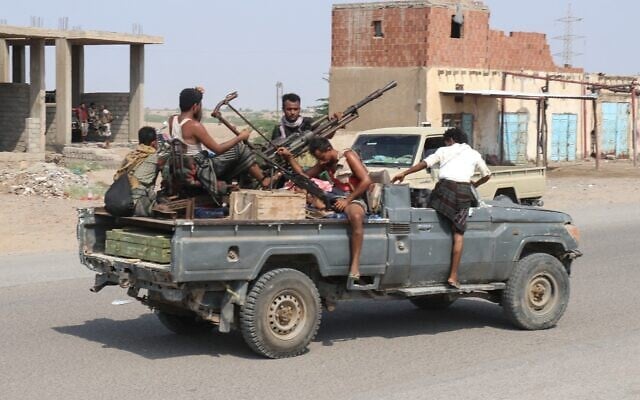
Government military spokesman Colonel Majed al-Nuzaili urged the international community to help restore government control over the strait, saying it "must assume its responsibilities." Earlier in the week the Saudi Cabinet called for an immediate end to threats in both Hormuz and Bab el-Mandeb, and Foreign Minister Prince Faisal bin Farhan was in Brussels on November 15 seeking European naval escorts. Europe's current capacity is limited: the EU's Operation Aspides can mount only occasional merchant escorts and is not configured for more than limited defensive operations. Washington, which has focused its naval power on the Gulf and now has three aircraft carriers in the region, has not announced any new Red Sea operation, and Al Jazeera reported back in September that the United States appeared willing to watch the Houthi push from the sidelines.
The Houthis continue to pressure Saudi Arabia directly. The same Sunday, the Saudi Press Agency reported that coalition forces intercepted two Houthi drones heading toward the Mecca region, and on November 12 the Houthis claimed strikes on the East-West Pipeline and Yanbu oil facilities, claims that have not been independently confirmed. Analysts and some reporting suggest Iran's influence over the Houthis may have weakened, although the Revolutionary Guards reportedly still maintain an on-the-ground mentoring presence alongside Houthi forces.
The Human Cost
The fighting is deepening a humanitarian emergency. Nearly 330,000 people have been displaced since fighting escalated in August, including around 48,000 in recent weeks, and Taiz hosts about half of all those displaced. The city remains under siege, with aid unable to enter and civilians unable to leave. The UN refugee agency warned that fighting has reached the Kharaz refugee camp in Lahij, putting around 9,600 people at greater risk, and the International Organization for Migration said earlier that more than 2,000 people had fled across the water to Djibouti's northern shores.
What's Next
Three questions will shape the coming weeks. The first is whether the Houthis press on toward Aden, the government's seat, or consolidate around Taiz and the coast. The second is whether they use their new position to choke off Saudi oil exports from Yanbu, which would put both of the Gulf's maritime exits under pressure from Iran and its allies at once and add to the strain on oil markets already rattled by Hormuz. The third is whether outside powers respond. Riyadh is clearly lobbying for European escorts, but neither the EU nor the United States has so far signalled a willingness to fight for the strait. For now, the Southern Armed Forces insist they will return. The Houthis, holding the high ground over one of the world's most important waterways, appear in no hurry to give it up.
Published By | News Editor