Written By | International News Agencies
Rwanda has agreed in principle to host the European Union's first deportation center outside the bloc's borders
KIGALI, Rwanda
Rwanda has agreed in principle to host the European Union's first deportation center outside the bloc's borders. Five EU governments presented the plan in Vienna on Monday, describing a "return hub" in Rwanda to receive migrants who have exhausted all legal avenues to remain in Europe. Germany, Denmark, Austria, Greece and the Netherlands say they expect to begin transfers in 2027, starting with a pilot of about 100 people.
For Kigali, the announcement is the latest step in a deliberate strategy: offering Western governments a destination for migrants they cannot or will not keep. The plan comes three years after the British version of this idea was struck down in court and little more than a year after Rwanda began accepting deportees from the United States. It again places President Paul Kagame's government at the center of a debate over migration, human rights and the price of partnership with an authoritarian state.
What was announced
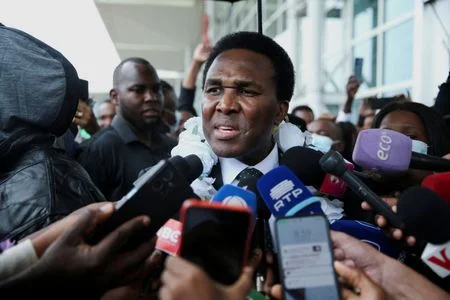
The plan was unveiled at a joint press conference in Vienna by Danish Prime Minister Mette Frederiksen and Austrian Chancellor Christian Stocker, joined by interior ministers from the participating countries and Rwanda's Interior Minister Vincent Biruta. Stocker called it "a truly historic paradigm shift in migration policy." Frederiksen defended it as a "very modern" idea, asking critics: "What is the alternative?"
Many details are still being negotiated. Diplomatic sources told AFP the pilot would hold about 100 people, with each of the five countries sending about 20. Kigali is set to sign a separate migration partnership agreement with Denmark next week, according to the reporting. The five governments say they will bear the full cost of deportations and accommodation, though no estimate for the first facility has been published. Frontex, the EU border agency, will not take part in deportations in the early stages.
The scheme is narrower than the British plan that preceded it. Only rejected asylum seekers with enforceable return decisions are eligible, and minors are excluded. The Dutch government said the first phase would "only return single men." The Netherlands plans to focus on people from countries in Rwanda's region, while Germany will target migrants who refuse to cooperate in establishing their identity and who come from countries reluctant to take back their own nationals.
Officials say the hub will not be a detention facility. Rwanda prefers to call it a "welcome center." Residents would be free to move around the country and would be expected to integrate into local society and the labor market. They could then settle in Rwanda or return voluntarily to their country of origin or another country where they can legally live.
Rwanda's pitch
Biruta presented the arrangement as humanitarian rather than transactional. Rwanda, he said, is committed to providing a "safe, legal and dignified solution for migrants," and the hub would offer "a second chance to people who no longer have the right to remain in the partner country." He also said Rwanda would work on "correcting the global imbalance in economic opportunities," which he called a "key driver of irregular migration." Asked about Rwanda's human rights record, Biruta dismissed the criticism as a "cliche."
That message has been consistent since talks began over the summer. In August, government spokesperson Yolande Makolo said there was "no agreement yet" and described the discussions as an extension of a humanitarian model Rwanda has run for years. That model is the Emergency Transit Mechanism, set up with the African Union and the U.N. refugee agency UNHCR, which has brought migrants evacuated from detention in Libya to a transit center in Gashora, about 60 kilometers from Kigali. "We don't want Africans making dangerous journeys across the desert and dying in the Mediterranean," Makolo told KT Press. "There will always be criticism, but we know we're doing this for the right reasons."
Foreign Minister Olivier Nduhungirehe confirmed to AFP in late August that a European delegation had visited and that "the negotiations are ongoing."
What Rwanda receives in return has not been disclosed. Unnamed sources quoted in the coverage say services in Rwanda will cost considerably less than in Europe, which is the economic logic of the plan for the European partners.
The legal foundation, and the British precedent
The hub rests on a change in EU law. Earlier this year, the bloc adopted rules that broaden detention powers and allow member states to set up return hubs in non-EU countries. Only countries that respect international human rights standards are eligible. The European Parliament passed the enabling legislation in June. European Commission spokesperson Markus Lammert said Brussels was "closely following the preparatory work" of the five states. German Interior Minister Alexander Dobrindt said the plan would be carried out "in line with human rights."
The comparison with Britain is unavoidable. In 2022, the Conservative government of then-Prime Minister Boris Johnson agreed with Rwanda to send it asylum seekers who crossed the English Channel in small boats. In November 2023, the U.K. Supreme Court ruled the policy unlawful, finding a real risk that people sent to Rwanda could be returned to countries where they faced persecution. Keir Starmer's Labour government scrapped the plan after taking office in 2024.
The European model tries to avoid that legal problem by restricting eligibility to people whose asylum claims have already been rejected, rather than sending new arrivals to have their claims processed abroad. Even so, critics note that the European Court of Human Rights bars transfers to places where fundamental rights may be violated. That could complicate matters once the first transfers begin. Downing Street has not ruled out joining the European scheme and said it would watch it "with interest."
The critics
Opposition came quickly. Spanish Prime Minister Pedro Sánchez said: "It's not the solution." French President Emmanuel Macron has also expressed doubts. A coalition of 45 nongovernmental organizations from 15 countries condemned the plan, saying such policies move people and responsibility for their rights "out of public sight and beyond scrutiny." French Green member of the European Parliament Mélissa Camara said the five countries were "crossing another disgraceful moral line" by partnering with what she called an authoritarian regime.
Human Rights Watch's Clémentine de Montjoye pointed to Rwanda's "well-established record of repression of dissent, arbitrary detention, ill-treatment in detention." The group also cited Rwanda's support for an armed anti-government group in neighboring Democratic Republic of Congo, an issue that has strained Kigali's relations with several Western capitals. UNHCR said such plans "must comply with international human rights law." The EU Agency for Fundamental Rights said any host country must "respect fundamental rights" and that unaccompanied children should not be sent to a return hub.
European newspapers were divided. Germany's conservative Die Welt welcomed the plan as legally sound if properly implemented. Austria's Der Standard called it "disrespectful and highly questionable from a human rights perspective." Germany's Süddeutsche Zeitung dismissed it as an expensive symbolic project, reporting that only about 20 people in Germany are due to be transferred next year at a cost of up to 20 million euros.
The numbers behind the push
The politics of the hub are driven less by current arrivals than by the failure to remove people already refused. According to the European Border and Coast Guard Agency, about 110,000 irregular border crossings into the EU were recorded in the first 10 months of 2026, down 29% from a year earlier. Fewer than 30% of people ordered to leave the EU are actually returned to their countries of origin, according to the reporting. Governments under pressure from anti-immigration parties at home see that gap as the problem to fix.
A pilot of about 100 places would barely affect that gap. Supporters say the point is deterrence and proof of concept. Frederiksen called the model a potential "gamechanger" if it proves workable legally and practically, Denmark's Politiken reported.
What it means for Rwanda
For Kagame's government, the deal adds to a growing portfolio of migration partnerships. Rwanda began receiving deportees from the United States in 2025 under an arrangement promoted by President Donald Trump. In August, Italy said it had opened talks with Rwanda, Uganda and Ghana on pilot return centers, and AFP reported in April that the five European countries were considering agreements with about 10 states. Each deal gives Kigali diplomatic leverage and a reputation as a problem-solver in European and American capitals at a time when its role in eastern Congo has brought criticism and, from some partners, pressure.
The risks are also real. Rwanda's government will be responsible for the welfare of people who did not choose to come and may not want to stay. If the hub becomes the subject of abuse allegations or a European court defeat, the political cost will fall on Kigali as well as on the five governments that designed it.
What to watch
The next milestone is the Denmark-Rwanda migration partnership agreement, expected to be signed next week. After that, the questions are the final terms of the five-country deal, including what Rwanda is paid; the first legal challenges in European courts; and whether other governments, possibly including Britain or Italy, join. Rwanda has offered Europe a solution. Whether European courts accept it will determine whether the hub opens in 2027 or goes the way of Britain's plan.