Written By | International News Agencies
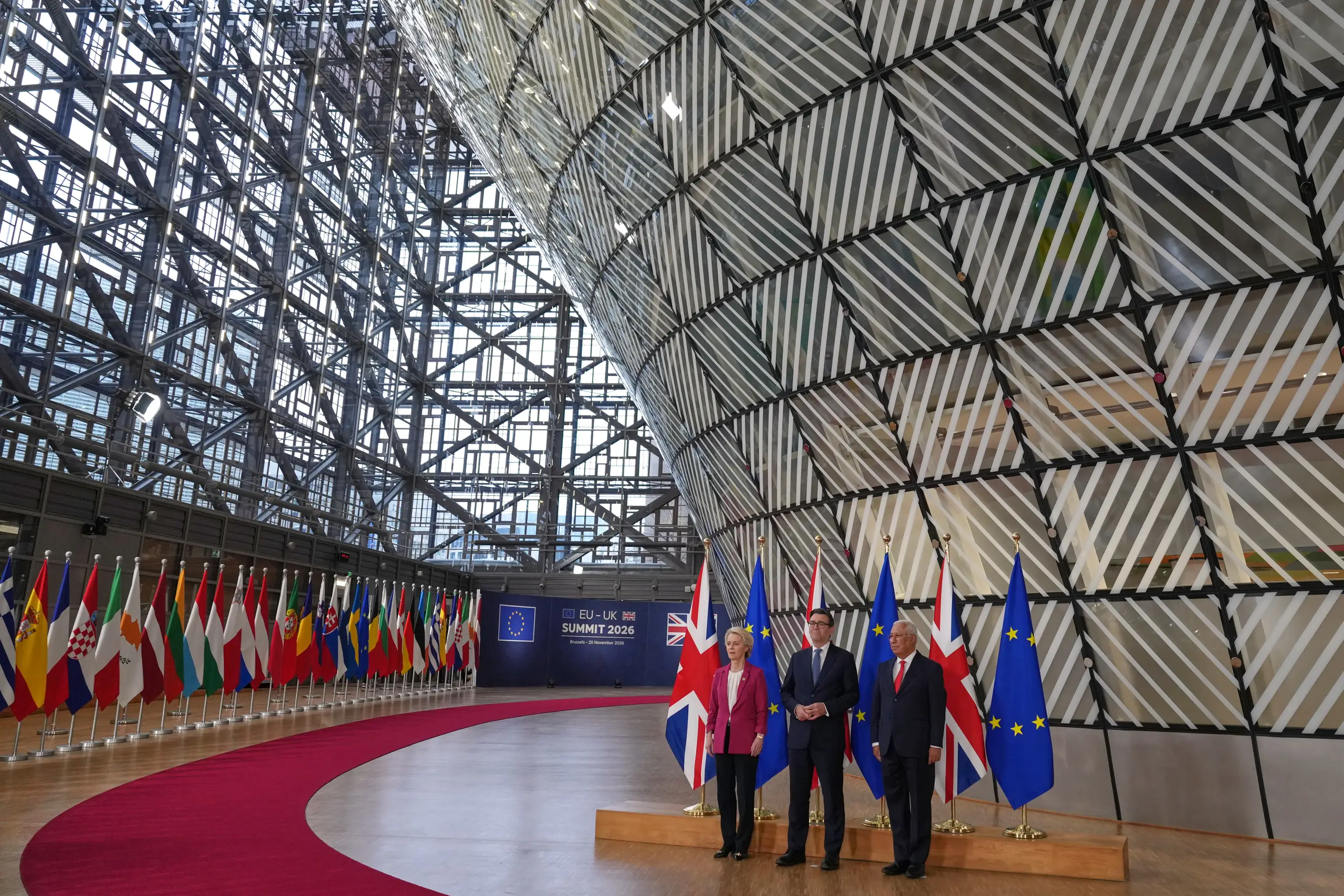
At the second EU-UK summit, Britain agreed to remove most food border checks, link carbon markets and open a youth mobility scheme for up to 100,000 young people.
World Politics
A Landmark Day in Brussels
Almost exactly a decade after British voters chose to leave the European Union, the United Kingdom and the bloc on Friday, 20 November 2026, announced the most substantial rapprochement since Brexit. Prime Minister Andy Burnham met European Commission President Ursula von der Leyen and European Council President António Costa in Brussels for the second EU-UK summit, and the two sides emerged with a package of three agreements: a sanitary and phytosanitary (SPS) area that removes most checks and paperwork on food and agricultural goods, a link between the British and European emissions trading systems, and a youth mobility programme.
“The deal is done. Negotiations have concluded. Now both sides will work towards implementation,” a Downing Street spokesperson said around midday, according to Al Jazeera. Burnham called it “a good day for Britain and this is a good day for Europe,” and told reporters that the agreements would “rebuild the bridges that were broken all those years ago.” Speaking directly to younger voters, he added: “this deal is for you.” RTÉ described both sides hailing the package as a “landmark” deal.
Yet the summit also exposed how much remains unfinished. A dispute over what European students should pay at British universities was not settled and has been given a six-month deadline, the agreements will not take practical effect until 2028, and the political fight at home over the meaning of Brexit has, by the admission of its fiercest champion, begun all over again.
Background: From Reset to Re-engagement
The Brussels meeting builds on the first EU-UK summit, held in London in May 2025 under Burnham's predecessor, Keir Starmer. That gathering produced a broad “reset” framework covering defence and security cooperation, a commitment to negotiate an SPS agreement and an understanding to explore a youth experience scheme, but left the detail for later. The following eighteen months were spent turning those commitments into legal text. According to Business Matters, a 200-page draft SPS text was agreed earlier this month, and AFP, citing diplomats, reported that EU member states signed off on the full package late on 19 November, clearing the way for Friday's announcement.
Burnham, who became prime minister after Starmer's departure this summer, has been more openly enthusiastic about Europe than his predecessor. In September he said Britain should look again at its long-term relationship with the EU, including the question of rejoining. That posture made Friday's summit a test of whether his government could translate warmer rhetoric into concrete gains for exporters, energy-intensive industry and young people, while staying inside the political red lines it has set for this Parliament.
What Was Agreed
The SPS agreement is the economic centrepiece. It is designed to remove the majority of border checks on British food and plant exports to the EU, in return for what the government calls “dynamic alignment” with EU food and plant-health standards, meaning the UK will follow EU rules in this area as they evolve. Al Jazeera's partner reports, citing the BBC, said the UK would adhere to some EU regulations by 2028. A government factsheet cited by Business Matters estimates the SPS deal alone could be worth up to £5.1 billion a year to the British economy.
The second agreement links the UK and EU emissions trading systems. The practical effect is that goods such as steel and aluminium will be exempt from each side's carbon border levies, including the EU's Carbon Border Adjustment Mechanism (CBAM). The government estimates the link is worth up to £3.8 billion a year and protects roughly £6.5 billion of British steel and aluminium exports that would otherwise face the levy.
The third, and politically most visible, element is youth mobility. According to RTÉ, which cited EU diplomats, Britain had initially proposed a cap of 50,000 places but agreed to 100,000, allowing young people from each side to live, work or study in the other's territory for up to three years. Al Jazeera reported the scheme applies to people under 30. The government insists the programme is “strictly capped and time-limited,” modelled on existing UK youth mobility visas, and “not freedom of movement.” Irish students, already covered by the Common Travel Area, are unaffected.
On the overall economic impact, figures vary by source and by what is being measured. Burnham said the package could add 0.5 per cent to GDP, raising his earlier estimate of 0.4 per cent, according to Al Jazeera. A report by ASAS Press, citing the BBC, quoted Foreign Secretary Ed Miliband as saying the Treasury believes the deal could add up to £17 billion a year. The government factsheet's two quantified measures, SPS and ETS linkage, together come to about £8.9 billion a year; the difference from the larger figure has not been explained in the reporting reviewed for this article. The government has also said Britain will make no payments into the EU budget beyond proportionate running costs.
The Sticking Points: Fees, Cars and a Contested Timetable
The most immediate unresolved issue is university tuition fees. Brussels wants EU students in Britain to pay the same fees as domestic students, as British students in many EU countries already do, while London has resisted because of the cost to universities and the Treasury. “We have not yet reached an agreement on tuition fees, and we have given ourselves six months,” an EU official told Al Jazeera. Von der Leyen said the fees work was “on a different piece of paper” and that she was confident of a solution; Burnham replied, “Me too.”
How much rides on that negotiation is the subject of conflicting accounts. Miliband, as reported via the BBC, said the food, energy and youth agreements would be implemented regardless of the fees question. RTÉ, however, reported that the EU has indicated the three deals will remain on hold until a fees agreement is concluded. Both cannot fully be true, and the difference matters: if Brussels does link them, the six-month window becomes a genuine deadline for the whole package rather than a side negotiation.
A second open issue concerns cars. The EU is prepared to grant British-made vehicles “Made in Europe” status under its Industrial Accelerator Act, which would help UK manufacturers qualify for European content rules, but only if London aligns with the EU's measures restricting Chinese electric vehicles. That condition pulls Britain into the wider transatlantic and European debate over Chinese industrial competition, and the government has not said whether it will accept it.
Then there is timing. No treaty was signed on Friday. “There's no document being inked,” Al Jazeera correspondent Rosie Birchard reported from Brussels. A joint statement says the agreements will apply from 2028, with the EU aiming for a start date of 1 March 2028 and the first young people able to benefit from the mobility scheme by 2030, according to RTÉ. In the meantime each side must complete its own legal process. Burnham said legislation would go to Parliament, and Business Matters reported that a bill is expected as soon as next week.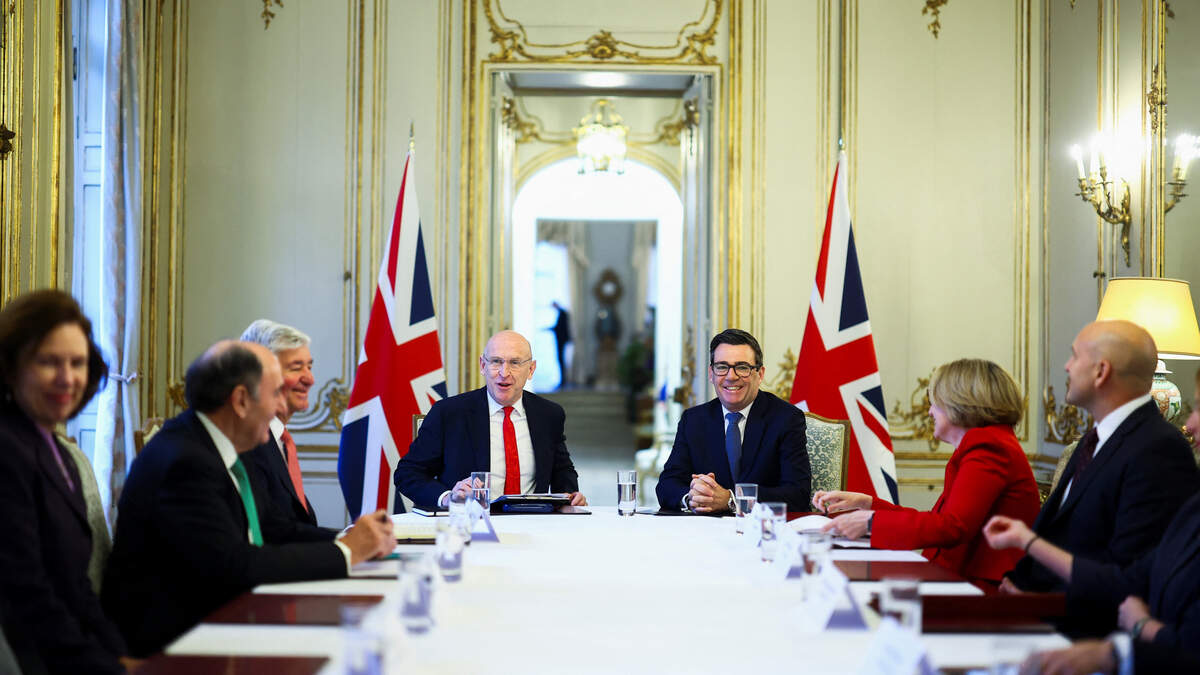
Reactions at Home and Abroad
The response at Westminster split along familiar lines. Reform UK leader Nigel Farage told the BBC, “I'm afraid that the great Brexit debate has just started again,” accused the prime minister of deception and “betrayal,” and has said he would renege on the agreement if he came to power. Conservative leader Kemi Badenoch argued the deal was unfair to farmers and young Britons, and the Conservatives oppose dynamic alignment as a surrender of regulatory control. The Liberal Democrats welcomed the direction but called the youth scheme “a good step but not enough” and the SPS arrangement a “partial fix.” Even within Labour there was caution: one unnamed MP told AFP, “I'm happy with closer ties, but he does need to tread carefully.”
Public opinion offers Burnham some cover. A YouGov poll cited by Al Jazeera found 54 per cent of respondents would find a referendum on rejoining the EU within five years acceptable, although voters remain divided over whether it should be a priority. In Ireland, Taoiseach Micheál Martin welcomed the agreement, as did Sinn Féin; reduced food checks are expected to ease friction across the Irish Sea, a long-running sore since Brexit. Ireland's ambassador in London, Sonja Hyland, spoke of “a lack of clarity” about what Brexit means, a comment that captured the sense in Dublin that the relationship is still being defined.
In Brussels the tone was warm but measured. Von der Leyen described the discussion of Brexit at the summit as “intensive,” and set the deal against the backdrop of the shocks that followed the referendum, noting that the COVID pandemic “was not even over when Russia started the war in Ukraine.” The summit took place as European leaders are seeking a seat at US-led peace talks on Ukraine and as Poland reported Russian airspace violations overnight, which Burnham, speaking in Brussels, called “utterly unacceptable.” That security context has made closer UK-EU cooperation easier to sell on both sides of the Channel.
What's Next
Burnham has framed Friday's package as close to the ceiling for now, calling it “probably the limit of what we can achieve in this parliament.” The government's own factsheet says it will not seek to rejoin the EU, the customs union or the single market, or restore freedom of movement, during this Parliament. At the same time, Burnham said his government would open talks on long-term options ranging from existing arrangements to customs union membership or even rejoining, something that would require approval from British voters and every EU member state. Reconciling those two positions will be one of the defining tensions of his premiership.
The near-term milestones are clearer. Parliament will debate implementing legislation, likely starting within days, giving the opposition its first formal chance to challenge dynamic alignment. Negotiators have six months to settle tuition fees, and whether Brussels treats that issue as a condition for the rest of the package will become apparent well before the 2028 start date. Decisions on Chinese electric vehicles and the “Made in Europe” label will test how far London is willing to align with EU industrial policy. And with Farage promising to reverse the deal, its durability may ultimately depend on the next general election, turning a technical agreement on food checks and carbon prices into a central question of British politics once again.