Six months after the world sounded the alarm, a rare Ebola strain with no approved vaccine and no proven cure has killed more than 5,500 people, struck one child in three among the dead, and jumped borders to Kenya, Nigeria and beyond. Experts warn it may not be tamed for another year.
KINSHASA / GENEVA
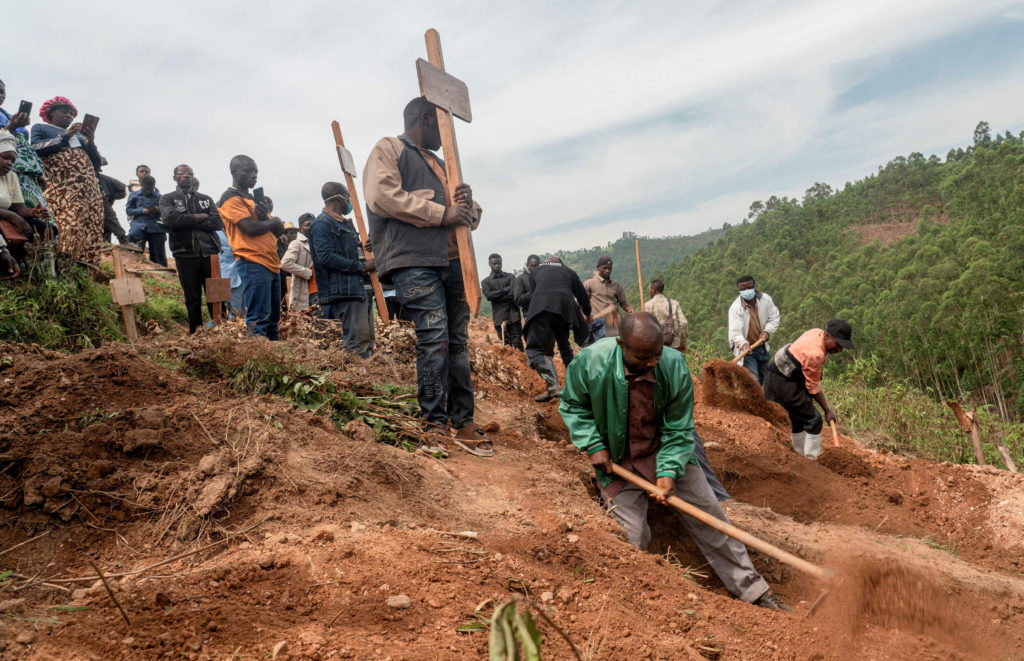
It began, investigators now believe, with a funeral. In early February, mourners gathered in the gold-mining town of Mongbwalu, in the Democratic Republic of the Congo's restless Ituri province, to bury a local pastor. In the weeks that followed, nearly 50 people who had fallen sick with fever, vomiting and crushing weakness reportedly died. Nobody knew what was killing them.
Nine months later, the world knows all too well. The outbreak that crept out of Mongbwalu is now the deadliest Ebola epidemic in Congo's history, the second-largest Ebola outbreak ever recorded anywhere, and, according to the World Health Organization, on track to overtake the infamous 2014–2016 West African epidemic that killed roughly 11,000 people.
As of November 14, the U.S. Centers for Disease Control and Prevention counted 11,407 confirmed cases and 5,572 confirmed deaths across five countries. Almost all of them, 11,376 cases and 5,568 deaths, are in Congo. And those are only the cases that have been laboratory-confirmed. Congo's Ministry of Health does not count probable or suspected infections, and WHO has reportedly said the true toll is at least double the official tally.
This weekend marked six months since WHO declared the outbreak a Public Health Emergency of International Concern. The verdict from the front lines, carried by the Associated Press on November 15, was blunt: the outbreak "remains out of control."

The Strain Nobody Was Ready For
What makes this outbreak so frightening is not just its size. It is the virus itself. This is not the Zaire strain of Ebola that tore through West Africa and that doctors have spent a decade learning to fight. It is Bundibugyo virus, a rarer cousin first identified in western Uganda in 2007. Before this year, it had caused only two known outbreaks, in Uganda in 2007 and in the Congolese town of Isiro in 2012, both small.
That rarity is exactly the problem. The world's licensed Ebola vaccine, Merck's Ervebo, and the antibody treatments approved for Ebola were all designed against the Zaire species. Whether they offer any protection against Bundibugyo is unknown. In late May, WHO advised against deploying Ervebo widely because evidence of cross-protection was so weak. There is, to this day, no licensed vaccine and no approved treatment for Bundibugyo virus disease.
The virus has another sinister trick. Africa CDC's Dr. Yap Boum II has warned that patients often show little of the dramatic bleeding people associate with Ebola, making it harder to recognize from symptoms alone. Sick people who look like they have malaria or a bad stomach bug stay home, nursed by relatives, and the virus moves on quietly.
The early weeks showed how badly it had outrun everyone. When samples first came back from a lab in Bunia in late April, they tested negative for Zaire Ebola. It took until May 14 for Congo's national biomedical research institute, the INRB in Kinshasa, to confirm a non-Zaire filovirus, and May 15 for genetic sequencing to name the culprit. By the time Congo declared the outbreak that day, 43 deaths had already been recorded, a sign the virus had been spreading undetected for months.
Faster Than Anything Before
The speed has stunned veteran outbreak fighters. According to the CDC, this epidemic passed 1,000 confirmed cases within 40 days of the response being activated. The 2018 Congo outbreak in North Kivu took about 235 days to reach the same grim milestone.
By mid-July, Doctors Without Borders (MSF) was calling it "the third largest, and fastest growing, Ebola disease outbreak on record." Congo's confirmed count crossed 5,000 on August 17, then 10,000 on October 28. By November 1, the U.N. reported more than 10,500 confirmed cases and 5,126 deaths. Ten days later, the tally had raced past 11,000.
The virus has now been confirmed in eight of Congo's 26 provinces, including Ituri, North Kivu, South Kivu, Haut-Uele, Bas-Uele, Tshopo, Nord-Ubangi and Sud-Ubangi. Ituri remains the epicenter. New hotspots keep appearing.
Across the Borders
Neighbors have not been spared. Uganda reported an imported case the very day Congo declared its outbreak and eventually recorded 20 confirmed cases and two deaths. Ugandan authorities isolated an estimated 6,000 contacts, opened a treatment center at Kampala's Mulago hospital, and closed the border with Congo for weeks. WHO and Africa CDC declared Uganda's outbreak over in late August, a rare bright spot.
France confirmed a case in June, a doctor returning from a humanitarian mission, who recovered. Then, in October, the virus reached two new countries. Kenya reported its first case on October 6, a traveler who had flown into Nairobi from Congo; Kenya has since logged nine confirmed cases and two deaths. On October 20, Nigeria confirmed a single case, the outbreak's first in West Africa. How that patient was infected remains unknown. That spread makes this, according to the AP, the most geographically widespread Ebola outbreak on record.
The Children Paying the Highest Price
Behind the statistics lies a heartbreaking pattern. According to UNICEF figures reported by the AP, children accounted for 35 percent of all deaths recorded through November 4. Children under five alone made up 21 percent of the dead. Most chilling of all: nearly 72 percent of infected children under five have died.
Many of those children were already weak from malnutrition before the virus ever reached them. Congo is in the grip of a hunger crisis; the U.N. reported on October 30 that more than 28 million people in the country are not getting enough food. Most of the infected children, UNICEF says, never received specialized care.
War, Mistrust and Missing Millions
Why can't the world stop it? The answer lies in where it is burning. Eastern Congo is one of the most violent places on Earth. Government troops battle hundreds of armed groups, including the Rwanda-backed M23 rebels and the Allied Democratic Forces, an Islamic State-affiliated militia that attacks civilians. Insecurity blocks contact tracers, burial teams and vaccinators from reaching the very villages where the virus is spreading.
The response has also been met with fear and fury. In May, protesters set Ebola tents ablaze in Rwampara, and 18 suspected patients fled a treatment site in Mongbwalu after a tent was burned. Five health workers were taken hostage in Mongbwalu in June. In August, a mob torched an ambulance in Aru Territory. A displacement camp near Bunia that housed an Ebola transit center was burned.
Health workers themselves are falling. By late August, around 160 had been infected and more than 40 had died. Staff have repeatedly gone on strike over wages that are months overdue, at times leaving confirmed patients untreated.
Surveillance has crumbled under the strain. Africa CDC says 80 percent of new cases are now detected outside the health surveillance system, meaning they are not known contacts of earlier patients. Around a third of deaths happen at home or in the community, where traditional burials that involve washing and touching the body can ignite fresh chains of infection.
And there is the money. In October, Africa CDC raised concerns that more than $700 million in Ebola aid remains unaccounted for. MSF has described "a troubling disconnect between the considerable resources mobilised for the response and what is actually reaching patients."
A Glimmer of Hope Called "Tumaini"
For the first time in this outbreak, science is beginning to fight back.
On October 23, WHO launched a vaccine trial in Bunia, Ituri's capital. It is called Tumaini, Swahili for "hope." Led by Congo's INRB with the University of Antwerp and WHO, it uses ring vaccination, the strategy that proved Ervebo worked in Guinea a decade ago, by vaccinating the contacts of confirmed patients and their contacts in turn. The trial includes pregnant women and children aged 12 and older. Participants first receive Ervebo to test whether it gives any cross-protection.
Then, on November 4, WHO announced that two vaccines designed specifically against Bundibugyo would join the trial after national approvals: ChAdOx1, developed by the University of Oxford with the Serum Institute of India, and mRNA-1469 from Moderna. These will be the first Bundibugyo-specific vaccines ever tested during an outbreak of the disease. The global vaccine coalition CEPI has committed $50 million to Moderna and $8.6 million to Oxford for the work.
Treatments are being tested too. The WHO-sponsored PARTNERS trial, launched in July, is studying whether the monoclonal antibody MBP134, the antiviral remdesivir, or the two together improve survival. A second antibody, maftivimab, is being added, and the drug obeldevisir is under study to prevent illness in people who have been exposed.
"The fact that these vaccines are ready to enter clinical trials is a testament to the power of science and partnership," WHO Director-General Dr. Tedros Adhanom Ghebreyesus said. But he was careful not to oversell it: "Vaccines alone will not end this outbreak, but they could become a powerful new tool for bringing it under control."


Expert Perspective: "Trust Cannot Be Demanded"
Marking the six-month milestone, Tedros struck a tone that was equal parts grief and resolve. He said transmission is slowing in several of the outbreak's early epicenters and that around 3,000 people have now survived and gone home.
"Because of your courage, around 3,000 people have recovered and returned home," he told frontline responders. "My heart is with every grieving family."
He also made clear that no vaccine will work without the communities it is meant to protect. "Trust cannot be demanded. It is earned through listening, respect, and compassionate care," he said, urging donors to close funding gaps and calling for a cessation of hostilities so health workers can reach the sick.
Other experts are less optimistic about the timeline. According to the AP, specialists say the outbreak is unlikely to be brought under control within the next year. The International Rescue Committee estimated during the summer that only around one in five contacts was being traced.
What This Means for You
For most readers outside Central and East Africa, the direct risk is very low. The CDC says no cases linked to this outbreak have been reported in the United States, and it rates the risk to the American public and to travelers as low, with the likelihood of spread to the U.S. very low.
But the travel rules have teeth. Travelers who have been in Congo within the previous 21 days cannot board commercial flights to the United States, and U.S. citizens returning from Congo must wait outside the country for 21 days first. Since November 3, every international passenger flying to the U.S. must sign an attestation that they have not been in Congo in the past 21 days. People who were in Uganda or South Sudan, but not Congo, must enter through designated airports for enhanced screening.
The CDC advises against all travel to Ituri and North Kivu, recommends reconsidering nonessential travel to Haut-Uele and Tshopo, and urges enhanced precautions elsewhere in Congo and in Uganda.

If you live in or travel to the region, the rules are simple and lifesaving. Avoid contact with anyone who is sick and with the bodies of people who have died. Do not handle bushmeat. And if you develop fever, severe headache, muscle pain, vomiting, diarrhea or unexplained bleeding within 21 days of being in an affected country, call a health care provider before you show up, so they can prepare to receive you safely.
For everyone else, the lesson is about distance and complacency. Ebola now has a foothold in Nairobi and has reached Lagos. Outbreaks in places the world tends to ignore have a way of arriving at airports everywhere.
Conclusion: A Race Against the Clock
Six months in, the Bundibugyo outbreak is a story of a virus that got a months-long head start, found its way into a war zone, and has thrived on hunger, mistrust and broken promises of pay. More than 5,500 people are confirmed dead, a third of them children, and the real number is surely higher.
Yet for the first time there is something to put in people's arms. If Tumaini's vaccines work, the ring of protection around each new case could finally begin to choke the virus off. If they don't, and if the guns and the funding gaps persist, the world may soon be writing a new headline: the deadliest Ebola outbreak in history. For now, the families of Ituri are waiting for a word they have been promised for half a year. Tumaini. Hope.
Published By | Features Editor