Written By | International News Agencies
In a first for the International Court of Justice, judges find a state responsible for genocide, ordering Myanmar to prosecute perpetrators and let refugees return home
World Politics
A Historic First in The Hague
The International Court of Justice ruled on Thursday, November 19, that Myanmar committed genocide against its Rohingya Muslim minority during the military's 2017 campaign in northern Rakhine State. It is the first time the United Nations' highest court has found a state itself responsible for committing genocide. The judgment closes seven years of litigation brought by The Gambia and is final, with no possibility of appeal.
Reading the decision over roughly three hours in the Peace Palace, ICJ President Yuji Iwasawa said the evidence supported the conclusion that Myanmar's security forces had acted with the intent to destroy the Rohingya, in whole or in part, as a group. According to multiple accounts of the judgment, the court found that genocidal intent was "the only reasonable inference" that could be drawn from the pattern of conduct, the threshold the court set for itself in its earlier jurisprudence. Several outlets, including the American Society of International Law and Outlook India, report that the core finding was reached by a 9-6 majority of the fifteen judges.
The ruling arrives at a moment when international law is under unusual strain, with wars in Ukraine, Gaza, Sudan and the wider Gulf testing whether global courts still carry weight. For the roughly 1.2 million Rohingya living in refugee camps in Bangladesh's Cox's Bazar district, and the approximately 520,000 who remain inside Myanmar, the decision is the most authoritative legal recognition yet of what they endured.
Background: From Rakhine to The Hague
The case traces back to August 2017, when Myanmar's military, known as the Tatmadaw, launched what it called "clearance operations" in northern Rakhine following attacks on police posts by the Arakan Rohingya Salvation Army. Within weeks, hundreds of thousands of Rohingya fled across the border into Bangladesh. Estimates of the exodus differ by source, from about 700,000 to roughly 750,000 people, and the judgment itself cites at least 10,000 killed. United Nations fact-finding investigators later documented mass killings, the systematic rape of women and girls, and the burning of entire villages.
On November 11, 2019, The Gambia, a small West African state with no direct connection to Myanmar, filed suit under the 1948 Genocide Convention, with the backing of the Organisation of Islamic Cooperation. Its legal team was led by then-Justice Minister Aboubacarr Tambadou, who had previously worked as a prosecutor at the International Criminal Tribunal for Rwanda. The Gambia argued that every party to the convention has an interest in seeing it upheld, an approach known as standing erga omnes partes.
In January 2020 the court unanimously ordered provisional measures requiring Myanmar to prevent genocidal acts, preserve evidence and report back periodically. The hearing became globally famous because Aung San Suu Kyi, then Myanmar's de facto civilian leader, travelled to The Hague to defend her country and described the allegations as incomplete and misleading. A year later the military overthrew her government in the February 2021 coup. In July 2022 the court rejected Myanmar's preliminary objections and confirmed it had jurisdiction under Article IX of the convention. Eleven states then joined the proceedings through declarations of intervention on how the convention should be interpreted: Canada, Denmark, the Netherlands, Germany, the Maldives, the Democratic Republic of the Congo, Slovenia, Ireland, Belgium, France and the United Kingdom. Hearings on the merits took place in January 2026.
What the Court Found
According to analyses of the 191-page judgment published by Just Security and the American Society of International Law, the court found that Myanmar's security forces committed three of the five prohibited acts listed in Article II of the Genocide Convention: killing members of the group, causing serious bodily or mental harm, and imposing measures intended to prevent births. The court cited at least 1,834 documented rapes and roughly 326,000 homes burned. It concluded that the targeted population, about 815,000 Rohingya in northern Rakhine, constituted a substantial part of the protected group.
Iwasawa told the courtroom that the evidence "supports a reasonable inference that Myanmar security forces acted with genocidal intent," according to The Jerusalem Post. The court also found that Myanmar breached its separate duties to prevent genocide and to punish it, and that its 2021 domestic legislation was inadequate. It further held that Myanmar violated the court's own 2020 order to preserve evidence. Not every claim succeeded, however. The court rejected The Gambia's argument that Myanmar had directly and publicly incited genocide, and dismissed some of the applicant's other submissions.
In terms of remedies, the court ordered Myanmar to investigate and prosecute those responsible and to provide guarantees that the crimes will not be repeated. It also ordered forms of restitution, including the safe and voluntary return of refugees, the return or replacement of property, efforts to locate the disappeared and provide proper burials, rehabilitation for survivors, and protection from discrimination. The court stopped short of a blanket order restoring citizenship, which Myanmar has denied most Rohingya under its 1982 citizenship law. Compensation was left for a later phase, and Myanmar must report back on its compliance within two years.
The judges were divided. The American Society of International Law reports that Vice-President Julia Sebutinde and five other judges dissented on the central finding, arguing that the majority applied a lower standard of proof than in past cases and leaned too heavily on United Nations fact-finding reports. It also reports that President Iwasawa agreed on genocidal intent but argued that The Gambia lacked standing to pursue compensation. Just Security notes that all fifteen judges wrote separate opinions or declarations. Accounts differ on the characterization of the standard of proof: Just Security argues the court applied its established requirement of fully convincing evidence, while The Jerusalem Post suggests the bar was effectively lowered. Readers should treat both characterizations as contested.
Reactions
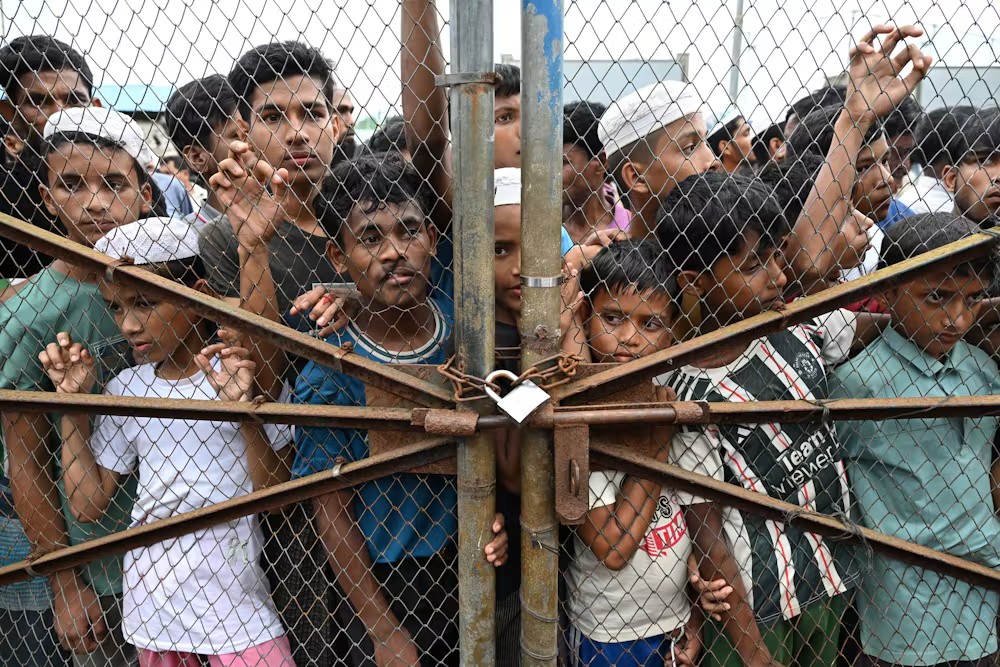
Arsalan Suleman of the law firm Foley Hoag, lead counsel for The Gambia, called the decision "a landmark victory for the Rohingya people," according to Al Jazeera. Matthew Smith of the human rights group Fortify Rights described it as a huge day for the Rohingya and for all the people of Myanmar. Amnesty International's Secretary General Agnes Callamard said the court's conclusion was unequivocal. In the Cox's Bazar camps, refugees gathered with placards ahead of the verdict, and many told reporters afterward that they hoped the ruling would bring them closer to returning home safely and with rights.
None of the coverage reviewed for this article contained an official response from Myanmar's military government to the ruling itself. Throughout the proceedings, Myanmar consistently rejected the genocide allegations and argued that its 2017 operations were a legitimate counter-terrorism response to armed attacks. One international news roundup reported that the United Kingdom announced it would expel Myanmar's defence attaché following the judgment, but that report could not be confirmed in other sources at the time of writing.
Legal scholars also weighed in on the wider significance. Oxford's Janina Dill, quoted via The Washington Post in Outlook India's coverage, called the judgment very instructive for other genocide cases now on the court's docket.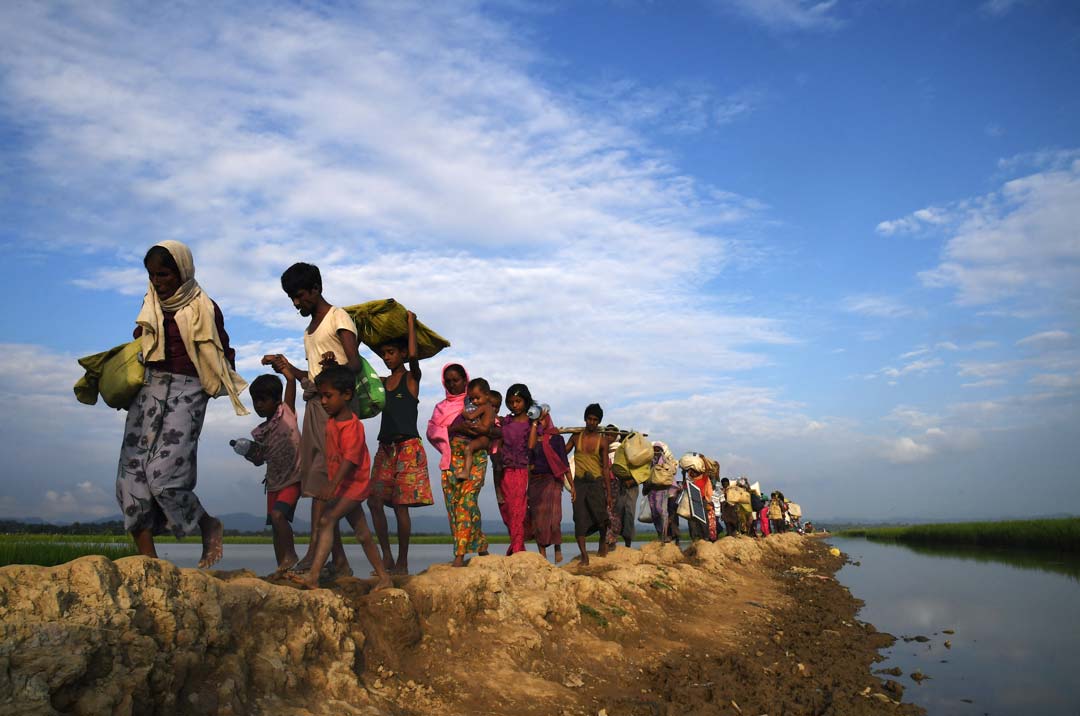
Implications Beyond Myanmar
The most closely watched spillover concerns South Africa's genocide case against Israel over the war in Gaza, filed in December 2023. That case is at a much earlier stage: Israel filed its Counter-Memorial in March 2026, South Africa's Reply is due in November 2027, and Israel's Rejoinder in May 2029. Under Article 59 of the ICJ Statute, the Myanmar ruling binds only the parties to that case, but commentators across the spectrum agree it will shape arguments about how intent can be inferred from patterns of conduct. Some, including The Jerusalem Post, argue it could make Israel's defence more difficult; others note that the factual records are very different and that the dissents give future litigants ammunition on the standard of proof.
The ruling is also likely to add momentum to parallel efforts to hold individuals accountable, since the ICJ rules only on state responsibility, not on personal criminal guilt. In November 2024, the Prosecutor of the International Criminal Court applied for an arrest warrant for Senior General Min Aung Hlaing on charges of deportation and persecution as crimes against humanity; according to Diplomacy and Law, that application remains pending before a Pre-Trial Chamber. In Argentina, a universal-jurisdiction complaint filed in 2019 led a federal court in February 2025 to order the arrest of 25 suspects, the same outlet reports.
Inside Myanmar, the practical prospects for compliance are uncertain. The military remains locked in a civil war that has killed an estimated 100,000 people and displaced more than 3.5 million since the 2021 coup, and Min Aung Hlaing now holds the presidency. Northern Rakhine is largely contested, with the ethnic Arakan Army, which has itself been accused of abuses against Rohingya, controlling much of the state. In August, Myanmar said it had verified more than 300,000 refugees for possible repatriation, but only once security in Rakhine is restored, a condition that appears distant.
What Comes Next
The ICJ has no police force, and enforcement of its judgments ultimately depends on the United Nations Security Council, where China and Russia have long shielded Myanmar's military from punitive measures. Even so, the judgment carries legal consequences for other states. Governments that maintain arms sales, military training or commercial ties with Myanmar's armed forces may face new scrutiny under their own duty to prevent genocide, and the ruling strengthens the hand of courts and prosecutors pursuing individual cases.
Humanitarian needs, meanwhile, continue to grow. Aid to the Cox's Bazar camps has shrunk since major cuts to United States foreign assistance in January 2025, and Bangladesh has repeatedly warned that it cannot host the refugee population indefinitely. Rohingya advocates say the judgment's real test will be whether it translates into safe, dignified return, restored rights and justice for victims rather than remaining a symbolic milestone.
For now, the court has done something it had never done before in its 80-year history. Whether that becomes a turning point for the Rohingya, or simply a powerful historical record, will depend on what governments, the Security Council and Myanmar's own rulers do in the two years before Myanmar must report back to The Hague.