Written By | Health News Agencies
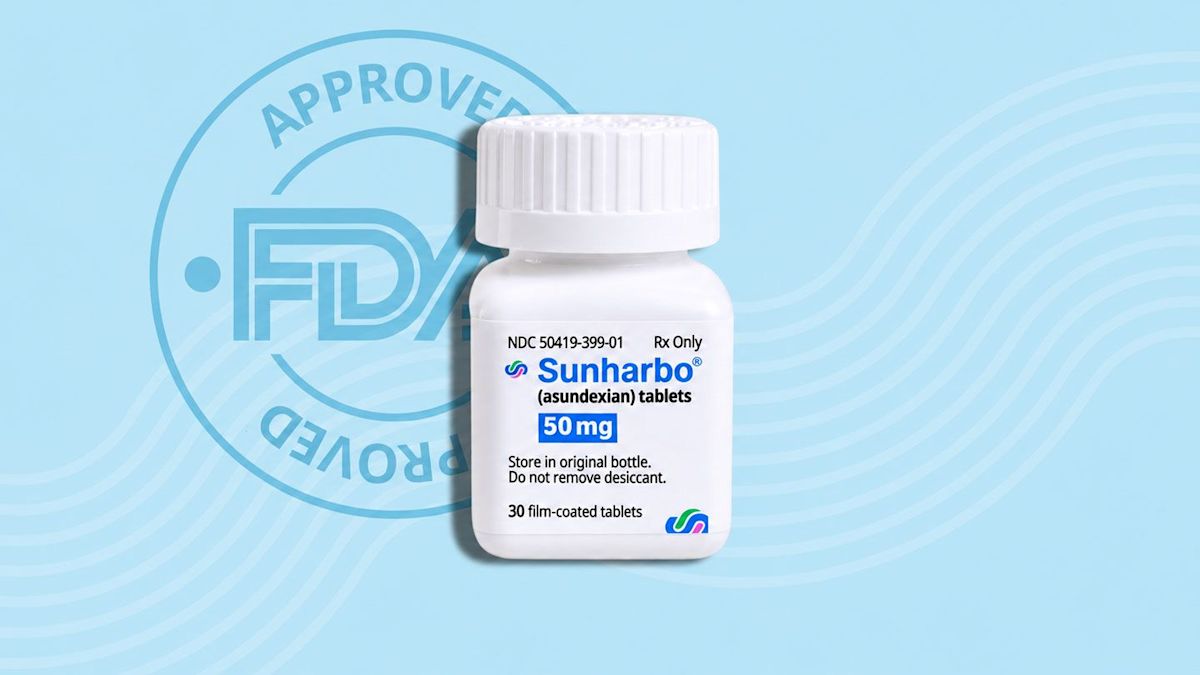
Bayer's Sunharbo cut repeat strokes by 26% in a 12,000-patient trial without raising major bleeding — but a $748 monthly price tag could keep it out of reach
WHIPPANY, N.J.
Every year, around 795,000 Americans suffer a stroke. For roughly 185,000 of them, it is not the first time.
Now, for the first time in years, stroke survivors have a brand-new weapon against the nightmare of a repeat attack.
The U.S. Food and Drug Administration has approved Sunharbo (asundexian), a once-daily pill from German drugmaker Bayer that slashed the risk of a second ischemic stroke by more than a quarter in a massive international trial. Bayer announced the approval on Monday, November 9, 2026, and the drug is set to begin shipping this month.
It is the first medicine ever approved from a new class of blood thinners called factor XIa inhibitors, drugs that scientists have chased for years in the hope of preventing dangerous clots without the frightening bleeding risks that come with older treatments.
"This is an important advance in secondary stroke prevention," said Dr. Ashkan Shoamanesh, co-principal investigator of the trial that led to the approval. The drug, he said, "offers physicians a new opportunity to provide greater protection against recurrent stroke" without the bleeding risk that has held back more aggressive clot-preventing treatment.
The Danger That Follows a Stroke
Surviving a stroke is only the start of the battle. According to the CDC, about one in four stroke survivors will have another stroke within five years. Even with today's best guideline-recommended care, up to 20 percent of patients who suffer the most common type of clot-driven stroke may have another within five years, Shoamanesh noted.
Most strokes are ischemic, meaning a clot blocks blood flow to part of the brain. Some of those clots come from the heart, often in people with an irregular heartbeat called atrial fibrillation. Many others form because of plaque build-up in the arteries, a condition called atherosclerosis. Those are known as non-cardioembolic strokes, and that is exactly the group Sunharbo is designed for.
For decades, the standard treatment for these patients has been antiplatelet medicine, most famously aspirin. Doctors have long wanted to add stronger blood thinners, but the trade-off has been brutal: fewer clots, but more dangerous bleeds, including bleeding in the brain.
How the New Pill Works
Blood clotting works like a chain of dominoes, with one protein triggering the next. Traditional anticoagulants block key dominoes in that chain, which stops clots but also weakens the body's ability to stop bleeding.
Factor XI sits in a part of the chain that appears to matter more for the dangerous clots that cause strokes and heart attacks than for the healthy clotting that seals a cut. Block it, the theory goes, and you can prevent harmful clots while leaving the body's natural bleeding defense largely intact.
"This blocks a very specific protein that's part of the cascade of blood clotting," Dr. Richard Kovacs, a cardiologist at Indiana University School of Medicine and chief medical officer of the American College of Cardiology, told Fox News.
Sunharbo is taken as a single 50-milligram tablet once a day, alongside standard antiplatelet therapy such as aspirin.
Inside the Blockbuster Trial
The approval rests on OCEANIC-STROKE, a phase 3 trial that enrolled 12,327 patients across 37 countries. All had recently suffered a non-cardioembolic ischemic stroke or a high-risk transient ischemic attack (TIA), often called a "mini-stroke." In the trial, the drug was started within 72 hours of the stroke.
Patients were given either asundexian or a placebo on top of their usual antiplatelet treatment and followed for an average of about 14 months. The results were published in The New England Journal of Medicine.
The headline numbers:
Ischemic stroke struck 6.6 percent of patients on asundexian, compared with 8.8 percent on placebo. That is a 26 percent relative reduction and a 2.2 percentage-point absolute drop.
The combined risk of stroke, heart attack or cardiovascular death fell from 11.1 percent to 9.2 percent.
Death from any cause was 10.5 percent with asundexian versus 12.3 percent with placebo.
Crucially, there was no significant increase in major bleeding as measured by international standards. Later analyses suggested that the strokes that did occur in the asundexian group tended to be less severe, and the benefit held up across patients with different levels of underlying vascular risk.
The Fine Print on Safety
No drug is risk-free, and doctors say the caveats matter.
Gastrointestinal bleeding was more common on asundexian, at 2.7 events per 100 patient-years versus 2.1 with placebo. Major bleeding also rose in patients over 75 during the first 90 days of treatment. The most common side effect was diarrhea, affecting 3.4 percent of patients compared with 2.8 percent on placebo. Some patients saw raised liver enzymes, though Bayer says about three-quarters of those cases were mild.
The drug is not recommended for patients with moderate or severe liver impairment, or for people taking certain combinations of drugs that speed up how the body breaks down medicine. Shoamanesh said it would also be unsuitable in end-stage kidney disease.
And it is not for everyone who has had a stroke. "This drug is not for patients who have had strokes due to atrial fibrillation or due to a valve problem in their heart," Kovacs stressed. In fact, asundexian stumbled badly in an earlier trial in atrial fibrillation patients, and the FDA label explicitly excludes them. The approval also covers only patients whose stroke was mild to moderate, with a stroke-severity score of 15 or lower.
Experts also note the trial excluded patients with more severe strokes and certain heart conditions, and longer studies are needed in older adults and underrepresented groups. Long-term safety beyond the trial period is still unknown.
A Race Bayer Won First
Asundexian's approval is a major win in one of the hottest races in cardiovascular medicine. Rival factor XI drugs have stumbled. Milvexian, developed by Bristol Myers Squibb and Johnson & Johnson, has suffered multiple clinical setbacks, though analysts at Leerink Partners still project $2.5 billion in risk-adjusted sales by 2032. Novartis is developing an injectable antibody acquired through its $925 million purchase of Anthos Therapeutics, and City Therapeutics has an early-stage RNA-based candidate.
For Bayer, the timing could hardly be better. Its blockbuster blood thinner Xarelto now faces generic competition, and its sales fell almost 43 percent in the first half of 2026 to about 738 million euros. Analysts believe the new factor XI class could produce multibillion-dollar products.
Sebastian Guth, chief operating officer of Bayer Pharmaceuticals and president of Bayer U.S., said physicians regard asundexian as "practice-changing." He said the company will focus first on stroke neurologists, then primary care doctors, and that Bayer has a "very robust" patient support program.
Asundexian was approved in China last month and is under review by regulators in Europe and Japan.
The Price Problem
There is one big hurdle: cost. Sunharbo carries a list price of $748.50 for a 30-day supply, close to $9,000 a year. Bayer stresses that list price does not reflect what most insured patients will actually pay, and says some patients may be able to get the drug free through the Bayer US Patient Assistance Foundation.
Still, stroke experts are worried. Dr. Cheryl Bushnell called cost "probably going to be the main limiting factor" for how widely the drug is used. Shoamanesh said getting the drug into treatment guidelines, educating physicians and securing fair reimbursement are the key next steps.
Expert Perspective
Specialists describe the approval as a genuine milestone, but not a magic bullet.
"It doesn't completely eliminate the risk of a second stroke," Kovacs said. Because the trial started treatment within 72 hours, he said conversations about the drug should happen early, often while patients are still in the hospital.
He also emphasized that many patients in the trial had strokes caused by plaque build-up in their arteries, which means the old-fashioned basics remain essential: stop smoking, control cholesterol and blood pressure, eat well and exercise. No pill replaces those.
What This Means for You
If you or a loved one has recently had an ischemic stroke or a TIA, this is a question worth bringing to your neurologist: "Am I a candidate for Sunharbo?"
You may be a candidate if your stroke was caused by a clot that did not come from the heart, it was mild to moderate, and you are already taking antiplatelet medicine such as aspirin.
You are likely not a candidate if your stroke was caused by atrial fibrillation or a heart valve problem, if you have significant liver disease or end-stage kidney disease, or if you take certain medicines that interact with it. Patients over 75 should discuss the early bleeding risk carefully with their doctor.
Ask about cost before you fill the prescription. Check your insurance coverage, ask whether prior authorization is needed, and ask about Bayer's patient support and assistance programs.
And above all, know the signs of stroke and act fast. Remember BE FAST: Balance loss, Eyes (vision changes), Face drooping, Arm weakness, Speech difficulty, Time to call 911. Every minute counts.
The Bottom Line
For millions of stroke survivors living with the fear of a second attack, Sunharbo represents the first genuinely new kind of protection in years: a once-a-day pill that, in a trial of more than 12,000 people, cut repeat strokes by about a quarter without driving up major bleeding.
It is not for everyone, it will not erase risk, and its price could keep it out of reach for some. But after years of failed attempts across the industry, the long-promised era of "safer" blood thinners has finally arrived, and it begins with stroke.