ABUJA, Nigeria
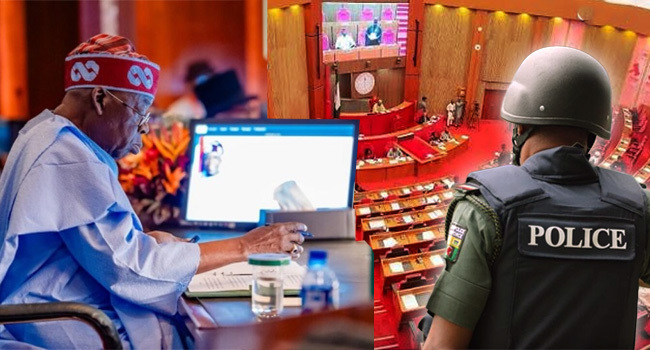
A constitutional amendment that would end Nigeria's single, centrally controlled police force now needs only President Bola Tinubu's signature. All 36 state Houses of Assembly approved the measure, the Senate formally sent it to the presidency this week, and Tinubu's chief of staff confirmed on Wednesday, Nov. 18, that the president had received it. If it is signed, the amendment will be the most significant restructuring of Nigerian policing since the 1999 Constitution placed all police powers in federal hands.
The timing is politically loaded. Nigeria goes to the polls in less than two months, with presidential and National Assembly elections scheduled for Jan. 16, 2027, under the Independent National Electoral Commission's revised timetable. Insecurity, from jihadist insurgency in the north-east to banditry and mass kidnappings in the north-west and north-central regions, remains one of the defining issues of the campaign. Supporters see state police as the long-awaited answer to an overstretched federal force. Critics see a new instrument that governors could turn against their opponents.
Unanimous, at the last minute
The Clerk to the National Assembly, Kamoru Ogunlana, announced on Monday, Nov. 16, that every state legislature had approved the bill, describing it as "one hundred per cent endorsement," The Sun reported. Cross River and Niger, the last two outstanding states, filed their approvals hours before a Nov. 17 deadline set by the National Assembly. A day earlier, Senate Leader Opeyemi Bamidele had put the count at 32 and said the legislature would proceed regardless.
Section 9(2) of the 1999 Constitution requires approval by at least two-thirds of state assemblies, or 24 of 36, so the bill cleared the threshold comfortably. The Senate approved it on June 24, 2026, and the House of Representatives on July 23, 2026. It was sent to the states on Sept. 16, and the original 30-day window for their response was extended, according to The Sun.
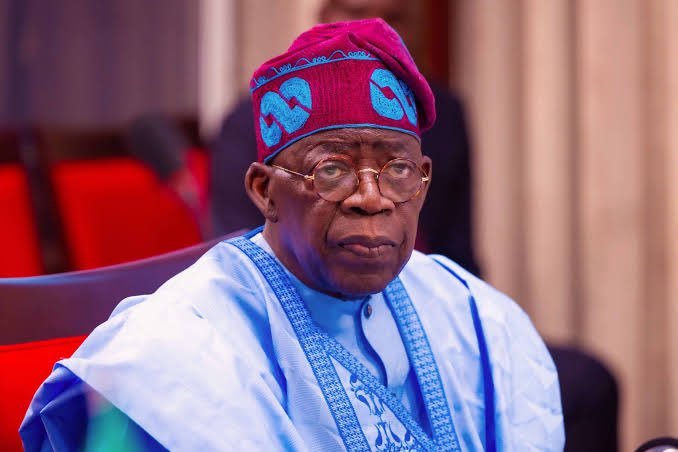
On Wednesday, the Senate adopted a motion sponsored by Bamidele directing Ogunlana to transmit the bill, formally the Constitution of the Federal Republic of Nigeria (Sixth Alteration) Bill, 2026, to the president under the Acts Authentication Act, ThisDay reported. In a statement the same day, Chief of Staff Femi Gbajabiamila said special advisers Basheer Lado and Wasiu Olanrewaju-Smart had delivered the bill to Tinubu. The president is expected to review it with the Attorney General of the Federation before signing it at a formal ceremony, according to reporting carried by AllAfrica. No signing date has been announced.
What the amendment would do
The bill replaces the Nigeria Police Force with two tiers: a Federal Police Service and State Police Services, according to a summary of its provisions published by Arise News. Each state may create its own service through a law passed by its House of Assembly. No state force may begin operating until that law is passed and certified against national minimum standards. Until then, federal police will continue to police the state.
Responsibilities are divided by subject. Federal police would keep federal laws and federal assets, along with terrorism, cybercrime, organized crime, arms trafficking and border security. State police would enforce state laws, maintain public order and protect lives and property.
Much of the text addresses the fear of political misuse. Governors are "expressly prohibited from issuing any unlawful directive" to arrest, detain, investigate or use force against named individuals or groups. They may still give lawful, written general-policy directions on public safety. Police may not be used to suppress lawful political activity or to pursue partisan, ethnic, religious, sectional or personal aims.
Governors would appoint state commissioners of police on the recommendation of the National Police Council, subject to confirmation by the state assembly. The inspector-general would continue to be appointed by the president on the council's advice, subject to Senate confirmation. Removing either official would require stated cause, a fair hearing, a council recommendation and a resolution backed by at least two-thirds of the relevant legislature. Independent State Police Service Commissions, with funds paid to them directly, would handle recruitment, promotions, discipline and complaints.
The federal government could intervene in a state's policing where public order has broken down or is about to, where the state cannot or will not contain a threat, or where there is evidence of systematic rights abuses or partisan or electoral intimidation, among other grounds. Any intervention must be authorized in writing by the president, notified to the governor, the state speaker, the National Police Council and the National Assembly within 48 hours, and kept temporary and proportionate. It would also be subject to judicial review. Extensions beyond the period set by national law would require Senate approval.
The case for and against
Supporters argue that the current structure has left governors as "chief security officers" of their states in name only. The constitution gives them that title but no operational control over the commissioners or officers posted to their states, as AllAfrica's report noted. Advocates say locally recruited, locally commanded forces would improve intelligence and response times in communities that federal police reach slowly or not at all.
On Wednesday, Senate President Godswill Akpabio called the measure a major accomplishment of the 10th National Assembly and projected that the new structure could address up to 70% of the country's security challenges, ThisDay reported. He did not explain how he arrived at that figure. Deputy Senate President Barau Jibrin called it "a wonderful achievement for the present administration and the current National Assembly." Minority Leader Abba Moro, who seconded the motion, said state police had become necessary because of the worsening security situation.
Even in the chamber that passed the bill, some lawmakers were cautious. Sen. Adams Oshiomhole warned that governors could misuse state police against political opponents. "We can foresee the possibility of some people misusing the police, but that should not be enough reason to abandon the idea," he said, calling for comprehensive operational guidelines with the force of law. Sen. Ekon Sampson said the judiciary must check abuses through oversight. Sen. Adamu Aliero suggested that local government policing could eventually be considered.
Concerns outside the National Assembly are broader. Reporting in The Sun and AllAfrica noted fears that some states may not be able to fund police services, and that recruitment, training, command structures and oversight remain unresolved. Nigeria's states vary enormously in revenue, and several struggle to pay existing salaries. A force that a state cannot afford to train or equip properly could become less accountable than the federal one it replaces.
The missing law
The amendment provides a constitutional foundation, not an operating manual. The Senate used Wednesday's motion to urge Tinubu to send the National Assembly a National Policing Bill that would set out operational guidelines, define the relationship between federal and state forces and include safeguards against abuse. Akpabio said the executive should forward that framework without delay. He added that the legislature could start drafting the law itself if the executive does not act within a reasonable period, ThisDay reported.
A Presidential Working Group on State Police, chaired by Gbajabiamila, has held nationwide consultations on a draft. The draft has been sent to the Federal Ministry of Justice for legislative drafting validation, after which the group will present it to the president with its report, according to Gbajabiamila's statement. Until that law and the state laws that follow it are passed and certified, no state police service can begin operating.
Analysis: a security reform with an electoral clock
The amendment arrives as Abuja is emphasizing visible security gains. The United States this week praised Nigerian military operations between Nov. 6 and Nov. 12 that, according to Nigerian authorities, rescued 125 kidnapped people, including 119 travelers abducted along a road in Borno State, AllAfrica reported. Defence Headquarters said eight suspected terrorists were killed, 10 alleged collaborators were arrested and 12 fighters surrendered with family members. Defence Minister Christopher Musa credited US intelligence-sharing, satellite imagery and training.
For Tinubu, signing the amendment would let him claim a structural reform that previous administrations debated for years without completing, weeks before he faces voters. The unanimous backing of state assemblies, across states governed by different parties, gives him broad political cover. It also signals that governors across party lines want the powers the bill would give them.
That is also why the safeguards matter. The bill's protections against unlawful directives and partisan use are detailed on paper. Their strength will depend on the National Police Council, the state commissions and the courts, institutions whose independence has often been tested in Nigerian politics. The first real test may come in the state elections on Feb. 6, 2027, although few, if any, state forces are likely to be operating by then given the legislation still required.
What to watch
The immediate question is when Tinubu signs, and whether he does so before the January vote. The second is how quickly the executive sends the National Policing Bill to the National Assembly, and whether lawmakers make good on Akpabio's suggestion that they will draft it themselves if it does not arrive. After that, attention will turn to the states. Which governors move first to pass enabling laws, how they plan to pay for new forces and how the certification process works in practice will decide whether the amendment changes policing on the ground or stays largely on paper.
Published By | News Editor