World Politics
Opposition leader Venâncio Mondlane returned to Mozambique's Supreme Court on Wednesday for the second day of a trial that could send him to prison for up to 24 years and will test how far the country's courts are prepared to go in treating calls for mass protest as incitement to terrorism.
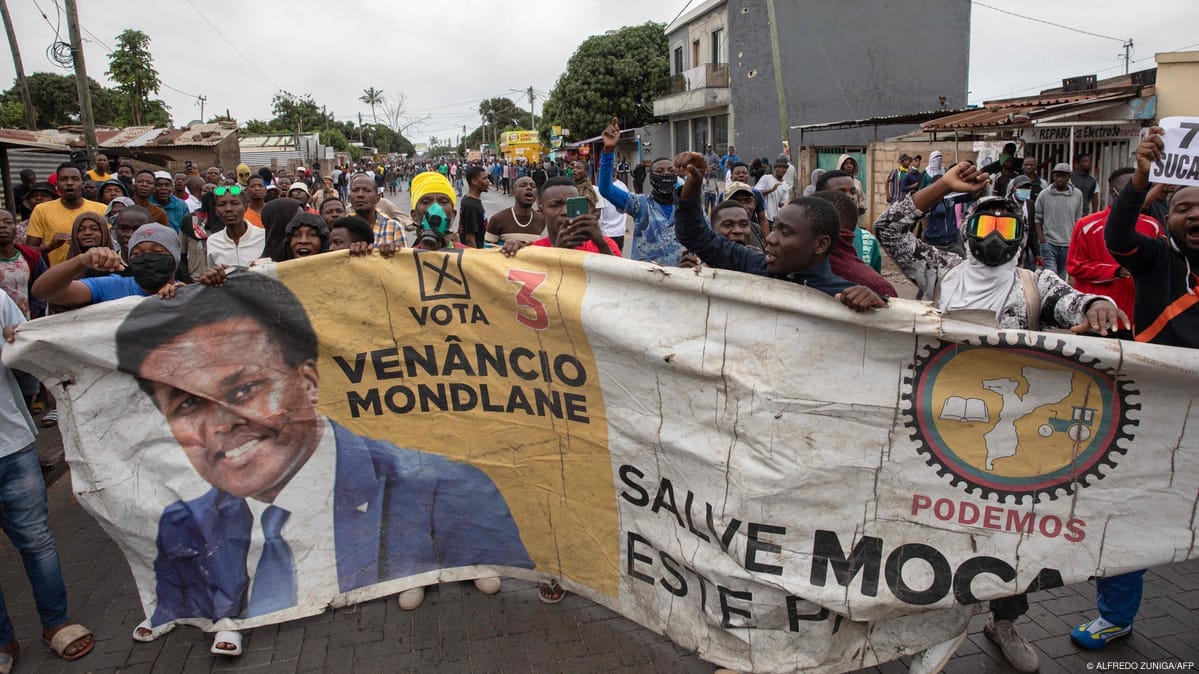
Mondlane, 52, finished second to President Daniel Chapo in the disputed October 2024 election and then led the largest popular uprising ever mounted against Frelimo, the party that has governed since independence from Portugal in 1975. Prosecutors say his online broadcasts deliberately produced the chaos that followed. Mondlane says he was demanding "electoral truth." The verdict will shape Mozambique's opposition politics ahead of local elections in 2028 and general elections in 2029, and the case comes amid a run of prosecutions of opposition leaders across southern and eastern Africa.
The Case Against Mondlane
Mondlane faces five charges: public advocacy of crime, incitement to collective disobedience, public instigation to commit a crime, instigation of terrorism and incitement to terrorism. Mozambican legal expert Vítor da Fonseca told The Associated Press that instigating terrorism, the most serious count, carries up to 24 years in prison. Mondlane denies all the charges, and his party, the National Alliance for a Free and Autonomous Mozambique, known as Anamola, calls the case political. "There is no shadow of a doubt that Mondlane's trial is purely political," party spokesperson Alberto Manhique told the AP.
Deputy Attorney General Amabélia Chuquela read the 107 points of the 44-page indictment in court on Tuesday. According to Mozambique's state news agency, AIM, the prosecution's case rests heavily on Facebook livestreams that Mondlane made during the unrest, and prosecutors gave the court USB devices containing the recordings. "The defendant acted deliberately to create disorder," the indictment says, adding that he "acted with the purpose of creating panic and terror."
Two episodes feature prominently. Prosecutors cite Mondlane's call for a national march on Maputo on Nov. 7, 2024, which he named "Victory Day" and for which he reportedly projected about 4 million participants. They say the mobilization and accompanying roadblocks disrupted traffic and essential services, including health care. They also cite a Jan. 17, 2025, Facebook announcement of what he called the "Lei de Telao," which prosecutors say told demonstrators that if Rapid Intervention Police officers killed a citizen, the officer responsible should also be killed. The prosecution characterized it as a call for reciprocal violence.
The indictment further cites an audio recording in which, prosecutors say, Mondlane discussed moving his family out of Mozambique before a mobilization that could trigger violence, which they present as evidence that he understood the risks. Other evidence includes videos, telephone intercepts and banking data.
The road concessionaire Revimo has joined the case as an assisting party, claiming losses from destroyed toll plazas and uncollected fees.

A Procedural Battle on Day One
The first session was consumed largely by procedural fights that previewed the defense's strategy. Mondlane's lawyers sought to annul the indictment, arguing that the copy served on him differed in form from the version in the court file, did not name the investigating officer and lacked the issuer's signature. They also argued that prosecutors held the case for about 130 days, depriving him of a realistic chance to request a preliminary hearing.
Chuquela countered that the objection came too late and that the file showed proper notification. The court rejected the annulment bid, Reuters reported. Prosecutors also tried to remove defense team member Chamir Mendes on the grounds that he is not recognized by the Mozambican Bar Association, but presiding Judge Luís Mondlane, who shares the defendant's surname, allowed him to remain, citing the defendant's interests.
The hearing ended about an hour early after the defense disclosed a 223-page written response that had not yet been copied for the other parties. "The indictment was presented months ago," the judge said. "There has to be responsibility on the part of lawyers." Outside the courtroom, Mondlane said the indictment "should have fallen today" and accused the court of a "gymkhana" to keep the case alive.
Wednesday's session was scheduled to begin with the reading of that response, which the Mozambican newspaper O País said was expected to take about two hours before the court could move to evidence. Accounts of the atmosphere differed: O País described a calmer day than the opening session, while Hold On Angola, citing a journalist at the scene and Mondlane's supporters, reported a heavier police presence and tighter restrictions near the court.
An Election That Never Ended
The trial's roots lie in the Oct. 9, 2024, general election. Official results gave victory to Chapo, who was sworn in the following January, but Mondlane rejected them as fraudulent. Election observers, including a European Union team, cited irregularities in counting and the alteration of some results. Frelimo denies wrongdoing.
Tensions escalated when Mondlane's lawyer and another official of the Podemos party, which had backed his candidacy, were shot dead in a car. Mondlane called the killings political assassinations and left the country for a time, saying his life was in danger. Protests, strikes and shutdowns continued until March 2025.
The human cost remains contested. The civil society platform Decide counted 411 deaths in clashes with police and about 7,200 detentions over five months. Amnesty International, citing local civic groups, has said more than 300 people were killed. Human Rights Watch alleged that security forces used live ammunition against protesters.
The case reached the Supreme Court because Mondlane, as runner-up in the presidential race, sits on the Council of State, whose members enjoy immunity. The council suspended that protection, a move Mondlane has called "null and void."
Open Court, Closed Doors
The conduct of the trial has become a dispute of its own. The court refused live broadcasts and later rejected an appeal against that ruling, and the courtroom holds only 45 people, with limited places for journalists and the public. Reuters reported that the court cited the risk of instability in banning broadcasts. Mozambique's Network of Human Rights Defenders condemned the restrictions and urged the court to publish transparent accreditation criteria and consider a larger venue.
Supreme Court spokesperson Pedro Nhatitima said the proceedings are the first in Mozambique to be recorded in audio and video with automatic transcription, a system he said should shorten the trial. The court expects to hear 12 prosecution witnesses, 20 defense witnesses, four witnesses for Revimo and two experts from the telecommunications companies Vodacom and Tmcel. Albino Forquilha, the Podemos leader and Mondlane's former ally, is expected to testify. Reuters said the trial is expected to last months. Supreme Court President Adelino Muchanga has denied any political influence, saying the court will decide according to the law.
Analysis: The Legal Question and the Political One
At the center of the case is causation. Mozambican lawyer Baltazar Fael told Deutsche Welle that the terrorism charge requires proof of a plausible link between Mondlane's words and specific acts. That is a demanding standard when the violence involved many actors, including security forces that rights groups accuse of firing live ammunition. A conviction on the terrorism counts would establish a significant precedent for political speech online; an acquittal on those counts, paired with conviction on lesser charges, could give the state a way to claim both judicial independence and a measure of accountability.
The political calculation may matter as much as the legal one. Analyst Jaibo Mucufo told the Portuguese news agency Lusa that the trial "could be a moment that might be exploited to stir up popular unrest," and described it as "a test to gauge public reaction" with elections approaching. Journalist Fernando Lima warned that "any conclusions that may arise from it will also be politicised," and linked the case directly to the coming polls: "It's all connected."
Frelimo has already moved to consolidate behind its leader, announcing last month that Chapo will be its 2029 presidential candidate, according to veteran Mozambique analyst Joseph Hanlon. Hanlon's newsletter also cited a Decide report recording 50 incidents of political violence between March and October, with 44 of those affected being members of Anamola.
Mondlane, meanwhile, is working to internationalize his cause. He announced Tuesday on Anamola's Facebook page that academics in the United States had proposed him for the 2027 Nobel Peace Prize. Observador, a Portuguese newspaper, could not confirm the claim, and the Norwegian Nobel Institute does not disclose nominees for 50 years.
The trial also fits a regional pattern. In Tanzania, opposition leader Tundu Lissu was sentenced this month to four years in prison for incitement after being acquitted of treason. In Uganda, Kizza Besigye is on trial for treason, and in Zambia the leading opposition figure faces treason charges after this year's election.
What to Watch
The immediate questions are whether the court admits the defense's challenges to Revimo's participation and how quickly it moves to witness testimony, particularly that of Forquilha and the telecommunications experts, whose evidence may bear on the link between Mondlane's broadcasts and events on the ground. Beyond the courtroom, the key variable is the street. Mondlane has so far appeared voluntarily and remained at liberty, and dozens of supporters have gathered near the court rather than thousands. Any move to detain him, or a harsh verdict, would test whether the movement of 2024 can still be summoned.
Published By | News Editor