Written By | Joshua Nahamya
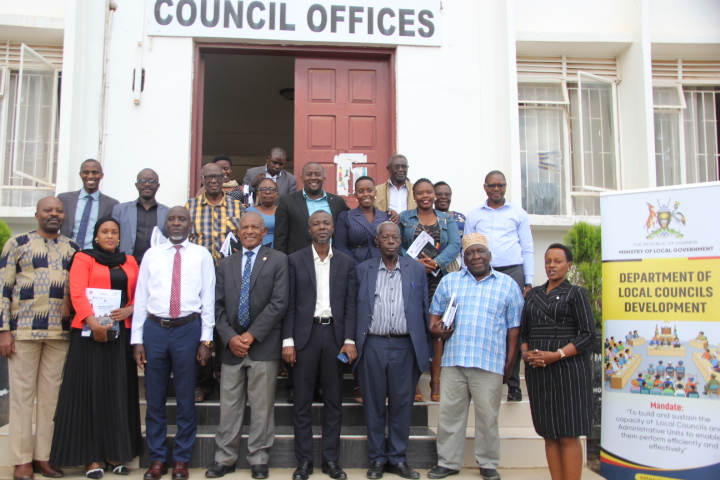
Mbarara city councilors and ministry of local government officials after the two-day induction
MBARARA CITY
Officials from the Ministry of Local Government have cautioned newly elected local government leaders against political infighting, administrative sabotage and self-enrichment, warning that personal disputes between councillors and technocrats are undermining grassroots service delivery and development across Uganda.
The warning was issued during a two-day induction exercise held at Mbarara City Hall from November 23 to 24, 2026, in partnership with Mbarara City Council.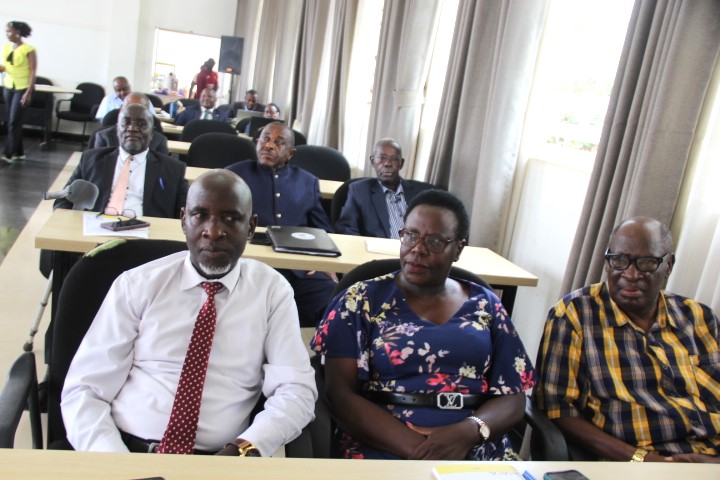
Mbarara City Councillors, sectoral bodies and technocrats attending the induction
The training forms part of the second phase of the Ministry of Local Government’s nationwide 2026/27 induction programme for newly elected local leaders serving the 2026–2031 term. It is being conducted concurrently with sessions at Bushenyi District Multipurpose Hall, Bushenyi-Ishaka Municipality headquarters and 35 other deployment stations across the Central, Western and Eastern regions.
The government-funded induction programme is anchored on the theme of strengthening good governance, accountability and legal compliance to accelerate socio-economic transformation.
Designed to address persistent friction between political leaders and civil servants, the curriculum equips councillors, speakers and statutory committee members, including members of the Public Accounts Committee (PAC) and District Service Commissions, with skills in conflict management, mindset change, patriotism, ethics and integrity, council rules of procedure, budgeting and oversight of flagship programmes such as the Parish Development Model (PDM) and Emyooga.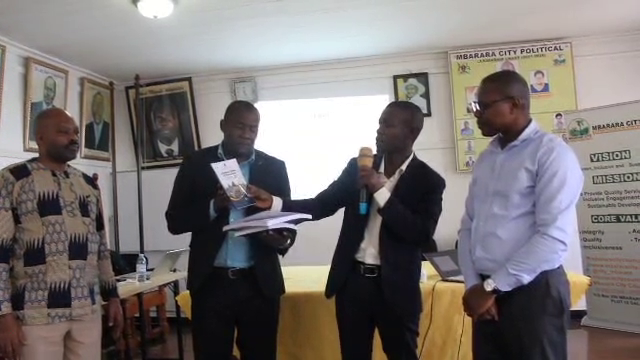
Speaker Bonny Tashobya Karutsya, receiving local government tools of equipment from the deputy RCC Gerard Tukamuhebwa
Addressing staffing bottlenecks and urban planning
Addressing participants in Mbarara, Rodgers Nayebare, Principal Inspector at the Ministry of Local Government, urged councillors to set aside personal egos and use statutory provisions under the Local Governments Act, Cap. 138, to address staffing shortages rather than wait indefinitely for central government intervention.
“For instance, if your service commission here has issues, you are legally allowed under the Local Governments Act to borrow capacity,” Nayebare explained. “An institution here can write to Isingiro District asking them to provide their service commission members to interview and recruit your staff—you do not need to seek permission from Kampala to intervene.”
Dominic Atwine, Secretary of the Mbarara City Service Commission, explained the procedure for using neighbouring district service commissions to clear recruitment backlogs.
“In regard to that, the council sits and selects one of the neighbouring districts' service commissions—in the case of Mbarara City, we can utilise Rwampara, Isingiro, Kiruhura, Ibanda, Mbarara District or Sheema,” Atwine said. “We write to the selected district, they submit a minute extract to us, and we forward it to the Public Service Commission for final approval.”
Nayebare also challenged city leaders to invest in international benchmarking for technical planners, promote urban tree planting as a climate change adaptation measure and prioritise road infrastructure in their budgets.
“If all your city physical planner knows is Mbarara and Kampala, allow them to travel to cities like Dubai or South Africa so they can see and replicate modern infrastructure—from functional street lighting to recreational facilities,” Nayebare urged. “Create an environment where technical staff gain international exposure using available resources, while planning and budgeting consistently for road upgrades and urban beautification.”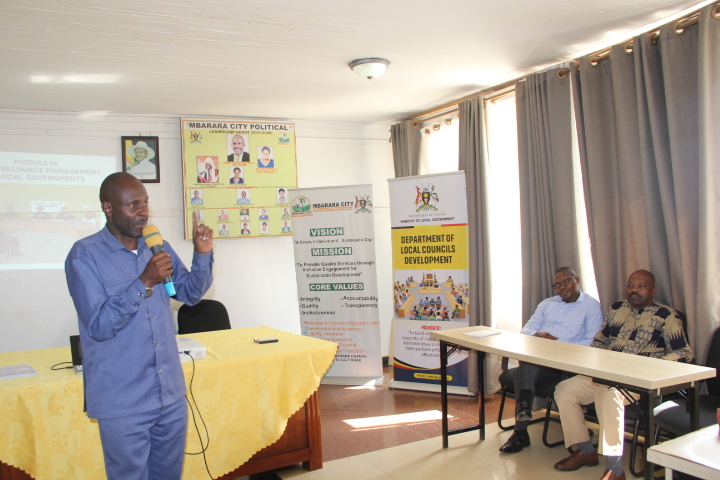
Mayor Robert Kakyebezi warning the councillors to respect council business
Mayor calls for decentralisation reforms
Mbarara City Mayor Robert Mugabe Kakyebezi welcomed the ministry's training initiative, challenging councillors and technical officers to translate the knowledge gained into tangible services for citizens.
However, he expressed concern over what he described as the gradual recentralisation of local government powers, calling for legislative reforms to restore greater autonomy to local councils.
“With this training, our main mandate as councillors, technocrats and sectoral bodies is to deliver purified, quality services to the ordinary citizen, and we must stop condemning each other,” Kakyebezi said.
“However, decentralisation today does not match what existed when the system began. Much of the authority that belongs to local councils has been taken away by external actors, leaving councils unable to execute duties mandated to them. We need to go back to the drawing table and review these gaps.”
Mbarara City Speaker Bonny Tashobya Karutsya commended the ministry for clarifying council procedures and committee mandates. He urged councillors from Mbarara City North and Mbarara City South divisions to embrace dialogue and consensus.
He also appealed to the central government to extend induction training to lower local councils (LC I, LC II and LC III) and review tax deductions on councillors' emoluments.
“Councillors, we have learned a great deal, and I have also seen areas where we can improve so that we work together for the people of Mbarara City without divisions,” Tashobya said.
“If you have an issue with a colleague, bring it to the table, discuss it and harmonise rather than carrying personal grudges into council work. I also encourage the ministry to extend these trainings to lower councils and reconsider the heavy tax deductions on councillors’ allowances.”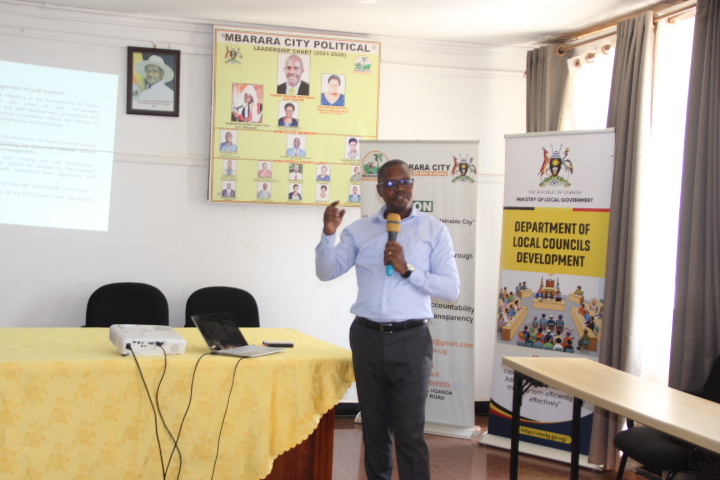
Rogers Nayebare, Principal Inspector at Ministry of Local Government inducting councillors' at Mbarara City Council
Ministry hands over governance reference materials
At the close of the induction session, Mbarara City South Deputy Resident City Commissioner (RCC) Gerald Tukamuhebwa handed over statutory governance reference materials to Speaker Tashobya.
The package included copies of the 1995 Constitution of the Republic of Uganda, the revised Local Governments Act, Cap. 138, the Revised Standard Rules of Procedure for Local Government Councils (2026) and the official Induction Manual.
“I believe that if you consistently review and consult these foundational legal documents and put them to good use, you will run your councils effectively and lawfully,” Tukamuhebwa advised.
Receiving the materials on behalf of the council, Tashobya pledged to adhere to statutory procedures in conducting council business. “As Speaker, I have received these tools of power with a firm commitment to follow the Rules of Procedure and the Local Governments Act,” Tashobya said. “I urge all councillors who have received these documents to read them thoroughly and follow the law so that we pass sound, lawful council legislation.”