Written By | International News Agencies
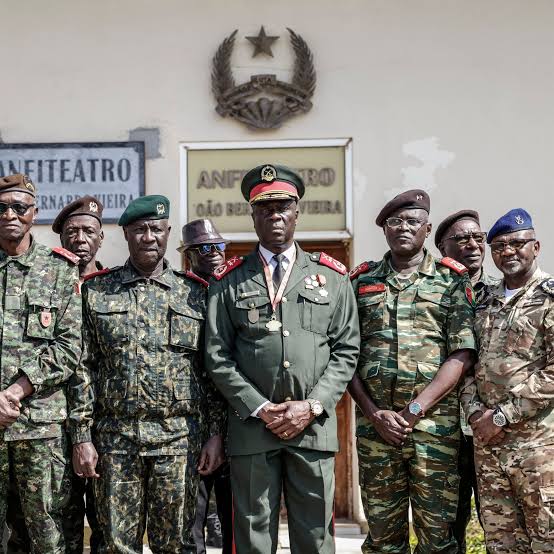
Guinea-Bissau's military rulers have postponed the country's presidential and legislative elections by nearly two years
West Africa
Guinea-Bissau's military rulers have postponed the country's presidential and legislative elections by nearly two years. The move extends a transition that was supposed to last 12 months into one that will now run for at least three. In a decree signed Thursday, transitional President Maj. Gen. Horta Inta-a moved the vote from Dec. 6, 2026, to Nov. 26, 2028. The new date falls exactly three years after the coup that brought the army to power. The decree cited "an insufficiency of the technical, material and financial conditions" needed to hold the polls, according to Al Jazeera, citing AFP and Reuters.
The decision matters beyond the small West African state of 2.2 million people. It puts Guinea-Bissau on the path already taken by Mali, Burkina Faso and Niger, where military governments promised short transitions and then extended them. Pressure from the Economic Community of West African States (ECOWAS) has repeatedly failed to stop such extensions. The postponement also comes three months after a referendum that greatly strengthened the presidency the junta will now control for two more years.
How the transition began
The crisis began with an election. On Nov. 23, 2025, Guinea-Bissau held presidential and legislative elections in which incumbent President Umaro Sissoco Embaló sought another term. The African Party for the Independence of Guinea and Cape Verde (PAIGC), the main opposition party, had been barred from the presidential race. Embaló and opposition candidate Fernando Dias both claimed victory.
On Nov. 26, 2025, the day before official results were expected, soldiers seized power. Brig. Gen. Dinis Incanha, head of the Military Office of the Presidency, announced that officers had taken "total control" of the country. The next day, a newly formed High Military Command for the Restoration of National Security and Public Order named Inta-a, then the army chief of staff, to lead a military government during a one-year transition. The results of the 2025 vote were never released. On Dec. 2, 2025, the National Electoral Commission said armed men had seized computers and destroyed tally sheets.
Embaló was detained and then allowed to leave the country, first for Senegal and later for other countries. PAIGC leader Domingos Simões Pereira was arrested and held until Jan. 30, 2026, when he was released into house arrest. Dias took refuge in the Nigerian Embassy in Bissau and left it on the same day. Both men refused offers to join the transitional government.
The junta published a Transitional Charter on Dec. 9, 2025. It barred Inta-a and Prime Minister Ilídio Vieira Té, who had served as Embaló's finance minister and campaign director, from running in future elections. In January 2026, the military set new general elections for Dec. 6, 2026. That timetable has now been abandoned.
The decree and the new timetable
The decree signed Thursday does more than move the national vote. According to the Pan-African news site Afreeque, it also schedules Guinea-Bissau's first municipal elections for 2027, so local polls will come before the presidency and the National People's Assembly are renewed. Afreeque reported that the military also cited the need for a "transparent, inclusive and credible electoral process."
The postponement had been signaled for weeks. On Oct. 8, Felisberta Moura Vaz, vice president of the National Electoral Commission, said technical conditions did not allow the original timetable to be met, Afreeque reported. The next day, Nelson Moreira, vice president of the National Transition Council, called the December vote unfeasible because of legal deadlines. In October, Prime Minister Vieira Té also said the conditions for a December election were not in place, though he offered no new date.
The government's argument rests on logistics and money. Guinea-Bissau is among the world's poorest countries, and organizing a national vote is costly. Critics note, however, that the same authorities found the resources in August to hold a nationwide constitutional referendum.
A stronger presidency, approved under boycott
On Aug. 30, voters were asked to approve a new constitution that changes the balance of power in Guinea-Bissau's political system. The National Electoral Commission announced on Sept. 1 that 70% of votes cast supported the changes. It put turnout at almost 60%. International news agencies, however, reported largely empty polling stations, and the PAIGC had called for a boycott, according to Al Jazeera.
The new charter replaces the country's semi-presidential arrangement, in which parliament chose the prime minister who ran day-to-day government. Under the new constitution, the president can appoint and dismiss the prime minister and cabinet, create and abolish ministries, and dissolve parliament under certain conditions. Parliament will shrink from 102 seats to 65, and the number of electoral constituencies will fall from 29 to 12. The military said the changes were meant to stabilize key state institutions before the December vote. Critics accused the junta of concentrating power.
Read together, the referendum and the postponement point in one direction. The office now held by a general has gained powers that previous civilian presidents lacked, and the general will hold it for at least two more years than first promised.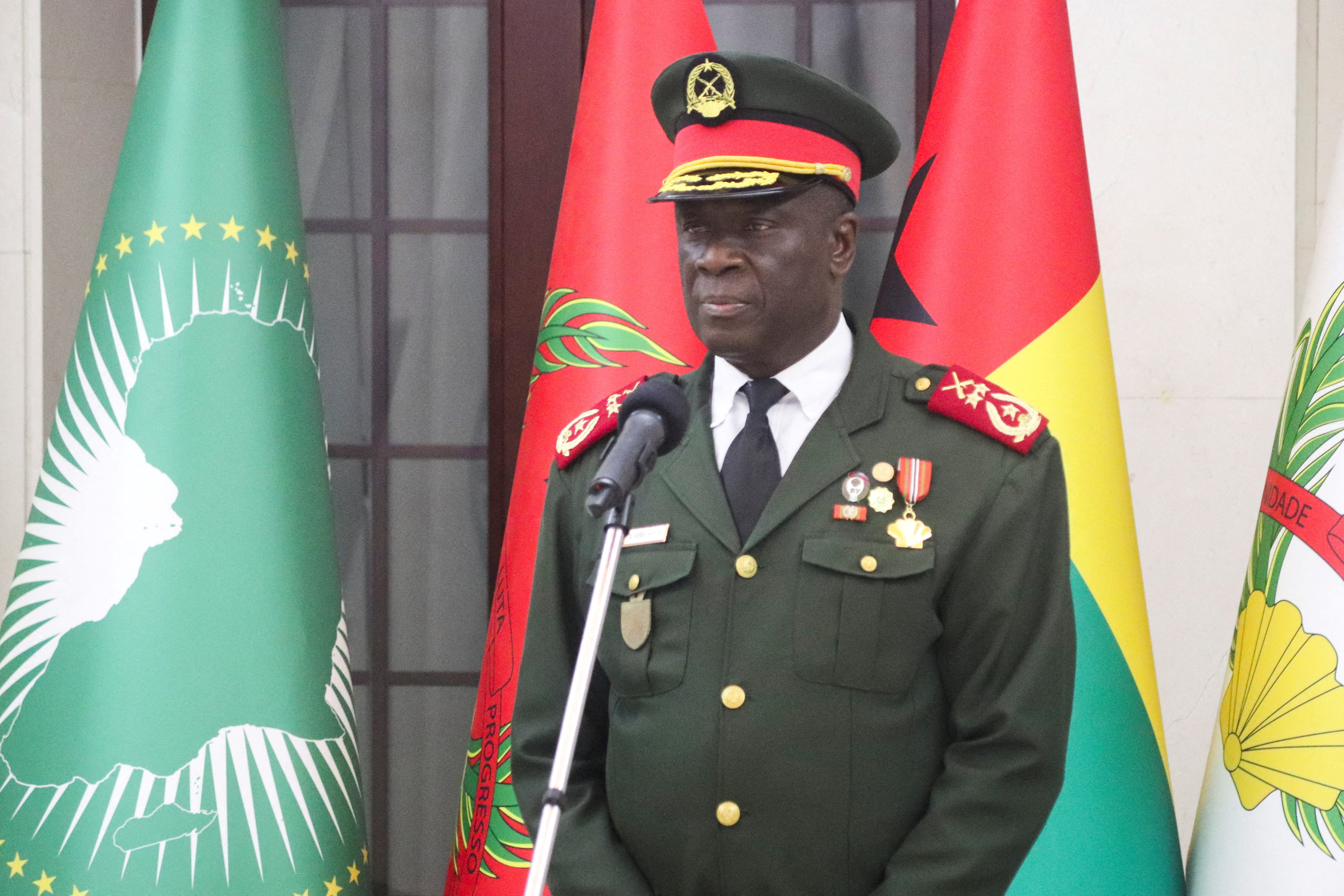
Embaló's attempted return and a crowded opposition field
The deposed president has kept himself in the conversation. On Sept. 28, Embaló, speaking from exile, announced that he would run in the December election and said he would return to Guinea-Bissau, Afreeque reported, citing his comments to RFI. On Oct. 1, the military high command blocked his return, citing security concerns and a lack of favorable conditions. Two civil society groups then called for Embaló to come back only in judicial custody to answer accusations of crimes and human rights violations. On Nov. 7, Embaló urged his supporters to reorganize and resume political activity.
Pereira, the PAIGC leader, has argued that the transition must be short. On Oct. 8, he urged a swift return to constitutional order and warned against a prolonged military transition like those in Mali, Burkina Faso and Niger, Afreeque reported. Thursday's decree is close to the outcome he warned against.
Regional response: firm words, limited leverage
ECOWAS suspended Guinea-Bissau's membership on Nov. 27, 2025, and the African Union followed a day later. At their Dec. 14, 2025, summit in Abuja, ECOWAS heads of state rejected the junta's transition program and demanded a rapid restoration of constitutional order, Benin Web TV reported. The bloc has continued to call for a short, structured and transparent return to civilian rule.
Neighboring Senegal has been especially active. In October, Dakar urged the authorities in Bissau to resume political dialogue and lift restrictions on political parties and civic groups. Senegal also said any change to the electoral schedule should come from an inclusive political agreement. On Oct. 3, 24 political figures and activists from Senegal, Cape Verde and Guinea-Bissau published an open letter urging ECOWAS to do more to restore constitutional order.
None of the coverage reviewed for this briefing reported new ECOWAS sanctions in response to Thursday's decree as of Friday. The bloc has lost leverage since 2024, when Mali, Burkina Faso and Niger announced their departure and formed their own alliance. That episode showed that a heavy-handed response can push juntas out of the regional system altogether, and that weakens the threat of sanctions against a fourth member.
Analysis: what the delay reveals
Three features of the decree stand out. The first is its timing. By choosing Nov. 26, 2028, the third anniversary of the coup, the junta has turned an emergency arrangement into a set term. That is the pattern seen elsewhere in the Sahel, where "transitions" have become extended periods of military government.
The second is the order of events. Municipal elections in 2027 would give the military a chance to test electoral machinery, and perhaps to build a local political base, before any contest for national power. They will also be held under the new constitution, which reduces parliament's weight and concentrates authority in the presidency.
The third is the question of who will be eligible to run. The Transitional Charter bars Inta-a and Vieira Té from running. But the charter was written for a one-year transition, and it is not yet clear whether its eligibility rules will survive a three-year one. In other countries in the region, military leaders who first said they would not run later did. Observers will watch closely for any move to amend the charter or reinterpret its bar.
Guinea-Bissau's history adds to the concern. The country has had repeated coups and attempted coups since independence from Portugal more than 50 years ago. It is also a transit hub for cocaine trafficking between Latin America and Europe, which analysts say has fueled its political instability. Prolonged military rule with weak oversight could deepen those problems.
What to watch
For now, the junta has given itself two more years and a stronger presidency, and the regional bodies that objected have so far issued statements rather than penalties.