Written By | Health News Agencies
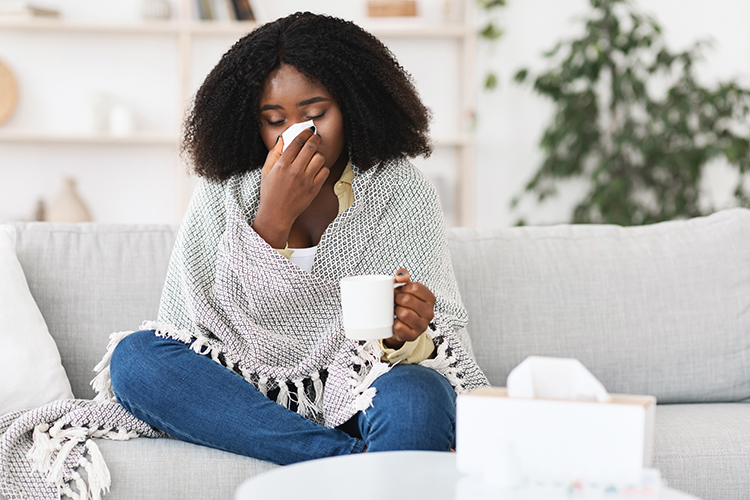
Nearly 4 million people have already been sick and 50,000 hospitalized before Thanksgiving.
HEALTH
It is not even Thanksgiving, and America's flu season is already off and running at a speed doctors have not seen in more than a decade.
New figures released by the Centers for Disease Control and Prevention on Friday, November 20, paint a stark picture. Since the season officially began on October 4, the agency estimates at least 3.7 million Americans have fallen ill with influenza. At least 50,000 have been admitted to hospital. At least 2,800 have died.
And the youngest victims are already being counted. Two more children died of flu in the latest reporting week, bringing the pediatric death toll for the 2026-27 season to seven. Both of the newest deaths were linked to the H1N1 strain that is driving this autumn's surge.
"It's taking off and it's taking off in a direction that's only likely to increase in the next month or two," Dr. Fred Lopez, an infectious disease specialist at LSU Health Sciences Center in New Orleans, told the Associated Press.
With tens of millions of people preparing to travel and pack into crowded family homes for the holidays, health officials are sounding the alarm: if you have not had your flu shot yet, now is the time.
The Numbers That Have Doctors Worried
The CDC's weekly FluView report, covering the week that ended November 14, shows virtually every warning light flashing at once.
Roughly 11.8 percent of flu tests run by clinical laboratories came back positive that week, up from about 11 percent the week before. In raw numbers, 7,269 of 61,838 specimens tested positive.
Visits to doctors' offices for flu-like illness hit 3.8 percent of all visits, above the national baseline of 2.9 percent for the second week running. Flu-like illness rose in every region of the country except New England.
Hospitals are feeling it most. Hospitals reporting to the CDC's national network logged 11,734 laboratory-confirmed flu admissions in a single week. In the agency's FluSurv-NET system, which tracks hospitalizations across 14 states covering about a tenth of the U.S. population, the cumulative rate reached 12 hospitalizations per 100,000 people. According to the CDC, that is the highest rate recorded at this point in the season since the 2010-11 flu year.
The number of jurisdictions with "very high" or "high" flu activity also jumped. Two were rated very high and nine rated high in the latest week, up from one and seven the week before. Meanwhile, the number of places with only "minimal" activity fell from 23 to 17.
Where It's Hitting Hardest
The early wave has slammed the South and the West first. In the CDC's update released November 13, Louisiana was the only state in the "very high" category. South Carolina, Texas, California, Tennessee, Oregon and Washington were all rated high.
Colorado offers a striking snapshot of how far ahead of schedule this season is. State health data reported by Medical Daily showed 157 flu hospitalizations in the week ending November 14. In the same week last year, the state saw just 44. Since October 4, Colorado has recorded 689 flu hospitalizations, compared with only 107 at this point last season.
That matters because last season was already brutal in Colorado. The state logged 5,931 flu hospitalizations in 2025-26, including a record 1,169 children, and eight children died.
Nationally, the 2025-26 season ended with an estimated 32 million illnesses, 380,000 hospitalizations and 24,000 deaths, according to the CDC's spring estimate. Pediatric flu deaths that season totalled 204.
Meet the Culprit: H1N1 Is Back in Charge
Unlike some recent years, when the H3N2 strain led the charge, this season belongs to H1N1, the descendant of the virus that sparked the 2009 swine flu pandemic.
In public health laboratories, 96.4 percent of the influenza A viruses that were subtyped in the latest week were H1N1. Since the season began in October, H1N1 accounts for 98.3 percent of subtyped flu A samples. Influenza A as a whole made up 99.2 percent of all positive tests in commercial labs.
Genetic sequencing shows the H1N1 viruses belong mostly to a family the CDC calls "subclade E," including its offshoots E.1 and E.3. The smaller number of H3N2 viruses detected are mostly from subclade K, the lineage that caused alarm in parts of the world last year. Still, the CDC is careful not to declare a final winner. "It is too early to know what viruses may predominate," the agency said in its weekly report.
Good News: The Vaccine Looks Like a Match
Here is the reassuring part. Lab testing so far suggests this year's flu shot is well matched to what is circulating.
Of 182 H1N1 viruses tested against the vaccine's reference strain, 170, or 93.4 percent, were well recognized. Every one of the 38 H3N2 viruses and all 38 B/Victoria viruses tested were well matched to their vaccine counterparts.
This year's Northern Hemisphere vaccines are built around three strains: an A/Missouri/11/2025-like H1N1 virus, an A/Darwin/1415/2025-like H3N2 virus and a B/Pennsylvania/14/2025-like B/Victoria virus.
"Almost all the influenza viruses" tested are antigenically similar to the vaccine reference viruses, the CDC said, though it cautioned that it is too early to know how effective the vaccine will prove over the full season.
Andrew Pekosz, an immunologist at Johns Hopkins, told the AP that the vaccine "can recognize" the circulating virus and that "right now there is no cause for concern."
Antiviral drugs are holding up too. Only eight of 781 viruses tested, about 1 percent, showed reduced response to oseltamivir, the drug best known as Tamiflu. No resistance was found to peramivir, zanamivir or baloxavir.
Why Is Flu So Early This Year?
Experts are still working out exactly why this season arrived ahead of schedule. Dr. Anna Durbin of Johns Hopkins University noted that flu hospitalization rates in mid-October were the highest seen that early in an autumn in more than 15 years, according to the AP.
The CDC, however, has urged people not to panic about what that means for the rest of the winter. "An earlier increase in activity does not necessarily lead to a higher seasonal peak or greater severity overall," the agency said. Its preliminary assessment rates the season's severity so far as low across all age groups.
But an early start still means more weeks of spread before the typical January and February peak, and the CDC's own forecasters expect things to get worse before they get better. The agency's FluSight models predict between 9,200 and 36,100 new flu hospital admissions in the week ending November 28, the week of Thanksgiving, with a "likely increase nationally."
Who's Most at Risk
Seniors are bearing the heaviest load. In the FluSurv-NET data, adults aged 65 and older had a cumulative hospitalization rate of 38.1 per 100,000, roughly three times the rate in any other age group.
Adults aged 50 to 64 came next at 12.8 per 100,000, followed closely by the littlest patients: children under five, at 11.8 per 100,000. Older children aged five to 17 and adults aged 18 to 49 had the lowest rates, at 4.2 and 3.9 per 100,000 respectively.
That pattern is why doctors are pleading with families to protect grandparents and babies before holiday gatherings.
"As we prepare to gather with family and friends over the upcoming holidays, getting vaccinated is especially important," said Dr. Nicole Iovine, a University of Florida-affiliated infectious disease specialist.
A Bird Flu Footnote
The CDC's latest report also logged one new confirmed human case of H5 avian influenza, in an Oregon dairy worker who developed conjunctivitis, or pink eye. That brings the number of H5 cases among U.S. dairy workers in 2026 to four.
Officials stress there is no sign of the bird virus spreading from person to person. "To date, human-to-human transmission of avian influenza A(H5) virus has not been identified in the United States," the agency said. Seasonal flu, not bird flu, is what is filling hospital beds right now.
Expert Perspective
Infectious disease doctors are united on one message: the early start is a reason to act, not to despair.
"If you haven't been vaccinated, you should get vaccinated now," Dr. Lopez told the AP.
Dr. Michelle Barron of UCHealth in Colorado, where hospital admissions have tripled compared with last year, was equally direct: "The flu shot is safe and effective."
It takes about two weeks after vaccination for the body to build full protection, which means a shot this weekend could still offer meaningful coverage by early December, as holiday parties, school concerts and Christmas travel ramp up.
The CDC also emphasizes that flu antivirals "should be started as early as possible and are especially important for patients at higher risk for influenza complications." Doctors say the drugs work best when started within about 48 hours of symptoms.
What This Means for You
Get vaccinated now. The CDC recommends a flu vaccine every year for everyone six months and older. Pharmacies, doctors' offices and many workplaces still have supplies, and lab data suggest this year's shot is a good match.
Know the signs. Flu typically hits suddenly, with fever, chills, body aches, cough, sore throat and exhaustion. It is usually more abrupt and more severe than a common cold.
Act fast if you get sick. If you are over 65, pregnant, have a chronic condition such as asthma, diabetes or heart disease, or are caring for a young child who falls ill, call a doctor quickly. Antivirals are most effective in the first two days.
Protect the vulnerable. If you are feeling unwell, consider skipping the visit to elderly relatives or a newborn. Wash hands often, cover coughs and stay home when sick.
Watch for emergencies. Trouble breathing, chest pain, confusion, persistent high fever, or a child who is unusually drowsy or dehydrated all require urgent medical attention.
The Bottom Line
The 2026-27 flu season has arrived weeks ahead of the usual calendar, and it has come in swinging. Nearly four million illnesses, 50,000 hospitalizations, 2,800 deaths and seven children lost, all before the turkey is carved.
The silver lining is that the tools to fight back are already on the shelf. The vaccine appears well matched. The antivirals still work. And there is still time, though not much, to get protected before the holiday rush.
As Dr. Lopez put it, this season is only likely to grow in the next month or two. The question for every American is whether they will be ready when it reaches their front door.