Written By | International News Agencies
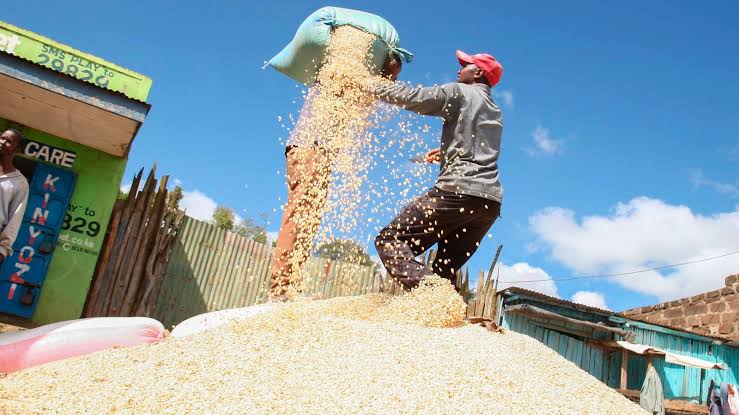
As Presidents Museveni and Samia Suluhu Hassan pledge to tear down trade barriers, Uganda's rice growers are being told, in effect, to compete or quit
Feature | Markets & Trade
A line drawn at State House
When Tanzanian President Samia Suluhu Hassan sat down with President Yoweri Museveni at State House, Entebbe, on Wednesday, 18 November, the agenda was dominated by big infrastructure: the East African Crude Oil Pipeline, now reported to be 93.9 per cent complete, a Standard Gauge Railway framework, and a 400kV power interconnector linking Masaka, Mutukula and Mwanza. Yet one of the most consequential remarks for Ugandan farmers concerned a humble kitchen staple.
Museveni told his guest that he had turned down calls to block imports of Tanzanian rice because it was, in his words as reported by Nile Post and The Informer, "cheaper and better." He warned that restricting Tanzanian farmers could invite retaliation against Ugandan products. The two leaders agreed to form a Tanzania-Uganda Joint Trade Committee to tackle non-tariff barriers.
For consumers in Kampala, the message is reassuring: the government is not about to choke off the cheapest source of a food they eat every day. For paddy farmers in Butaleja, Bugiri, Lira and the West Nile lowlands, it is a blunt restatement of policy. There will be no protective wall. If they are to hold their ground, it will have to be on price and quality.
How dependent Uganda has become
The scale of Uganda's reliance on its southern neighbour is striking. World Bank trade data cited by the Daily Monitor show Uganda imported 344.9 million kilograms of rice worth US$146 million in 2022, of which 335.4 million kilograms, worth US$140.9 million, came from Tanzania. In 2023 total imports eased to 242 million kilograms worth US$125 million, but Tanzania still supplied 232.2 million kilograms, or roughly 96 per cent of the total.
Estimates of local production and demand vary widely, which is itself part of the problem. The Rice Business Sector Association has put annual national demand at about 470,000 tonnes and the deficit at around 240,000 tonnes. A 2022 SEATINI Uganda paper, cited by New Vision, estimated demand at roughly 680,000 tonnes against about 350,000 tonnes of local output in 2021. Whichever figure is closer to the truth, Uganda consumes far more rice than it grows, and the shortfall is filled overwhelmingly from Tanzania. Tanzania, for its part, produces about 3.7 million tonnes a year, second only to Nigeria in Africa, according to the same Monitor analysis.
More broadly, URA's 2024/25 Annual Databook ranks Tanzania as Uganda's largest single import source, with goods worth Shs12.46 trillion, ahead of China, India, Kenya and the UAE, The Independent reported in August.
The farm-gate squeeze
Ugandan growers have complained for years that cheap imports drag down what they are paid. During campaign rallies in Butaleja in October 2025, farmers told New Vision that imports from Tanzania and Pakistan had pushed farm-gate prices down to Shs1,500 to Shs1,800 per kilo, from Shs2,000 to Shs2,500 previously, even as the same rice could retail in shops for up to Shs6,000. "We are losing our livelihoods because our rice can't compete with foreign products," Butaleja farmer Fred Hapule said at the time. Growers also cited flooding, poor feeder roads and the costs of a wetland cultivation ban.
The wide gap between farm-gate and shelf prices tells its own story. It suggests the problem is not only Tanzanian competition but a domestic value chain that loses a great deal between the paddy field and the shop: weak milling, poor grading, small and scattered volumes, and post-harvest losses that the Monitor's analysis put at an estimated 30 to 40 per cent.
Global benchmarks underline how tough the competitive environment is. World Bank data compiled by Selina Wamucii put Thai 5 per cent broken rice at about US$0.44 per kilo in May 2026 and Vietnamese 5 per cent at US$0.38, while Uganda's own rice export unit value was recorded at US$0.77 per kilo. Ugandan rice, in other words, is not cheap by regional or global standards.
Why the President will not budge
Museveni's position is not new. He has repeatedly said he would not ban cheap Tanzanian rice, and the reasoning laid out in the Monitor's analysis remains the same: taxing or blocking imports would shield inefficient producers, raise food costs for consumers, and risk Tanzanian retaliation against Ugandan exports that matter far more to the national economy, notably coffee and milk. Dr Paddy Mugambe of the Uganda Management Institute noted that reduced EAC tariffs make imports from neighbours structurally cheaper.
The timing makes the consumer argument especially weighty. Food prices have been climbing after a prolonged dry spell; the Uganda Bureau of Statistics reported food crop inflation of 10.7 per cent in October 2026, up from 4.5 per cent in September, and the Daily Monitor reported on 29 October that beans and maize, once among the cheapest foods, were no longer so after four months of drought withered crops. Restricting the supply of a substitute staple in that climate would be politically and economically costly.
There is also the regional dimension. The two leaders stressed resolving non-tariff barriers through dialogue and EAC mechanisms, recalling an EAC directive that such barriers be resolved by 30 June 2026. A unilateral rice ban would sit awkwardly against a summit devoted to dismantling exactly such obstacles.
The import side has its own problems
Ironically, the most disruptive interference with the rice trade this year came from Kampala, not Dodoma. In August 2026, the Kampala Rice Traders Association accused the Ministry of Trade, Industry and Cooperatives of restricting import permits to 25 companies, after initially approving 20, while more than 200 established importers were shut out. Trucks carrying Tanzanian rice were stranded at the Mutukula border from 27 July, some cargo began to spoil, and traders said warehouse stocks ran low and prices rose.
Trader Constantine Kasolo alleged that permit holders were charging other importers up to Shs180,000 per tonne for access, and association chairman Livingstone Ssenyonga told The Independent that "what we oppose is a system where permits are issued to brokers instead of genuine importers." The ministry's spokesperson, Khadija Nakakande, said officials had been sent to Mutukula and that an official position would follow.
The episode matters for farmers because it shows how a poorly designed control can raise consumer prices without delivering anything to producers. Permit rents flow to intermediaries, not to paddy growers in Butaleja. Museveni's latest remarks suggest the political tide is running against using import controls as industrial policy, which puts the burden squarely on making local rice more competitive.
What competing would actually require
There are pockets of evidence that Ugandan yields can rise sharply with better practice. In West Nile, a Japan-funded project working with refugees and host communities has introduced improved NERICA varieties, with participating farmers reporting large gains, as the Daily Monitor and Nile Post reported in October. In Lira, the Itek-Okile Rice Growers Cooperative has been adopting line planting and bunding with Japanese volunteer support around the Olweny irrigation scheme.
Scaling such gains is the policy challenge. Analysts point to several levers: certified seed of high-yielding, aromatic varieties that urban consumers prefer; reliable water through lowland irrigation schemes rather than rain-fed planting; collective milling, cleaning and grading at cooperative level so that Ugandan rice reaches shelves at a quality comparable to Tanzanian grades; and storage that cuts the 30 to 40 per cent post-harvest losses. The MV Mwanza cargo vessel announced at the summit for the Mwanza-Port Bell route, and the Joint Trade Committee, could, in principle, also open the Tanzanian market wider for Ugandan goods in which Uganda does hold an edge.
Implications
For farmers, the State House remarks are a signal to stop waiting for protection. Growers who can join cooperatives that mill and grade, and who can access irrigation and better seed, may find a niche in quality local rice. Those producing small volumes of mixed-quality paddy on rain-fed plots will remain price-takers against a neighbour that grows about ten times as much.
For consumers and the wider economy, open rice trade is a buffer against food inflation at a time when the weak shilling and drought are pushing prices up, and it protects goodwill for Uganda's far larger exports to Tanzania. The cost is borne mainly by marginal rice farmers, and it is there that the government's response, through extension, irrigation and value-addition support, will be tested. The new Joint Trade Committee will also need to show that "removing barriers" works in both directions, including on the opaque import permit system that traders say has enriched brokers rather than anyone who grows or eats rice.