Written By | Staff Writer
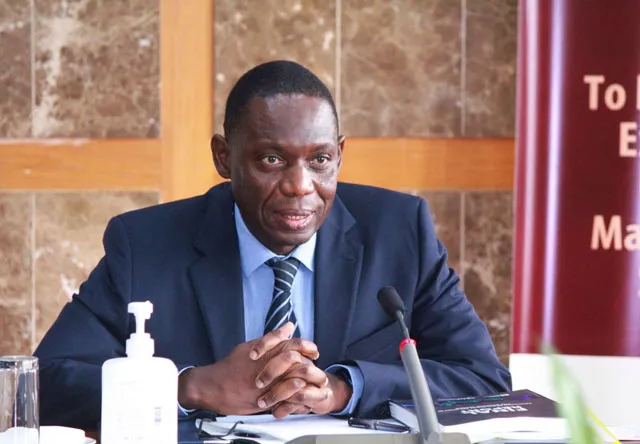
Governor Michael Atingi-Ego, reading the November Monetary Policy Statement, said the inflation outlook had deteriorated since the previous meeting, prompting upward revisions
BUSINESS & ECONOMY
The Bank of Uganda (BoU) kept its Central Bank Rate (CBR) unchanged at 12 percent on Monday, November 9, choosing to let an emergency hike from last month work through the economy rather than squeeze borrowers further. But the pause came with a stark message: the bank now expects headline inflation to rise to between 7.5 and 8 percent over the next 12 months, well above its 5 percent target.
Governor Michael Atingi-Ego, reading the November Monetary Policy Statement, said the inflation outlook had deteriorated since the previous meeting, prompting upward revisions. Future decisions, he said, would depend on incoming data, the evolving inflation outlook and the balance of risks.
What the bank decided
Beyond holding the headline rate, the BoU made several technical changes that tighten its operating framework. It widened the CBR corridor from plus or minus 2 percentage points to plus or minus 3, giving it more room to manage liquidity in the money market. It also raised the rediscount rate to 16 percent and the bank rate to 17 percent, set at margins of 4 and 5 percentage points above the CBR respectively. These are the rates at which commercial banks borrow from the central bank, and lifting them makes emergency liquidity more expensive.
The Daily Monitor summarised the effect two days later under the headline that the central bank had tightened rules to shield the shilling, telling readers to "brace for a money shortage" as tighter conditions slow spending, raise borrowing costs and constrain credit.
How we got here
The hold follows an extraordinary October. On October 14, at a special meeting originally scheduled for November, the BoU raised the CBR by 225 basis points, from 9.75 to 12 percent. It was the first change since October 2024, the largest single increase since October 2011, and took the policy rate to its highest level since December 2016. The governor addressed reporters by video from Thailand, where he was attending IMF and World Bank meetings, saying the move was needed to "keep a lid on inflation."
The trigger was the shilling. Before the hike it had fallen about 12 percent against the dollar since the start of the year, setting repeated record lows, and in late October it plunged beyond Shs4,500 to the dollar before recovering to around Shs4,040–4,050. Reporting by Reuters, carried by BusinessDay, attributed the slide to several pressures at once: high global oil prices linked to the conflict involving Iran, which raised demand for dollars in a net fuel-importing country; portfolio investors pulling out of Ugandan securities after the US Federal Reserve raised its own rate; weak exports and a large trade deficit; and disrupted remittances from the Middle East alongside lower tourism receipts after Ebola cases in May and June.
Inflation is already rising
The data have moved in the direction the bank feared. Headline inflation rose from 4.1 percent in August to 4.6 percent in September and 5.8 percent in October, its highest level in more than three years. Core inflation, which strips out volatile food and energy prices, climbed to 4.4 percent in October from 3.7 percent in September.
The bank's new projections, core inflation averaging 6 to 6.5 percent and headline 7.5 to 8 percent over the coming year, are higher than the forecasts it published in October (7 to 7.5 percent headline and 5.5 to 6 percent core). The risks it named include further shilling depreciation, which raises the cost of imports, fuel and production inputs; elevated international oil prices feeding into transport, manufacturing and food; adverse weather; and developments in the Middle East.
Business is feeling the squeeze
For firms, the tightening is already showing up in loan statements. Absa raised its shilling prime rate from 19.5 to 21.75 percent from November 1; DFCU announced a rise from 20 to 22 percent, and Stanbic a similar increase, both effective December 1. Lending rates at major banks now exceed 21 percent.
Ahead of the decision, Uganda Manufacturers Association chairman Aga Sekalala Jr urged a hold, saying higher prime rates had pushed up repayments and that some manufacturers had shelved borrowing plans. "Another hike now would only squeeze manufacturers harder when the economy is already slowing," he said. Makerere University Business School economist Dr Fred Muhumuza argued that the October move needed time to work, and that the economy had little capacity to absorb another shock. Not everyone expected a pause: Stephen Kaboyo of Alpha Capital Partners had predicted a further rise to anchor inflation expectations, warning that the shilling remains vulnerable to energy prices, US interest rates and dollar strength.
Survey data confirm the mood. Uganda's Business Tendency Index fell to 53.5 in October from 56.7 in September, its lowest reading since February 2023, according to figures reported by Trading Economics. Firms reported weaker current business conditions, employment, financial positions and demand, and access to credit slipped to 38.9, deep in negative territory. Average selling prices was one of the few indicators to rise, consistent with cost pressures being passed on to customers. Confidence fell in construction, wholesale trade, financial services and manufacturing, with only agriculture improving.
Growth: short-term pain, long-term hopes
In October the bank cut its 2026/27 growth forecast to 6–6.5 percent, from 7–7.5 percent. Its medium-term view remains upbeat: growth is projected to strengthen to an average of around 8 percent over the next five years, driven by private investment, stronger exports, expected oil-sector developments and the government's Tenfold Growth Strategy. The governor described medium-term macroeconomic stability as "the bedrock" of that strategy.
The fiscal backdrop adds pressure. Fitch has estimated that roughly one-third of government revenue goes to interest payments on debt, and Uganda's 10-year borrowing rate rose to 17 percent after the October hike, a sign that markets were pricing in tighter conditions for longer.
Why it matters
The BoU is trying to defend the shilling and stop a fuel and exchange-rate shock from becoming entrenched in wages, rents and prices. The cost is expensive credit at a time when firms are already gloomy. Small and medium enterprises, which provide most of Uganda's jobs, are particularly exposed through weaker cash flow, postponed investment and a higher risk of loan arrears. Households face rising fuel, food and transport costs.
What to watch
The key indicators in the coming weeks are the November inflation print, the shilling's ability to hold near Shs4,000–4,100, the path of global oil prices, and whether more banks follow Absa, Stanbic and DFCU in repricing loans. The bank has kept the door open in both directions: a renewed slide in the currency or an inflation surprise could bring another hike, while easing energy prices could give it room to hold through the first months of 2027.