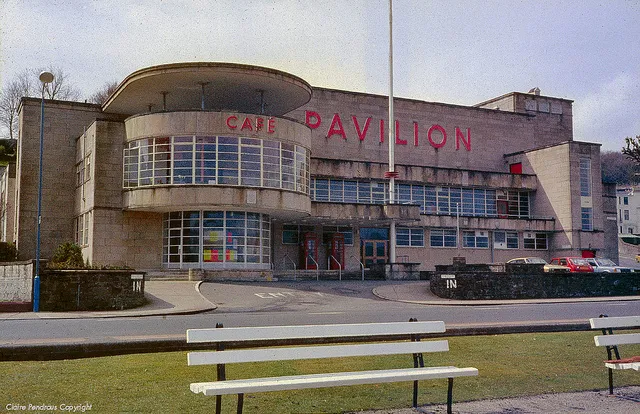
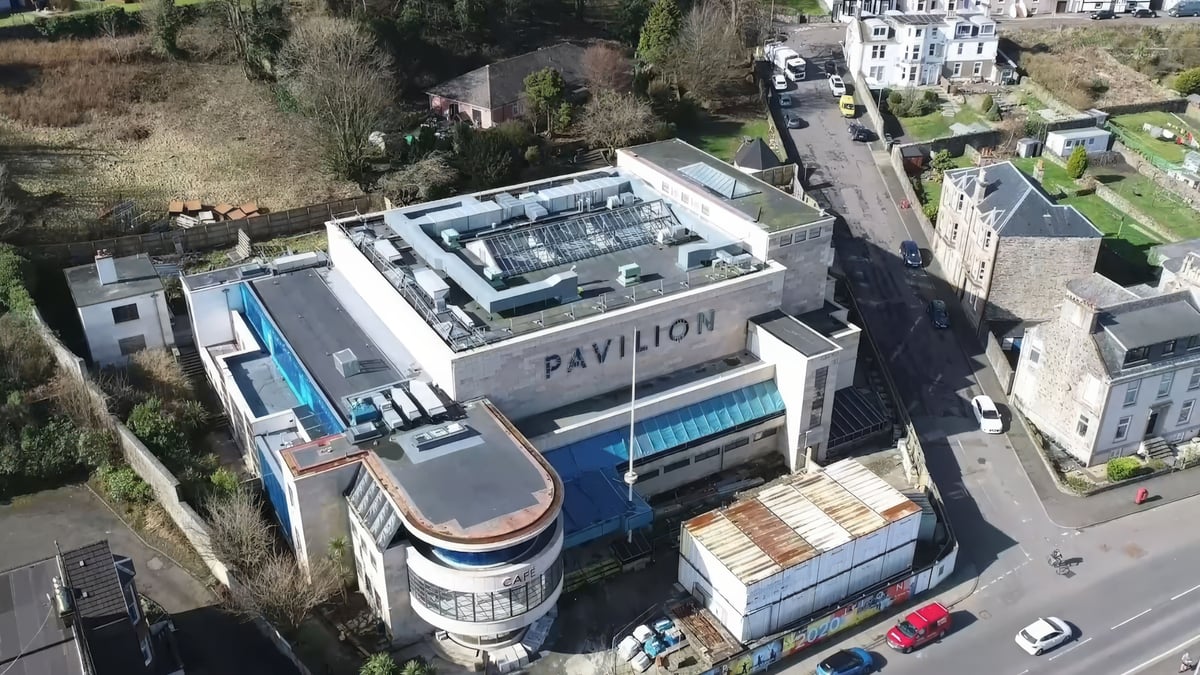
Studio Octopi's restoration of the 1930s tea pavilion at Tarlair, on the Aberdeenshire coast, has made the three-project shortlist for the RIAS Andrew Doolan Award. The winner will be named on November 26.
MACDUFF, Scotland
At the foot of a sea cliff just outside the fishing town of Macduff, a modest Art Deco building has come back to life. The tea pavilion at Tarlair Outdoor Pool, closed and decaying for decades, has been restored by London-based Studio Octopi. Featured by Dezeen on November 13, the project is now one of three contenders for the 2026 RIAS Andrew Doolan Best Building in Scotland Award, the country's top architecture prize.
It is an underdog story in more ways than one. The other two finalists are a major university project and a civic library. Tarlair is a small seaside pavilion, saved largely because local residents refused to let it go.
A Lido Carved Into the Coast
Tarlair was commissioned by Macduff Burgh Council in 1929 and opened in 1931, designed by the burgh surveyor John C. Miller. Built into the rocks, the complex included a main swimming pool, a boating pool and paddling pools, filled with seawater and refreshed by the tide, along with a tea-room pavilion overlooking the water. For decades it was where people in the north-east of Scotland spent their summers. From 1985 to 1994 it even hosted open-air concerts by acts including Jethro Tull, Runrig and Wet Wet Wet.
The pools closed in the mid-1990s and the site began to decline. Historic Environment Scotland, which listed it at Category A in 2007, calls it "the best example of only three surviving outdoor seaside pools in Scotland." Even so, its future was uncertain. A 2010 plan to turn it into a lobster hatchery was never carried out, and a 2013 proposal to fill in the pool was rejected.

A Community That Would Not Let Go
The turnaround began with local people. A Save Tarlair group formed after a public meeting in 2012, and the Friends of Tarlair Community Group followed. Aberdeenshire Council appointed conservation architect John Addison in 2013 to restore the boating pool and terraces, and in 2020 the community group took a 99-year lease on the pavilion. Studio Octopi was appointed in 2021 to lead the pavilion's restoration, working with Heritage Architecture, and in 2025 was brought on for the final phase covering the pools themselves.
The pavilion phase cost about £1.2 million, according to The Architects' Journal, as cited in coverage of the project. The building now houses a community workshop, an event space, a café and toilets, giving the site a year-round role before the pools reopen.
Green Marble and Gorse Yellow
The restoration is both faithful and practical. On the outside, the pavilion is now clad in green marble, chosen to stand up better to the harsh coastal weather. Its color, according to the Scottish Design Awards, was linked to paint samples found on the original railings and echoes the gorse and granite around the site. Inside, the team restored cream-painted concrete, peppermint-green metalwork, softwood floors and replica paneling, while joinery in the community workshop is finished in a gorse-flower yellow.
A 1970s extension was removed and replaced with a new addition inspired by Art Deco design. The roof terrace has reopened, with a glazed balustrade installed alongside the restored period railings to meet modern safety rules.
The less visible work may matter most. The original building had no insulation. The walls are now lined with cork board and lime plaster, cutting their U-value, a measure of heat loss, from 1.98 to 0.22 W/m²K, according to the Scottish Design Awards. That is the kind of upgrade that makes an old building usable all year rather than a summer-only curiosity.
"We wanted to pay homage to the art deco period with which the building was originally conceived in," said Studio Octopi director James Lowe.
The Competition
Tarlair faces strong rivals. The 2026 shortlist also includes Bennetts Associates' Edinburgh Futures Institute, a restoration and remodelling of a Category A-listed Victorian hospital for the University of Edinburgh, and Collective Architecture's Paisley Central Library, which converted a structurally upgraded historic building into Renfrewshire Council's main library.
All three are reuse projects, a fact the judges clearly noticed. RIAS president Libby Heathcote said the shortlisted projects "tap into important, current conversations around community, collaboration, retrofit and reuse," adding that they are "testament to the quality, innovation, and rich diversity of building design in Scotland." Of Tarlair specifically, the judges called it "a magical project, a phenomenal client, a fantastic collaboration," showing how "sensitive design can revive a historic site while embracing contemporary use."
Why It Matters Beyond Scotland
Tarlair is part of a broader revival of interest in lidos and seaside architecture across Britain, as towns rediscover the social and economic value of outdoor swimming. It also reflects a shift in what architecture prizes celebrate. A shortlist made up entirely of restored and reused buildings sends a clear message that the greenest building is often the one already standing, and that careful work on modest buildings can matter as much as headline-grabbing new projects.
The work is not finished. The pools have not yet been restored, and the site remains on the Buildings at Risk register. The boating pool stays landlocked until the main pool and its tidal refill system are repaired. The restored pavilion is the first visible proof that the larger goal is achievable.
What This Means for You
If you are planning a trip to north-east Scotland, Tarlair's pavilion is now open as a café and community venue, a reason to visit the rugged Moray Firth coastline beyond the usual whisky and castle routes. For homeowners and designers, the project offers useful lessons: choose materials based on local conditions and history, as with the marble's color taken from old paint samples, and remember that natural insulation like cork and lime can make an old building comfortable without stripping its character.
The Bottom Line
Whether or not it wins on November 26, Tarlair has already achieved something rare. A building many had written off has a new purpose, thanks to a community that refused to give up and a design team that treated a small seaside pavilion with real care. In a year when Scotland's architecture prize is all about reuse, this little Art Deco tearoom by the sea may be the clearest example of the idea.
Sources
Dezeen, "Studio Octopi revives art deco pavilion and lido on Scottish coast" (November 13, 2026); Free York summary of the project, citing The Architects' Journal and the Scottish Design Awards; Project Scotland and the Northern Scot on the 2026 RIAS Andrew Doolan shortlist and judges' comments; Wikipedia's Tarlair Swimming Pool entry for historical background. The Dezeen article itself could not be accessed directly; details were confirmed through the secondary sources listed.
Published By | Features Editor