Written By | Staff Writer
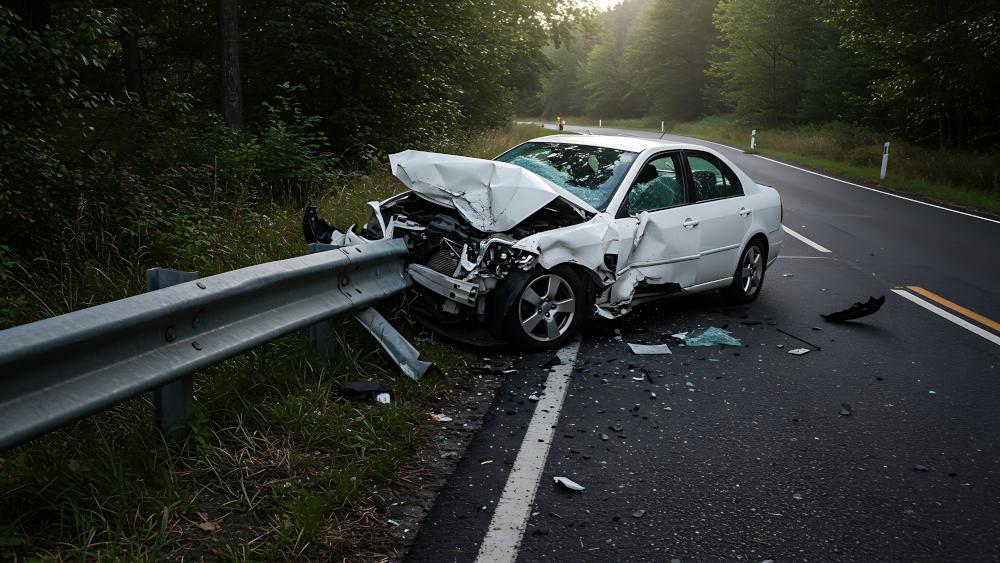
As global road deaths fall, Africa's are still rising. From Accra to Kampala to Casablanca, the cost is showing up in hospital wards, insurance pools and GDP
In July 2026 the World Health Organization published figures that should have been good news. Road traffic deaths worldwide fell by about 21 per cent between 2011 and 2025, to an estimated 1.16 million a year, even though more than a billion motor vehicles were added to the world's roads over the same period. The same week, the UN General Assembly adopted a political declaration recommitting countries to halve road deaths and serious injuries by 2030 against 2021 levels.
Africa was the exception. WHO's regional breakdown showed deaths falling 36 per cent in Europe, 15 per cent in the Western Pacific and 2 per cent in South-East Asia, flat in the Americas, and up 17 per cent across the WHO African Region. The region already had the world's highest fatality rate, about 19.4 deaths per 100,000 people, with roughly 15 per cent of the world's population but only around 3 per cent of its vehicles. A 2025 Africa status report from the World Bank's Global Road Safety Facility and SSATP put the continent's toll at about 259,600 deaths a year, close to a quarter of the global total.
This is usually told as a public-health story, and it is one. Road injuries are the leading cause of death worldwide for people aged 5 to 29. But in Africa the numbers are becoming an economic story too, because the victims are mostly working-age people in towns and cities, and because the vehicle that is spreading fastest, the commercial motorcycle, is also the main way young people earn a living from transport.
A rising toll, country by country
National data, which usually undercounts compared with WHO's modelled estimates, shows the same direction in most large economies.

What the crashes cost
Estimates of the economic cost differ in method, but they are large everywhere they have been measured. South Africa's RTMC put the cost of 2025 crashes at about R198.3 billion, roughly 2.8 per cent of GDP, down from R217.5 billion the year before. The deputy transport minister cited a figure of about R205 billion in August 2025. A World Bank estimate reported in Ghana puts the country's annual cost at about US$4.55 billion, or 2.1 per cent of GDP. These figures count medical care, lost output, property damage, insurance and administration, and they are an estimate of a wider loss rather than money directly taken out of GDP.
The burden is concentrated in particular places. Each death of a 25-year-old boda boda rider or okada operator removes a household's main earner. Serious injuries, which run at several times the number of deaths, often lead to long-term disability in countries with little rehabilitation capacity and thin social protection. For governments, crash victims crowd surgical and orthopaedic wards in public hospitals. In South Africa, the Road Accident Fund's claims liabilities have become a significant fiscal issue in their own right.
The motorcycle problem is a jobs problem
WHO says motorcycle numbers worldwide more than tripled between 2011 and 2025, driven partly by ride-hailing and delivery apps, and that motorcyclists now account for nearly one in three road deaths globally. In East and West Africa the share is often higher, as Uganda's 47 per cent shows. Commercial motorcycles fill gaps left by weak public transport and low car ownership, and they are one of the largest sources of informal employment for young men.
This makes the policy choice harder than it looks. Outright bans, which several cities have tried, remove income without providing an alternative way to travel. Ghana is trying a different route. Parliament passed a Road Traffic (Amendment) Bill on 11 December 2025 to legalise and regulate commercial motorcycles and tricycles, and the NRSA now requires commercial rider unions and transport companies to register and be licensed. Regulation of this kind can bring riders into licensing, insurance and helmet rules. WHO notes that a good helmet cuts the risk of death in a crash by more than six times. It works only if enforcement reaches the roadside.
From charter to budget
The policy framework has improved this year. The African Road Safety Charter, adopted by AU heads of state in 2016, entered into force on 12 March 2026 after Mozambique became the fifteenth country to ratify it on 11 February. The 15 ratifying states are Benin, Central African Republic, Eswatini, Ethiopia, Mali, Morocco, Mozambique, Namibia, Niger, Nigeria, Senegal, Sierra Leone, Togo, Uganda and Zambia. The Charter commits them to a national road safety lead agency, laws that meet best practice on speeding, drink-driving, helmets, seat belts and child restraints, national crash-data systems, safer roads and vehicle standards, and better emergency care.
Several notable economies, including Kenya, Ghana and South Africa, are not yet on that list. Kenya's approach, as the NTSA itself describes it, still relies heavily on punishing drivers, including mandatory re-testing for flagged offenders. Experts point to the 'safe system' approach in the UN declaration, which assumes people will make mistakes and designs roads, speeds and vehicles so those mistakes are not fatal. Ethiopia's National Road Safety Strategy 2021–2030 is built on this model, but a 2025 audit by the Office of the Federal Auditor General found serious discrepancies in the country's road safety data. That is a reminder that you cannot manage what you cannot count.
Money is the remaining gap. The World Bank and partners estimate a global road safety financing gap of about US$400 billion. Its Global Road Safety Facility says it has helped mobilise more than US$4 billion of World Bank lending with safety components. Recent corridor loans in 2026, including US$550 million for Horn of Africa trade corridors and US$45 million of additional financing for Djibouti, list road safety among their objectives. Building safety into new roads is far cheaper than retrofitting them, but most African deaths happen on existing urban streets where pedestrians and motorcycles share space with trucks and minibuses.
What would change the curve
The countries that have cut deaths elsewhere have done a few things consistently: they set and enforced lower urban speed limits, built separated space for pedestrians and two-wheelers, required helmets and seat belts and checked compliance, set minimum safety standards for imported vehicles, and paid for ambulance and trauma systems. Kenya's footbridge enforcement offers a small sign this can work in Africa. Pedestrian deaths fell from 178 to 146 in July 2026 compared with a year earlier, which the NTSA partly attributed to enforcement near footbridges.
Africa's urban population and motorcycle fleet will keep growing over the next decade. Whether that growth produces more deaths depends on choices that are mostly about budgets, data and street design, not on new knowledge. The Charter now gives citizens a legal standard to hold governments to. The next test is whether finance ministries, not just transport ministries, start treating road deaths as the drain on growth that their own cost estimates say they are.