Written By | International News Agencies
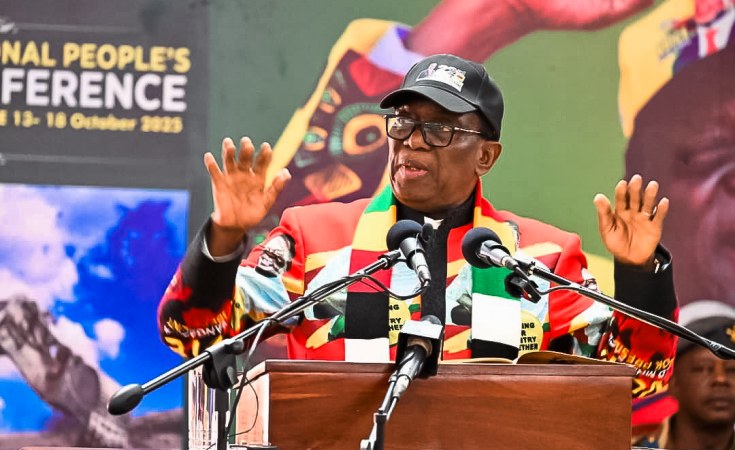
Zimbabwe's Constitutional Court has reserved judgment in two challenges to the constitutional amendments that extend President Emmerson Mnangagwa's rule from 2028 to 2030
HARARE, Zimbabwe
Zimbabwe's Constitutional Court has reserved judgment in two challenges to the constitutional amendments that extend President Emmerson Mnangagwa's rule from 2028 to 2030. The court now holds the most consequential legal question in the country's politics since the 2017 ouster of Robert Mugabe. The hearing in Harare on Wednesday, Nov. 18, took place under heavy security. Police blocked war veterans and journalists from the courtroom. The same week, Finance Minister Mthuli Ncube presented a 2027 budget that gives security ministries a combined ZWG59.5 billion as the country braces for an El Niño-linked drought.
Together, the two developments show the governing ZANU-PF's priorities heading into what was supposed to be the final stretch of Mnangagwa's presidency. Under the amendments now before the court, he would not face voters at all. The next president would be chosen by Parliament, and the general election originally due in 2028 would be pushed back to 2030.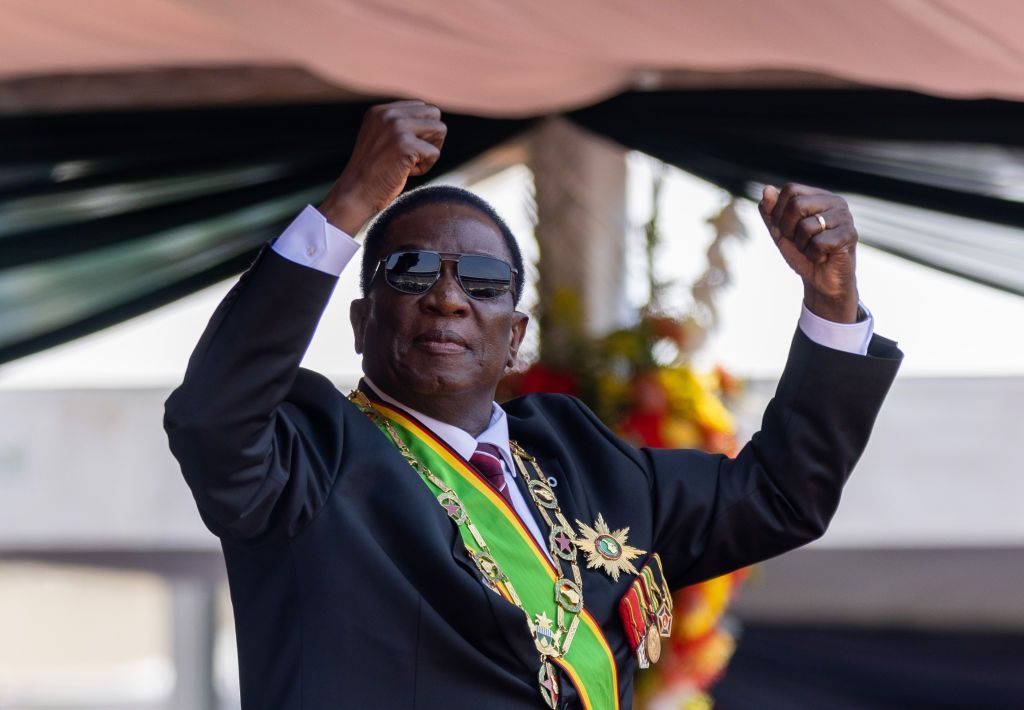
What the court heard
The two applications were brought by Vhurande Mahlupeko and Prince Dubeko Sibanda, a former legislator, according to reporting carried by AllAfrica. Both were represented by constitutional lawyer Lovemore Madhuku, who has led legal resistance to the amendments since they were proposed.
The applicants argued that about 10 provisions, including ones expanding the Constitutional Court, were added to the bill without first being gazetted for public consultation, in breach of Section 328(3) of the constitution. Madhuku asked the court to strike down Constitutional Amendment Act No. 3 in its entirety rather than remove the disputed clauses under the so-called "blue-pencil test." He argued that cutting out selected provisions would amount to rewriting the bill Parliament actually passed.
Sibanda's application focused on Section 328(7), which bars amendments that extend term limits from benefiting the people in office when they are enacted. He argued that the extensions cannot lawfully apply to Mnangagwa or to the sitting lawmakers who voted for them. The applicants also argued that Mnangagwa had a conflict of interest in signing a bill that benefited him personally and should have recused himself.
The government argued that the additional provisions were permissible because the accompanying memorandum allowed governance matters beyond the original proposals to be considered. Much of its case was procedural, contending that Sibanda's application was not a constitutional matter that could go directly to the apex court. Madhuku said Parliament had not disputed what Section 328 says but argued that the word "notwithstanding" in the amendment overrode it. "Parliament in court was not denying that Section 328 said that," he said.
Scores of war veterans gathered outside the court hoping to attend but were turned away by police, and journalists were denied entry to the courtroom, AllAfrica reported.
How Zimbabwe got here
Mnangagwa signed the amendments into law on July 7, 2026, according to Human Rights Watch and the Associated Press. Parliament had approved them in June. The changes lengthen the terms of the president, Parliament and local authorities from five years to seven. They abolish direct presidential elections in favor of a vote by a joint sitting of the Senate and National Assembly, and they apply the longer terms to the current officeholders. The 2013 constitution limits presidents to two five-year terms and would have required Mnangagwa to step down in 2028.
Mnangagwa was 83 when he signed the law, the AP reported. He came to power in 2017 after the military-backed removal of Mugabe and had previously pledged to leave office when his second term ended. ZANU-PF has argued that an extension was needed "to ensure continuity, stability and the sustained transformation of the nation," Human Rights Watch reported. The government has described the process as a legitimate legislative exercise and, citing advice from the attorney general, says no referendum was required.
Opposition parties, civil society groups and some liberation war veterans argue the opposite: that term-limit changes are entrenched provisions and require a national referendum. The Law Society of Zimbabwe has said extending terms for incumbents requires a referendum, although it did not find a shift to parliamentary election of the president unconstitutional in itself. Critics have called the amendments a "constitutional coup."
The legal fight has been long and mostly procedural. On June 17, before the bill was signed, the Constitutional Court struck off two earlier challenges without ruling on their merits, saying the issues should first go to the High Court. In September, a three-judge bench of Deputy Chief Justice Paddington Garwe, Justice Rita Makarau and Justice Chinembiri Bhunu reserved judgment on whether a group of war veterans, also represented by Madhuku, could approach the court directly, Zimbabwe Situation reported. In that case, government counsel Sylvester Hashiti argued that the applicants "should have approached the High Court first" and that "the President has no interest in this case."
The political climate around the amendments has been tense. Human Rights Watch documented attacks and arbitrary arrests targeting civil society groups, opposition parties, student leaders and activists during the process. It said police and unidentified armed individuals threatened and beat critics, including at public consultation meetings. The AP reported that police have banned public meetings and arrested or detained some critics.
A budget for security, in a drought year
The court hearing coincided with the 2027 national budget. Ncube allocated ZWG23.4 billion to the Ministry of Defence, ZWG20.5 billion to Home Affairs and ZWG15.6 billion to the Office of the President and Cabinet, a combined ZWG59.5 billion, AllAfrica reported. By comparison, Health received ZWG33.7 billion, and Primary and Secondary Education received ZWG46.8 billion. The budget projects a deficit of ZWG3.2 billion.
Critics have questioned those priorities as agriculture and food security come under pressure from a looming El Niño-induced drought. At a pre-budget seminar in Bulawayo in late October, Ncube cut the 2027 growth forecast to 3.5% from an initial 5%, Xinhua reported via the Ghana News Agency. He said growth would moderate "reflecting the anticipated impact of climatic risks." That compares with growth of 8.3% in 2025 and 5% in 2026, according to the same report. In October, the government also said it planned a $500 million cash and grain reserve to offset the effects of El Niño, Business Day reported.
Analysis: the court as the last formal check
The Constitutional Court now has three linked questions before it. It must decide whether the procedure was lawful, whether an amendment extending terms can benefit sitting officeholders, and whether the president could sign a law that served his own interest. A ruling for the applicants on Section 328(7) would not necessarily strike down the seven-year term or parliamentary election of the president. It would, however, deny Mnangagwa and the current Parliament the extra two years, and that is the outcome the amendment's architects most want to avoid.
The court's record so far suggests caution. Earlier challenges were disposed of on jurisdiction and standing rather than substance, and the government's main argument this week was again procedural. A decision that sidesteps the merits would leave the amendments in force without a definitive ruling on their constitutionality. Opponents would then be left with political rather than legal options in a climate where public meetings face police restrictions.
Wednesday's exclusion of war veterans also matters. Veterans of the liberation war have historically been a pillar of ZANU-PF's legitimacy, and a faction of them has openly opposed the "2030 agenda." Keeping them out of a public courtroom shows how far the dispute over Mnangagwa's tenure has moved into the governing movement's own ranks.
The budget adds a fiscal layer. Allocating more to defense, home affairs and the presidency combined than to health, in a year when the Treasury itself expects drought to slow the economy, will strengthen critics who argue the state is investing in control rather than resilience. The government argues that macroeconomic stability and mineral exports will carry the economy through.
What to watch
The court has not said when it will rule, and reserved judgments in Zimbabwe can take months. Watch for whether the court decides the September war veterans' application and this week's two cases together, and whether it engages Section 328(7) directly or rules on procedure again. Outside the courtroom, the key signals will be whether opposition and veterans' groups attempt to mobilize despite restrictions on gatherings, and how Parliament handles the budget debate as drought forecasts firm up. The longer the question stays unresolved, the more the 2030 timetable becomes a fact on the ground.