Written By | International News Agencies
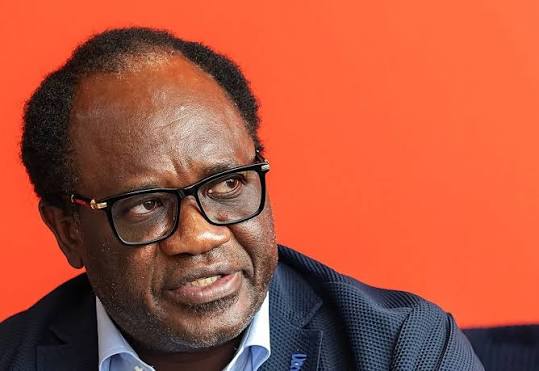
Zambia's main opposition challenger, Brian Mundubile
LUSAKA, Zambia
Zambia's main opposition challenger, Brian Mundubile, will stand trial in the High Court on treason charges after a Lusaka magistrate committed him and 13 co-accused for trial on Monday, Nov. 23. A day later, the court that was due to decide whether the detainees could go free on constitutional bail postponed its ruling at the state's request, while four men held in the same sweep were released after, according to defense counsel, prosecutors conceded they had no evidence against them. The court was scheduled to sit again at 9 a.m. on Wednesday, Nov. 25, to decide whether to grant the state's request for a delay.
The developments move the most politically charged prosecution in Zambia's recent history from pretrial skirmishing to a full criminal trial. They also sharpen a question hanging over President Hakainde Hichilema's second term: whether the state is pursuing a genuine security threat or, as rights groups allege, using the criminal law to neutralize the man who finished second to him in August.
Background: A disputed vote and a fast-moving crackdown
Zambia held its general election on Aug. 13. The Electoral Commission of Zambia declared Hichilema the winner on Aug. 18, with 2,965,326 votes to Mundubile's 1,856,217, according to figures reported by Africa Briefing. The publication noted that a later constituency-level results document from the commission recorded higher totals for both candidates, though Hichilema remained the declared winner. He was sworn in for a second term on Sept. 2.
Mundubile rejected the outcome. On Aug. 20, his campaign said it had documented "serious irregularities" and intended to challenge the results in court, Africanews reported. International observer missions said the vote was marred by irregularities. Hichilema has denied allegations of fraud.
The opposition's legal challenge never got off the ground in the normal way. Courts were closed roughly two weeks after the election, a step police described as an "intelligence-led and preventive measure," without giving details, according to Al Jazeera. Human Rights Watch said the closure blocked the opposition from filing legal challenges to the vote.
Mundubile, 55, is an accountant and lawyer who represented Mporokoso in the National Assembly from 2016 to May 2026 and previously served as Northern Province minister, government chief whip and leader of the opposition. He left the Patriotic Front, the former ruling party of the late President Edgar Lungu, and in May 2026 joined the National Reconciliation Party for Unity and Prosperity (NRPUP), running with Makebi Zulu of the PF Pamodzi Alliance as his running mate.
Mundubile and Zulu have been detained since Aug. 27 and were formally charged two days later, according to Africa Briefing and The Zambian Observer. The violence began earlier. The day after the election, police raided Mundubile's home, and former cabinet member Mutotwe Kafwaya was shot dead during the raid, Al Jazeera reported, citing Human Rights Watch.
The charges
Prosecutors have indicted Mundubile under Section 43(1)(a) of Zambia's Penal Code, which covers attempting to overthrow the government by unlawful means. Because Zambia abolished the death penalty in 2022, the maximum sentence is life imprisonment, Africa Briefing reported.
The state alleges that a conspiracy ran from April to August 2026 and that the accused organized meetings, recruited people with military backgrounds and provided financial and logistical support. Some defendants allegedly possessed weapons intended for the operation. Prosecutors specifically accuse Mundubile and businessman Harry Findlay of financing military training for recruits, which AllAfrica's summary of the case said took place in Russia. None of these allegations has been tested at trial, and all of the accused are presumed innocent.
Mundubile has denied wrongdoing and maintains that the case is politically motivated. His lawyer, Sakwiba Sikota, has rejected the allegations and questioned whether prosecutors hold sufficient evidence.
The treason case is not the only one. Mundubile and Zulu also face two counts of seditious practices under Section 57 of the Penal Code, arising from Facebook posts and livestreams on Aug. 14, the day after the vote, according to The Zambian Observer. In the first count, Mundubile allegedly called on the electoral commission to declare a winner based on parallel vote tabulation results; in the second, Zulu allegedly announced that Mundubile would address the nation at a set time. A separate three-judge panel led by Judge Geoffrey Mulenga has been considering a jurisdictional dispute over bail in that matter.
This week in court
Two strands of the case moved this week. On Monday, the Lusaka Magistrates Court committed 14 accused, including Mundubile and Zulu, to the High Court for trial on treason charges. No trial date has been set. Africa Briefing reported that the trial is expected to begin in early 2027.
On Tuesday, a three-judge panel of the Lusaka High Court — Justices Derrick Mulenga, Davies Chibwili and Ireen Wishimanga — was due to rule on a petition for constitutional bail brought by 18 detainees. Treason is ordinarily not a bailable offense in Zambia, so the applicants argued that their prolonged detention without trial violates their rights under Articles 13 and 28 of the constitution. The same panel had earlier ruled that the petition was properly before it, and the state had lost a series of preliminary objections.
Instead of a ruling, the court heard a state application, conveyed through Attorney General Mulilo Kabesha, to postpone. The defense objected that it had not been served with the supporting documents before the sitting, according to QNC News. The court adjourned to Wednesday morning to decide whether to grant the delay.
Defense lawyers told the court that the group had spent 1,128 hours in detention, far beyond the constitutional requirement that an arrested person be brought before a court within 24 hours. The detainees are held at Mukobeko Maximum Security Prison in Kabwe.
The same day, four of the 18 were freed: retired Anglican Bishop Trevor Mwamba, Francis Mulenga, Emmanuel Mulenga and Darius Mwila. Sikota told reporters that Director of Public Prosecutions Gilbert Phiri had said the state held no evidence against them. That account is secondhand, and QNC News reported no direct statement from the prosecutor's office.
The rights backdrop
The case is unfolding against sustained criticism of the government's conduct since the vote. In a report released in early November, Human Rights Watch said police and military personnel had "forcibly disappeared, arbitrarily detained, beat, and threatened" opposition members, supporters, lawyers, journalists and critics around the elections. Africa Briefing, summarizing the report, said HRW documented 14 apparent enforced disappearances and 61 cases involving allegations of violent abuse during arrest or detention. HRW called for detainees to be given access to lawyers and medical care, for the release of everyone arbitrarily detained, and for an independent investigation into Kafwaya's death.
The government rejects claims of a politically orchestrated crackdown and says membership in the opposition does not exempt anyone from criminal investigation, according to Africa Briefing.
Analysis: The weight of history and the risk of overreach
For many Zambians, the case carries a sharp irony. In 2017, Hichilema himself, then opposition leader, spent about four months in custody on treason charges brought under President Edgar Lungu's government. Prosecutors eventually dropped that case. Hichilema came to power in 2021 partly on a promise to restore civil liberties and end the politicized use of the police.
The two cases must be judged on their own facts, and the state's allegations here — military training, recruitment and weapons — are far more specific than in 2017. But the release of four co-accused on the apparent admission that there was no evidence against them is likely to fuel skepticism. So is the timeline: Mundubile was detained within weeks of announcing a challenge to the election result, and the courts were closed during the window in which such a challenge would normally have been filed.
The bail fight now matters as much as the eventual verdict. If the High Court grants constitutional bail, Mundubile would be free to organize and speak while awaiting a trial that may not begin for months. If the court denies bail or the state succeeds in delaying the ruling, the opposition's most prominent figure could spend much of 2027 in a maximum-security prison without a conviction — an outcome that critics would treat as punishment by procedure.
For Hichilema, the stakes are reputational as well as political. Zambia has positioned itself as a stable, reform-minded democracy, an image that has mattered to donors and investors as the country emerged from debt restructuring. A drawn-out treason trial against an election runner-up, combined with documented allegations of disappearances, risks eroding that standing.
What to watch
The immediate question is whether the High Court grants the state's postponement request on Wednesday or proceeds to rule on constitutional bail this week. After that, watch for the High Court to set a trial date; for whether prosecutors further narrow the list of accused, as they did with the four released on Tuesday; for the separate sedition bail proceedings; and for any official response to Human Rights Watch's call for an independent inquiry into Kafwaya's killing. The opposition's appeals to the African Union, first made in late August, could also gain traction if detention without trial drags on.