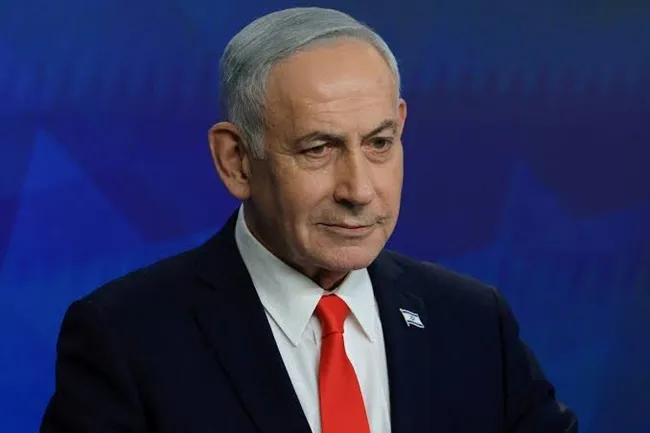
In a rare intervention at the Jerusalem District Court, the panel hearing Benjamin Netanyahu's six-year corruption trial told the attorney general that a conviction on the central bribery count looked unlikely, handing the caretaker prime minister a political lifeline in the middle of a contested government-formation fight.
A Rare Moment in Court
For more than six years, the corruption trial of Benjamin Netanyahu has been a fixture of Israeli politics, shaping elections, coalition arithmetic and the country's bitter debate over the judiciary. On Wednesday, November 25, the three judges hearing the case did something that stunned observers: they told the state, in open court, that the most serious charge against the prime minister may not hold up.
The attorney general, Gali Baharav-Miara, had been summoned to appear in person at the Jerusalem District Court, a step that Al Jazeera described as unusual and other outlets called highly unusual. Presiding judge Rivka Friedman-Feldman then laid out the panel's impressions of the three cases against Netanyahu, known as Case 1000, Case 2000 and Case 4000, and urged prosecutors to reconsider key parts of their indictment. The judges stressed that their remarks reflected impressions of the evidence, not a verdict.
Within hours, Netanyahu went before cameras at the Knesset to declare that the case against him had collapsed. His allies demanded that the trial be ended immediately, while the attorney general said only that her office would weigh the court's comments. The episode has injected fresh uncertainty into an already volatile political moment, with Israel still without a new government a month after its October election.
What the Judges Said
The heart of the court's intervention concerned Case 4000, the only case in which Netanyahu faces a bribery charge in addition to fraud and breach of trust. Prosecutors allege that while serving as prime minister and communications minister, Netanyahu advanced regulatory decisions worth large sums to Shaul Elovitch, then the controlling shareholder of the telecommunications giant Bezeq, in exchange for favorable coverage on the Walla news website, which Elovitch also controlled.
According to reporting by Nile Post and Al Jazeera, Friedman-Feldman told the attorney general that the chances of conviction on the bribery count were low and that the matter warranted reconsideration, citing what Al Jazeera described as considerable difficulties in proving bribery. The New York Times, in a report republished by GV Wire, said the judges discussed both bribery and conflict-of-interest questions in that case.
The judges also cast doubt on Case 2000, which involves allegations that Netanyahu discussed a deal with Arnon Mozes, the publisher of the Yedioth Ahronoth newspaper, to secure friendlier coverage in exchange for legislation that would have weakened a rival paper. Netanyahu is charged with fraud and breach of trust in that case, and the judges reportedly questioned whether any offense had been committed at all.
On Case 1000, which centers on gifts such as cigars and champagne that Netanyahu and his family allegedly received from the Hollywood producer Arnon Milchan and the Australian billionaire James Packer, the court's message was different. Reports diverge on the precise framing: Al Jazeera said the judges recommended reaching an agreement to end the case, Nile Post said they left a conviction open while suggesting a plea arrangement, and the Times said the case could move toward conclusion. The value of the gifts is also reported differently, with the Times putting it at nearly $300,000 and other accounts citing roughly $195,000 in cigars and champagne plus a few thousand dollars in jewelry.
Netanyahu and His Allies Respond
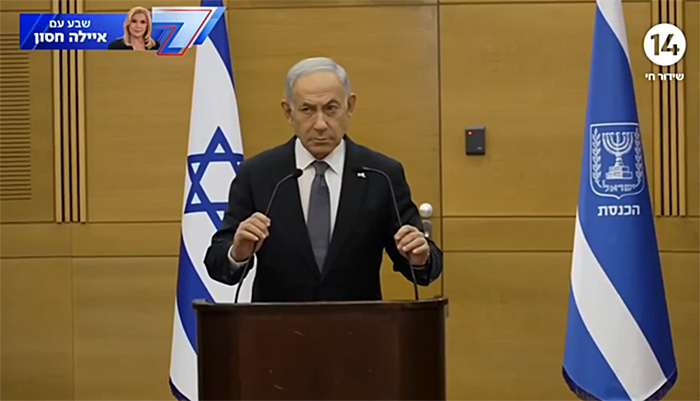
Netanyahu seized on the hearing as vindication. In a televised statement at the Knesset, he described the long-running proceedings as "ten years of terrible suffering" for himself and his family, and asked who would give those years back. "The trial must end immediately," he said, according to Al Jazeera. The New York Times reported that he declared, "Today, the trial has fallen," and called the judges' remarks "a ray of truth and justice," repeating his longstanding claim that the cases against him were fabricated.
His political allies quickly echoed the demand. Defense Minister Israel Katz, a senior Likud figure in the caretaker government, wrote on X that after years of what he called persecution, "the time has come to put an end to a trial that was flawed from the outset." Al Jazeera reported that Netanyahu's right-wing partners cheered the court's recommendations.
The attorney general struck a cautious note. According to a transcript released by a Justice Ministry spokesperson and cited by the Times, Baharav-Miara told the court that she and her team would consider the judges' recommendations and were open to all options based on the evidence. Al Jazeera reported that she indicated readiness either to proceed to a verdict or to pursue a plea agreement. Baharav-Miara has herself been a target of the Netanyahu government, which has sought to remove her from office, giving her response unusual political weight. Detailed responses from opposition leaders and independent legal analysts had not been widely reported in the sources reviewed for this article at the time of writing.
Background: Six Years in the Dock
Netanyahu was indicted on November 21, 2019, on charges of fraud, breach of trust and bribery, becoming the first sitting Israeli prime minister to face criminal charges. After withdrawing a request for parliamentary immunity, the indictment was formally filed in January 2020. The trial, originally set to open in March 2020, was delayed by the COVID-19 pandemic and began in May of that year.
Witness testimony started in April 2021, and the prosecution rested its case in the summer of 2024. Netanyahu's own testimony, repeatedly postponed because of the war in Gaza and other state obligations, concluded in June 2026 after dozens of hearings, according to the online record of the trial. Throughout, he has denied wrongdoing and portrayed the proceedings as a politically motivated campaign by the police, prosecutors and the media.
The trial has also become entangled with presidential and international politics. On November 30, 2025, Netanyahu formally asked President Isaac Herzog for a pardon, a request the Times reported was made with the backing of US President Donald Trump. Herzog, rather than granting it, offered to mediate a plea agreement, an offer the Times said Netanyahu's representatives had not answered. A legal opinion on the pardon request was submitted to the president's office in March 2026; no decision has been reported.
The Political Stakes
The court's remarks arrive at a delicate moment. Israel held a general election on October 27, 2026, and the result was inconclusive: Netanyahu's bloc won more seats than that of his main rival, former military chief Gadi Eisenkot, but neither side secured a majority, according to Nile Post. Herzog nonetheless gave Eisenkot, who leads the Yashar party, the first opportunity to form a government. His 28-day mandate expires on December 6, with the possibility of a 14-day extension, Al Jazeera reported.
Eisenkot has been assembling support piece by piece. His party agreed this week to sign a coalition pact with Avigdor Lieberman's Israel Our Home, its first such agreement since the election, but on November 24 Yair Golan's Democrats suspended their coalition talks with him. Lieberman has also ruled out partnering with Arab-led parties, narrowing Eisenkot's paths to a majority. Eisenkot has separately held unity talks with Likud, which has set out stiff conditions for joining any government he leads.
Against that backdrop, the judges' comments could reshape the bargaining. If Eisenkot fails, Netanyahu is expected to receive his own chance to form a government; if no one succeeds, Israel would head to another election next year. A weakened or abandoned bribery charge would undercut one of the central arguments against Netanyahu's return, that a prime minister on trial for bribery cannot lead the country, and could make some potential partners more willing to deal with Likud. Critics, by contrast, are likely to warn that any plea deal must address whether Netanyahu could continue in public life, a question that has long dominated discussion of a possible settlement.
What Happens Next
The immediate decision rests with the attorney general. No deadline for her response has been reported. She could amend the indictment by withdrawing the bribery count, seek a negotiated plea covering some or all of the cases, or ask the court to proceed to a verdict on the charges as filed. If the cases continue, the judges would ultimately rule on each count unless a plea agreement is reached.
Several timelines now run in parallel: the attorney general's review, Herzog's unresolved handling of the pardon request and his offer of plea mediation, and Eisenkot's December 6 deadline for forming a government. How those threads intersect over the coming weeks will determine not only the fate of Israel's most consequential criminal trial, but also whether Netanyahu, the country's longest-serving prime minister, can engineer another return to power.
Published By | News Editor