Written By | Sports News Agencies
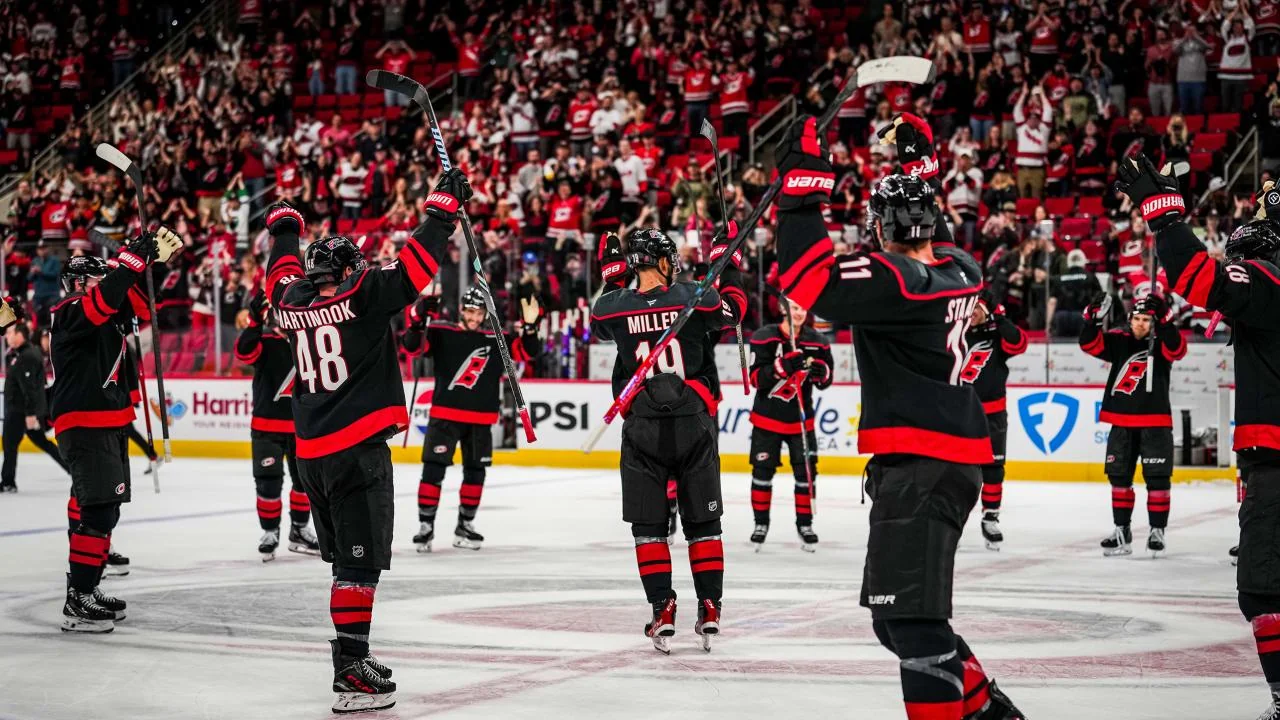
A new report says the league is seeking 50 to 100 percent more for its next U.S. media rights deal.
NEW YORK
Hockey has spent the last few years quietly piling up good news on television: strong opening nights, record playoff audiences and a younger, more digital fan base than its reputation suggests. Now the league is getting ready to cash in. According to a CNBC report by Alex Sherman, summarized by Sports Media Watch on November 14, the NHL wants to raise its total U.S. media rights fees by 50 to 100 percent in its next deal, which begins with the 2028-29 season.
If that sounds abstract, the numbers are not. The current seven-year contracts with Disney (ESPN and ABC) and TNT are worth roughly $4.5 billion in total, or about $625 million to $640 million a year. Disney's "A" package accounts for about $400 million a year and TNT's "B" package about $225 million. A 50 to 100 percent increase would push the total to somewhere between $6.75 billion and $9 billion over a similar term, and annual U.S. fees could approach or exceed $1 billion for the first time. Combined U.S. and Canadian fees already top that mark.
The Clock Is Already Ticking
Preliminary conversations have started, according to the report, and formal negotiations can begin on January 1, roughly six weeks from now. That leaves plenty of runway before the new deal kicks in, but the early positioning matters. Media companies are juggling an unusually busy rights calendar, and the NHL wants to be on the table before budgets are spoken for.
Both incumbents reportedly want to keep the sport, and so does the league. But wanting to renew and agreeing to pay double are two very different things, and the details of the CNBC report suggest the two partners are coming at the talks from opposite directions.
Disney Wants More; TNT Might Want Less
Disney, per the report, is "particularly interested" in adding playoff inventory. Right now ESPN and ABC carry half of the Stanley Cup Playoffs and alternate the Stanley Cup Final with TNT every other year. More postseason games would give ESPN the kind of high-stakes spring programming that drives subscriptions to its streaming service and fills the gap between the NBA's early rounds and the Finals. Sports Media Watch notes the report does not say Disney is seeking exclusive ownership of the Cup Final, though that is one possible reading of the league's leverage.
TNT, now owned by Skydance, is a different story. Sources told CNBC that Skydance would like to renew, but that hockey is not a "must-have." The company's focus is on its NFL package, which Sherman describes it as "dead set on renewing." That raises a real possibility: Skydance could take a smaller NHL package, freeing up games that the league could then shop to a third party, and potentially giving Disney the extra playoff inventory it wants in the process.
A Crowded Line of Suitors
That is where things get interesting. Sherman named Versant, the cable spin-off that is also his employer, as an interested party. Separately, Michael Perman, the CW's senior vice president of sports, told Front Office Sports' Michael McCarthy that the Nexstar-owned network is "taking a look at" the TNT package. Amazon, meanwhile, already carries NHL games in Canada through a sublicense from Rogers, the league's Canadian partner, a reminder that streaming companies already know their way around the sport.
For the NHL, more bidders means more leverage. A league that a decade ago struggled to get national attention in the United States now has several media companies that need live sports to justify subscription prices and advertising rates. Live events remain one of the few kinds of programming people still watch together and in real time, and that scarcity has driven the price of nearly every major rights package upward.
The NBA Precedent Hanging Over the Talks
Anyone following these negotiations will remember what happened the last time ESPN and TNT shared a major property. In the 2024 NBA talks, ESPN made keeping its NBA Finals exclusivity its priority, while TNT was lukewarm. Then-Warner Bros. Discovery CEO David Zaslav said the company did not "have to have" the NBA. ESPN kept its package; TNT lost its NBA rights to NBCUniversal and Amazon Prime Video.
The parallels are hard to miss. Again, Disney is the partner pushing for more. Again, the TNT side is signaling that the property is valuable but not essential. And again, there are well-funded outsiders who would happily take games off the table. Nobody is predicting that TNT will lose hockey entirely, and the network has invested heavily in the sport's coverage, but the NBA outcome shows how quickly a "nice to have" can become someone else's showcase.
What This Means for You
For fans, the short answer is that nothing changes this season or the next. The current deal runs through the 2027-28 season, so the familiar ESPN, ABC and TNT schedule stays in place. The longer answer is that the next contract will likely reshape where you find games. If Disney adds more playoff rounds, expect more of the postseason on ESPN's streaming platform and ABC. If a third partner such as Versant or the CW enters, regular-season games could be spread across another service or channel, which can mean better national exposure for more teams but also one more subscription to keep track of.
Bigger rights fees also matter beyond the broadcast booth. Media money flows into league revenue, which affects the salary cap, team budgets and, ultimately, the product on the ice. A deal worth close to $1 billion a year in the U.S. would be a sign that hockey's business has caught up with its on-ice popularity.
The Bottom Line
The NHL's ask is ambitious, and an opening position is not a final price. Still, the league enters these talks with momentum, two incumbents that both say they want to stay, and a list of potential newcomers. If Disney's hunger for playoff games and Skydance's focus on football line up the way the CNBC report suggests, the NHL may end up with exactly what it wants: more money, more partners, and a bigger stage. Formal talks can open on January 1, and the result will help decide where American hockey fans watch the sport for the rest of the decade.