Written By | Health News Agencies
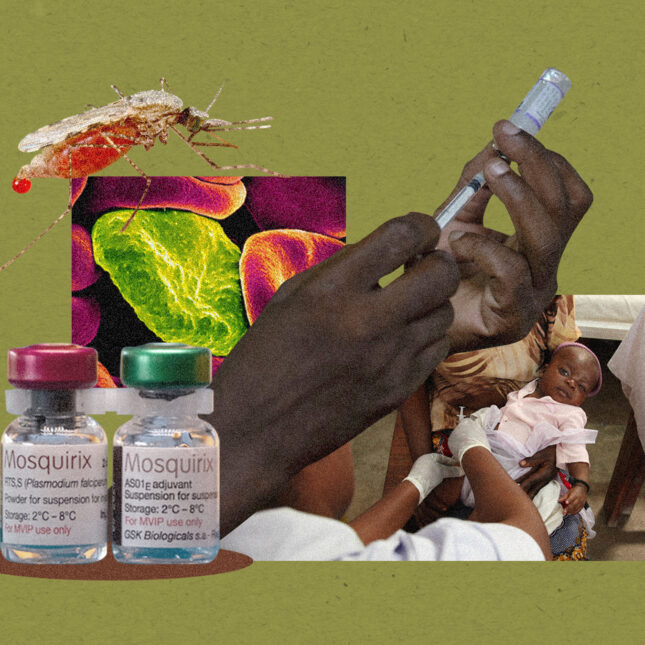
A genetically "disarmed" malaria parasite protected 87% of people deliberately infected with a mismatched strain in a Seattle trial.
SEATTLE / ROCKVILLE, MD.
They rolled up their sleeves, took three shots, and then did something most people would never volunteer for: they let researchers infect them with malaria.
Seven of them had been given nothing but salt water. All seven caught the disease. Fifteen had been given an experimental vaccine built from a malaria parasite that scientists had deliberately crippled in the lab. Thirteen of those fifteen walked away without a single parasite taking hold in their blood.
That is the headline result from a small but striking trial presented last week at the annual meeting of the American Society of Tropical Medicine and Hygiene (ASTMH), and it is now ricocheting around the global health world. The vaccine, called PfSPZ-LARC2, stopped infection in 87 percent of vaccinated volunteers, even though the parasite strain they were challenged with came from the other side of the world from the one used to make the shot.
"The clearest signal we have had that the premise is right," said Dr. Stephen L. Hoffman, chief executive of Sanaria Inc., the Maryland biotech company that has spent more than two decades and over $430 million chasing a whole-parasite malaria vaccine.
A disease that still kills a child every minute
To understand why scientists are excited about 13 protected volunteers, you have to understand the scale of the enemy.
According to the World Health Organization's World Malaria Report 2025, an estimated 282 million people were infected with malaria in 2024 and about 610,000 died. Roughly 95 percent of those deaths happened in Africa, and most of the victims were children under the age of five.
Malaria is caused by Plasmodium parasites, spread by the bite of infected Anopheles mosquitoes. The deadliest species, Plasmodium falciparum, is the target of this vaccine. Once a mosquito injects the parasite, it races to the liver, multiplies silently for about a week, and then bursts into the bloodstream, where it invades red blood cells. That blood stage is what causes the fever, chills, anemia and, in the worst cases, the brain swelling and organ failure that kill.
The world is not empty-handed. Two vaccines, RTS,S and R21, are now being rolled out to young children across Africa and have been credited with saving lives. But both target a single parasite protein, and their protection is partial and fades over time. Bed nets, insecticides and drugs remain the front line, and drug and insecticide resistance keep creeping forward. Researchers have long argued that a vaccine using the whole parasite could train the immune system far more broadly.
Building a parasite that cannot finish its job
PfSPZ-LARC2 is a live vaccine, and that is what makes it unusual. Instead of using a fragment of the parasite, it uses the whole organism: the sporozoite, the form of the parasite that a mosquito injects.
The trick is genetic surgery. Scientists removed two genes, called PfMei2 and PfLINUP, from the parasite. Without them, the parasite can still enter the liver and begin developing, which gives the immune system a long, detailed look at it. But it stalls late in the liver stage and cannot break out into the blood to cause illness.
The strain was created in the laboratory of Dr. Stefan Kappe at Seattle Children's, who is now director of the Center for Vaccine Development and Global Health at the University of Maryland School of Medicine. It is exclusively licensed to Sanaria.
"We engineered the PfLARC2 strain to be a safe vaccine," Kappe said.
The idea is to let the body rehearse the fight against the parasite at the point where it is most vulnerable, inside the liver, before it can multiply into the billions that overwhelm the bloodstream. Earlier preclinical work on the approach was published in EMBO Molecular Medicine in 2024.
Inside the challenge trial
The trial was run at the University of Washington's Vaccine and Treatment Evaluation Unit, part of a federally funded network supported by the U.S. National Institute of Allergy and Infectious Diseases (NIAID), through the Infectious Diseases Clinical Research Consortium. Clinical operations took place at Harborview Medical Center's Virology Research Clinic in Seattle.
It was randomized, double-blind and placebo-controlled, the gold standard of trial design. Twenty-two healthy adults aged 18 to 45, none of whom had ever had malaria, enrolled starting in July 2025. Fifteen received the vaccine and seven received a saline placebo. Each got three injections, 28 days apart, between July and October 2025.
Then came the moment of truth. In January 2026, about 12 to 16 weeks after their last dose, every volunteer was exposed to malaria in what is called a controlled human malaria infection, or CHMI. Volunteers were monitored closely with sensitive genetic blood tests, run at the UW Medicine Malaria Molecular Diagnostic Laboratory, and anyone who became infected was treated promptly with effective drugs.
Here is the twist that has impressed experts. The vaccine was made from a West African strain of the parasite. The challenge strain, known as 7G8, originated in Brazil and is genetically distant from the vaccine strain. In the real world, children in Africa are bitten by mosquitoes carrying a huge mix of parasite strains, so a vaccine that only protects against its own "home" strain would be of limited use. Protection against a mismatched strain is a tougher, more realistic test.
The result: all seven placebo recipients became infected. Only two of the 15 vaccinated volunteers did, and those two had lower parasite levels than the placebo group. That works out to an efficacy of 87 percent. Because the trial was so small, the statistical range around that figure is wide, with a 95 percent confidence interval running from 60 to 99 percent.
The results were presented at ASTMH by Dr. Sean C. Murphy, professor of laboratory medicine and pathology at the University of Washington School of Medicine and medical director of the Department of Laboratories at Seattle Children's Hospital.
Murphy said the study was made possible by "decades' worth of research on the biology of Plasmodium parasites." He added: "We look forward to continuing to advance this vaccine."
Is it safe? The numbers so far
Injecting people with a live malaria parasite sounds alarming, so safety was the first thing researchers watched.
Across the trial, 46 vaccinations were given, delivering about nine million parasites in total. According to Sanaria, the vaccine parasite never escaped the liver into the bloodstream in any volunteer. There were no vaccine-related serious adverse events and no vaccine-related side effects of Grade 3 or higher. The one notable finding was a temporary drop in a type of white blood cell, neutrophils, in one volunteer a week after the second dose, recorded as a Grade 3 laboratory abnormality.
"Forty-six vaccinations without a single vaccine parasite escaping the liver" tells the story of the attenuation, said Dr. B. Kim Lee Sim, Sanaria's executive vice president of process development and manufacturing.
The immune data matched the protection story. Vaccinated volunteers produced antibodies against the parasite's circumsporozoite protein, the main coat protein on its surface, as well as durable CD4 and CD8 T-cell responses. Those CD8 "killer" T cells are thought to be crucial for hunting down infected liver cells, and in this trial they held steady over time. The T-cell testing was carried out at Fred Hutch Cancer Center in Seattle.
Expert perspective: big promise, small numbers
The excitement is real, but so are the caveats, and the scientists involved are not hiding them.
First, this was a phase 1 trial with just 22 people. Phase 1 trials are designed mainly to test safety and dosing, and an 87 percent efficacy figure from 15 vaccinated volunteers is a signal, not proof. A couple of different outcomes could shift the number considerably, which is why the confidence interval is so wide.
Second, the results have been presented at a scientific conference but have not yet been published in a peer-reviewed journal. Sanaria says a final clinical study report is expected in the first quarter of 2027.
Third, the volunteers were healthy American adults who had never encountered malaria. The people who most need this vaccine are African children and adults who have been bitten by infected mosquitoes again and again. Their immune systems are primed very differently, and earlier whole-parasite vaccines have sometimes performed less well in malaria-endemic regions than in challenge trials in the United States and Europe.
Dr. Thomas L. Richie, Sanaria's chief medical officer, put the next questions plainly: how the vaccine performs in people exposed to malaria all their lives, and what the best dose and schedule are. "Those studies are underway," he said.
Sanaria says a phase 1 trial has been completed in Burkina Faso and the United States, another phase 1 trial is running in Germany, and a phase 2 trial is underway in Burkina Faso and Mali.
The team behind the challenge study also stressed the long road that made it possible. "Our teams at UW Medicine and Fred Hutch have been conducting malaria human challenge studies since 2011," said Dr. Jim Kublin of Fred Hutch's Vaccine and Infectious Disease Division, a co-principal investigator. Dr. R. Scott McClelland, professor of medicine, epidemiology and global health at UW, who led the clinical site, added: "It takes a strong and well-coordinated clinical trial team."
It is also worth noting the commercial interests. Several of the study's authors are Sanaria employees, and Hoffman and Sim own stock in the company, which the company disclosed alongside the results.
Why a whole-parasite vaccine matters
For years, the knock on whole-parasite malaria vaccines has been practical rather than scientific. Sanaria's earlier products used parasites weakened by radiation, which had to be hand-dissected from the salivary glands of mosquitoes, frozen in liquid nitrogen and injected directly into a vein. That is a tall order in remote clinics without reliable electricity.
A genetically attenuated parasite does not solve every one of those problems overnight, but it does offer something radiation cannot: a precise, built-in stopping point. Because the parasite is engineered to stall in the liver, scientists can be confident about where development halts, which is why the safety record of 46 shots without a breakthrough into the blood is so important to the developers.
The bigger hope is breadth. By showing the immune system the whole parasite, including many proteins that single-target vaccines ignore, a vaccine like PfSPZ-LARC2 might offer protection that holds up across the dizzying genetic diversity of parasites circulating in Africa. The cross-strain result in Seattle is the first hard evidence in humans that this vaccine might do exactly that.
What this means for you
If you live in or travel to a malaria zone, nothing changes today. PfSPZ-LARC2 is experimental and is not available to travelers or the public. It will take years of larger trials, and regulatory review, before it could be offered to anyone outside a study.
For travelers, the rules stay the same: see a travel health clinic before your trip, take the antimalarial pills you are prescribed exactly as directed, including after you return, sleep under an insecticide-treated net, use repellent and cover up at dusk and dawn. Any fever during or after travel to a malaria area is a medical emergency until proven otherwise. Tell your doctor where you have been.
For families in malaria-endemic countries, the existing childhood vaccines, RTS,S and R21, are the tools available now, alongside bed nets, indoor spraying and prompt testing and treatment. A fever in a young child should be tested for malaria as quickly as possible.
For everyone else, this is a story about how long-term public investment in basic science pays off. The vaccine grew out of years of NIH-funded parasite biology and a challenge-trial program that has been running in Seattle for 15 years.
The bottom line
Thirteen out of fifteen is a small number. But in the century-long fight against one of humanity's oldest killers, it may turn out to be a very big deal.
A parasite stripped of two genes, injected three times, protected the vast majority of volunteers against a strain from another continent, with no serious safety problems so far. The scientists are clear that the real test is still ahead, in the villages of Burkina Faso and Mali where malaria never takes a season off.
If PfSPZ-LARC2 can hold up there, the crippled parasite built in a Seattle lab could become one of the most important weapons yet against a disease that still claims more than 600,000 lives a year. The world will be watching the field trials closely.
Sources: Sanaria Inc. press release via EurekAlert (Nov. 19, 2026); University of Washington School of Medicine via News-Medical (Nov. 19, 2026); Medical Daily (Nov. 20, 2026); Global Health Technologies Coalition Research Roundup (Nov. 23, 2026); WHO World Malaria Report 2025.