World Politics
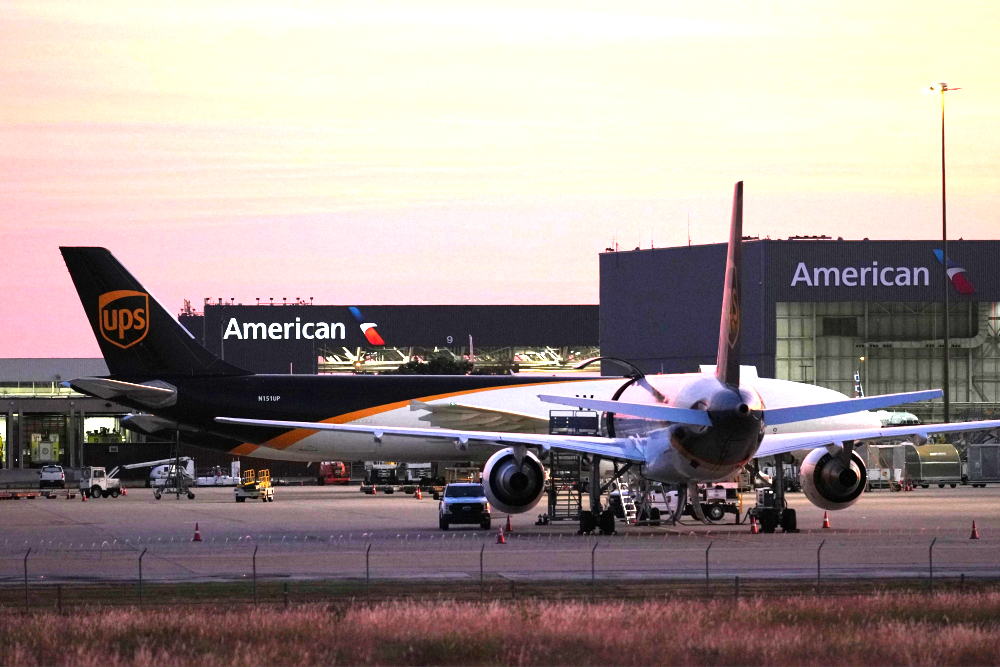
For a little more than four hours on Friday, November 13, the United States effectively stopped flying. At 3:36 p.m. Eastern time, with roughly 3,500 flights in the air, the Federal Aviation Administration ordered a nationwide ground stop after a telecommunications failure disrupted several of the air route traffic control centers that manage high-altitude traffic. Every airborne plane landed safely, but departures were halted across the country, stranding hundreds of thousands of travelers in what multiple outlets described as the longest nationwide ground stop since the September 11, 2001 attacks.
By Sunday the system was described as stable, but the political fallout was only beginning. Transportation Secretary Sean Duffy blamed a federal contractor, demanded $50 billion from Congress, and warned that "you will have more of these" without a complete overhaul. New York Governor Kathy Hochul called for Duffy's resignation. Congressional committees in both chambers promised reviews. A technical failure in a decades-old network has quickly become a test of accountability for the Trump administration, and an early preview of how a Democratic-led Congress may approach oversight in the new year.
What Happened
According to accounts from federal officials reported by Yahoo News, CBS News and ABC, the trouble began during work to migrate part of the FAA's telecommunications network from old copper lines to fiber at a remote FAA site. The network, known as FAA Telecommunications Infrastructure (FTI), is operated by the defense contractor L3Harris. Duffy said a router involved in that work flooded the network, which saw more than 1,000 connection attempts every four to five seconds, disrupting communications with aircraft and radar data. Officials said there may have been router problems in Arkansas and Texas. Senior government sources told CBS News the problem was isolated to specific hardware, Cisco routers manufactured between 2001 and 2006.
The cause has not been fully pinned down. FAA Administrator Bryan Bedford said investigators have not yet determined whether the failure resulted from contractor error or a defective router, and the review will examine whether the equipment was installed or configured incorrectly. Nick Daniels, president of the National Air Traffic Controllers Association, said communications with some aircraft were disrupted, and that controllers moved flights to working frequencies to keep them safe.
Accounts of exactly when the stop was lifted vary slightly. CBS reported restrictions were lifted around 8:20 p.m. Eastern; ABC13 in Houston reported shortly before 7:30 p.m., likely local Central time. Both describe a stop lasting more than four hours.
The Scale of the Disruption
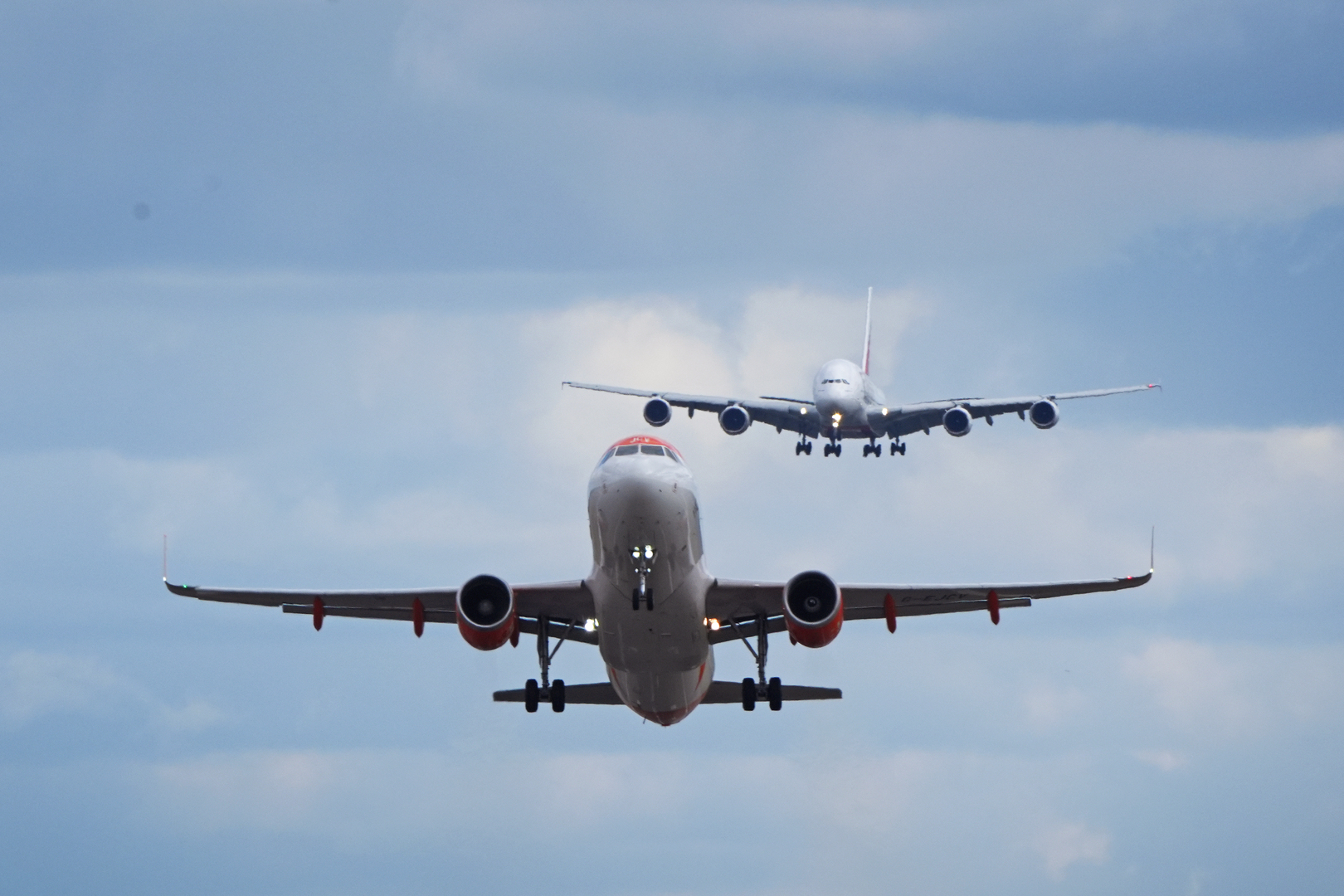
Figures for the damage have climbed as the weekend has gone on, and sources differ depending on timing and methodology. CBS reported about 9,159 cancellations and 7,190 delays on Friday. Yahoo News, citing officials, said about 12,000 flights could not be completed that day, roughly 9,000 commercial and 3,000 general aviation or private flights. Fox News reported the disruption affected more than 1.5 million scheduled passengers after 4 p.m. Eastern Friday.
Saturday brought no clean recovery, because crews and aircraft had ended Friday in the wrong places. Bedford had forecast 4,000 to 5,000 cancellations out of about 41,000 scheduled flights, but by 9 p.m. Eastern, FlightAware counted more than 6,400 U.S. cancellations, a figure the tracking app Flighty said exceeded the disruption caused by the 2024 CrowdStrike software outage. American, Delta, United and Southwest each canceled hundreds of flights. By Saturday night, roughly 800 to 900 Sunday flights had already been scrubbed, with JetBlue canceling about a quarter of its Sunday schedule. Airlines including American, Delta, United, Southwest and JetBlue issued travel waivers allowing free rebooking, with windows running as late as November 21.
Officials Point to Old Technology, and to a Contractor
Administration officials moved quickly to rule out sabotage. Homeland Security Secretary Markwayne Mullin said there were no signs of a cyberattack, and Duffy said, "We don't believe so" when asked about one. Bedford said there was "zero evidence" of anything AI-related, a question that arose because the FAA had just begun rolling out an $875 million artificial-intelligence traffic tool called SMART, whose maker said it was not involved.
Instead, officials placed the blame on aging infrastructure and on L3Harris. Duffy called the air traffic control system "incredibly old" and said it "didn't meet the moment." He said "we're going to hold people accountable," without specifying how, but conceded that until a replacement network is built, "I'm stuck with L3Harris." He also said the practice of doing upgrade work at small sites during the day would be reevaluated. Bedford apologized to travelers, stressed that "no facilities went dark," and acknowledged that the FAA has only a single telecommunications infrastructure with no full backup, a weakness he said "will continue to break until we replace it." L3Harris said it is supporting the investigation and takes the ground stop seriously, but did not respond directly to Duffy's criticism.
The vulnerability was not a secret. A 2009 misconfigured router disrupted 129 FAA facilities, and a 2023 FAA-commissioned review called the network obsolete. Daniels noted that some FAA systems still rely on floppy disks. In August 2026, the FAA selected AT&T to lead a replacement of the network, and L3Harris has reported completing more than 70 percent of the copper-to-fiber migration now underway.
The Political Fight
The outage has reopened a battle over money and responsibility. Congress approved a $12.5 billion down payment on air traffic control modernization last year. President Trump has requested $30 billion, and the administration raised its request to $50 billion late Friday. Bedford said finishing the modernization requires about $10.1 billion more, and Duffy said he planned to send a funding request to Congress on Monday. The differing numbers reflect overlapping requests for different scopes of work, and the administration has not published a single reconciled figure.
Democrats have pushed back on the administration's framing. Governor Hochul, whose state's airports were among the hardest hit and who has clashed with Duffy for more than a year over New York City's congestion pricing program, called for him to resign. A White House spokesperson dismissed that as "a desperate attempt to score political points," and Trump reportedly pledged "every resource" to fixing the system. Senator Tammy Duckworth of Illinois, a former Army helicopter pilot, called for an investigation and rejected Duffy's suggestion that Congress was to blame for underfunding. Senator Maria Cantwell, the top Democrat on the Senate Commerce Committee, said the committee would review the technology failures, and the bipartisan leaders of the House Transportation and Infrastructure Committee called the communication breakdowns "concerning" and promised their own review.
Labor is also making its case. Daniels said daytime upgrade work should be scheduled when the fewest planes are in the air, that assigning blame "does not fix the problem," and that any new funding should address controller pay and working conditions as well as equipment. The controllers' workforce has been a recurring flashpoint, after staffing shortages and outages at Newark and other airports drew national attention in recent years.

Why It Matters
The episode lands at a sensitive political moment. Republicans lost control of Congress in the November 3 midterms, and Democrats will take the gavels in January with subpoena power and a clear interest in scrutinizing executive-branch competence. A nationwide failure that grounded the country's aviation system for hours offers a ready-made oversight target, and the administration's decision to publicly blame a contractor, while asking Congress for tens of billions of dollars, sets up a familiar budget confrontation with sharpened stakes.
At the same time, the problem predates the current administration. Officials from both parties have warned for well over a decade about the FAA's brittle technology, and both the 2009 router failure and the January 2023 nationwide ground stop, caused by a corrupted file in a pilot-notice system, occurred under different presidents. That shared history may make bipartisan funding possible, even as Democrats press for accountability.
What's Next
In the immediate term, the FAA expects airline schedules to return to normal by the close of business Sunday, though Bedford cautioned that significant recovery work remains. Investigators will continue to examine whether the router failure stemmed from human error or defective equipment, a determination that could shape whether L3Harris faces contractual penalties. Duffy's funding request is expected on Capitol Hill as soon as Monday, and the House and Senate committees have signaled hearings.
The longer-term question is whether this outage proves to be the moment that finally forces a replacement of the network's single point of failure, or whether, as Duffy himself warned, Americans should expect more days like Friday. For travelers who spent the weekend sleeping in terminals, the answer will be measured not in press conferences but in whether the next upgrade happens without the sky going quiet.
Published By | News Editor