Washington's envoys tell the Coalition of the Willing that Russia may accept NATO-style guarantees for Kyiv, but the Kremlin still rejects a ceasefire as strikes on the Crimean Bridge continue
World Politics
Two Summits, One War
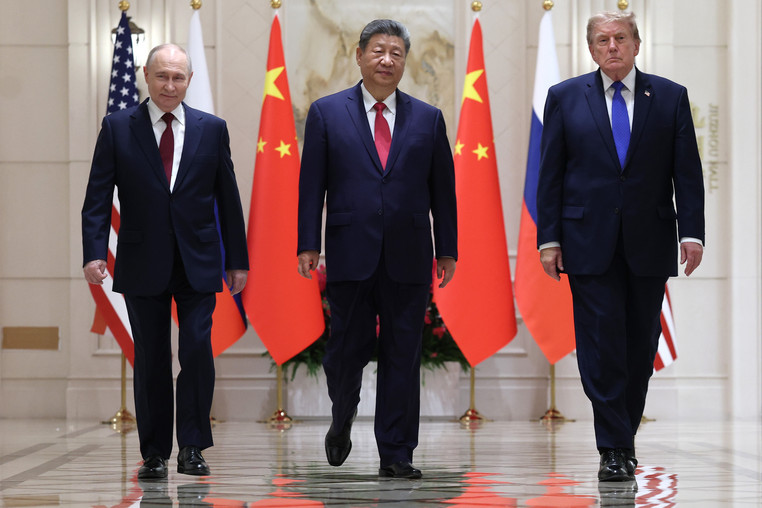
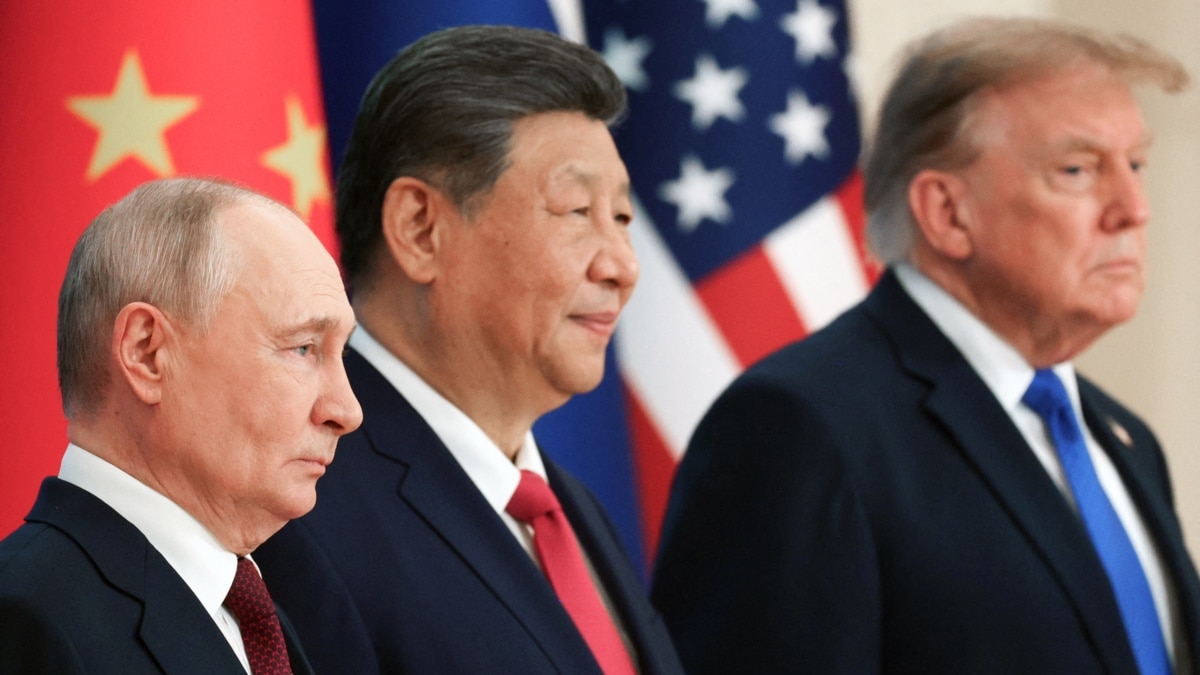
On the same day that Donald Trump, Xi Jinping and Vladimir Putin sat down in Shenzhen for the first-ever three-way meeting of the leaders of the United States, China and Russia, Europe staged a summit of its own. In Berlin on Thursday, November 19, German Chancellor Friedrich Merz hosted the Coalition of the Willing, the grouping of Ukraine's backers that has spent the past year designing security guarantees for a post-war Ukraine. French President Emmanuel Macron and British Prime Minister Andy Burnham co-organized the gathering, Ukrainian President Volodymyr Zelensky attended in person, and so did NATO Secretary General Mark Rutte.
The most consequential guests, however, were American: Trump's special envoy Steve Witkoff and his son-in-law and adviser Jared Kushner, who arrived in Berlin to brief allies on the Shenzhen talks and on months of shuttle diplomacy with Moscow and Kyiv. Their message, as reported by Al Jazeera and Ireland's RTE, was that the United States wants Europe involved in any settlement. Kushner said Trump "wants to make a deal with Europe by his side," and that having Europe at the table would be essential.
Reports differ on the size of the meeting. The Kyiv Post counted nearly 40 delegations, about 30 at leader level; Ukrainian outlet UA.NEWS, citing the German government, put it at 37 countries plus the European Union and NATO; RTE described an ad hoc group of 36 countries.
Background: A Process That Kept Europe Outside
The Berlin meeting came after weeks in which European governments watched peace diplomacy unfold largely without them. In early November, U.S., Russian and Ukrainian negotiators met in Abu Dhabi; the talks on November 10 and 11 produced a prisoner-of-war exchange but no ceasefire, and Europeans were not in the room. Witkoff and Kushner have since carried proposals between Moscow and Kyiv, and last week Zelensky disclosed that U.S. negotiators had for the first time asked whether Ukraine might withdraw from the Donbas in exchange for NATO membership, an idea he said could only be considered through a referendum.
Europe's response has been to organize. At the European Political Community summit in Dublin last week, EU institutions and the so-called E5 group of major European powers agreed on the team that would represent the continent in any negotiations. Then came the Shenzhen summit, which Ukraine and many European capitals viewed with anxiety. The Kremlin and the White House had insisted Ukraine was not formally on the agenda there, but the image of the three leaders meeting without Kyiv or Brussels reinforced fears of a great-power bargain struck over their heads. Ahead of Berlin, Zelensky said that issues concerning Ukraine must be decided with Ukraine's participation, and Kremlin aide Yuri Ushakov remarked that the Europeans were making every effort to get involved.
What Was Agreed in Berlin
The core of the discussion concerned security guarantees that would take effect once a ceasefire is reached. Zelensky said his priorities were strengthening Ukraine's air defence, its energy system and financial support. Kushner told reporters that the talks had made a lot of progress on what those guarantees could look like, and RTE reported that Trump is open to an Article 5-style guarantee, modelled on NATO's mutual-defence clause, provided it serves U.S. interests. Kushner called that "a really, really big deal."
The most striking claim concerned Moscow's position. Al Jazeera headlined its report with Kushner's assessment that Russia is comfortable with NATO-like guarantees for Ukraine, and a separate news roundup described him as saying Russia had been receptive to an Article 5-style framework while acknowledging Russian scepticism. That would be a notable shift from the Kremlin's long-standing insistence that any Western security role in Ukraine is unacceptable. The Kremlin has not confirmed such a position, and RTE noted that Russia has sent mixed signals about whether it will accept Europeans in negotiations at all, even as U.S. officials assured allies that it would.
Merz framed the outcome as a political breakthrough for Europe. "If it comes to peace negotiations, then we will be involved," he said, adding that talks could only succeed with Ukraine and Europe present. According to one aggregated account, participants agreed in principle on European participation in a future four-party format of Ukraine, Europe, the United States and Russia; that detail was reported by a single source and had not been independently confirmed. Merz was dismissive of the Shenzhen event, describing it as a photo op.
Burnham, in one of his most prominent foreign-policy appearances since becoming prime minister, said Europe was ready to enter negotiations with "a clear and consistent and united negotiating position," but insisted that a peace agreement between Ukraine and Russia must come first. He pledged support for as long as it takes and said he hoped the message would be heard clearly in Moscow. Macron called for reopening the question of Ukraine's NATO accession and criticized what he called the maximalist nature of Russia's position, while stressing the immediate need for anti-missile systems and interceptors. Rutte was reported by RTE to be unconcerned about the Shenzhen trilateral.
The Money Question
Financial support was a recurring theme. The European Commission on November 18 proposed a 45 billion euro package to cover Ukraine's budgetary and military needs for 2027, which was discussed in Berlin but has yet to be approved by member states. One news roundup reported that Britain put forward a 10 billion pound commitment, and another said the United Kingdom announced 1,000 long-range strike drones as part of a 260 million pound winter aid package. Neither British figure appeared in the main wire and broadcaster reports reviewed for this article, and both should be treated as unconfirmed until official details are published. Separately, Euronews reported on Thursday that Hungary is set to drop its veto on opening full EU accession negotiations with Ukraine, a step that, if confirmed, would remove one of the most persistent obstacles to Kyiv's European path.
Moscow's Answer
Russia's response offered little encouragement. According to an international news roundup, Putin invited European leaders to Moscow but stopped short of offering them a formal role in negotiations, and again rejected a ceasefire. The same account said Merz responded that Europe would join the next round of talks but would prefer a neutral venue. These details were not reported in the other sources reviewed and should be read with caution.
On the ground, the war continued throughout the diplomacy. Ukraine struck the Crimean Bridge for the third time in a week, following the collapse of a road span earlier this week; Russia's transport ministry said rail services were suspended but no one was hurt. Ukraine's General Staff said Neptune cruise missiles were used, according to one aggregated report. Putin warned that Russia's response would be far more painful. In Kyiv, Russian strikes on November 19 killed one person and damaged the Austrian and Dutch embassies, RTE reported. Zelensky wrote that Ukraine does not want Russia to drag the process out into the winter, and the coalition urged Moscow to accept a truce on strikes against energy infrastructure.
Reading the Signals
The Berlin meeting highlighted both Europe's growing assertiveness and its dependence on Washington. European leaders want to ensure that any settlement does not reward Russian aggression or leave Ukraine without credible protection, and they have tied their offers of troops, money and weapons to a seat at the table. Ukraine's Foreign Minister Andrii Sybiha captured the mood when he said that Putin had posed as a global leader in Shenzhen. For Europe, the fear is that Russia can use direct channels with Washington and Beijing to bypass its neighbours entirely.
For the Trump administration, inviting Europe in serves several purposes. It spreads the burden of guarantees and reconstruction costs, and it gives Washington leverage in its dealings with Moscow by presenting a united Western front. Kushner's suggestion that Russia could live with NATO-style guarantees, if accurate, would also give the White House a selling point for a deal that might otherwise be seen in Kyiv as a capitulation. The unresolved question is territory: the Donbas proposal, which Zelensky has said must go to the Ukrainian people, remains the most explosive issue on the table.
What's Next
Witkoff and Kushner were expected to brief Kyiv further on Trump's talks in Shenzhen, and diplomats are watching for a date and venue for the next round of negotiations, including whether Europe will in fact be represented. Member states must also decide on the Commission's 2027 funding proposal, and the details of any British package remain to be confirmed. Meanwhile the Kremlin's position on a ceasefire, on European participation and on Western security guarantees remains publicly unchanged, and the strikes on both sides of the front line suggest neither side expects a pause soon.
Berlin may be remembered as the day Europe formally claimed its place in the peace process. Whether Moscow accepts that claim, and whether a deal emerges before the depths of winter, will determine if the coalition's guarantees are ever put to the test.
Published By | News Editor