Written By | International News Agencies
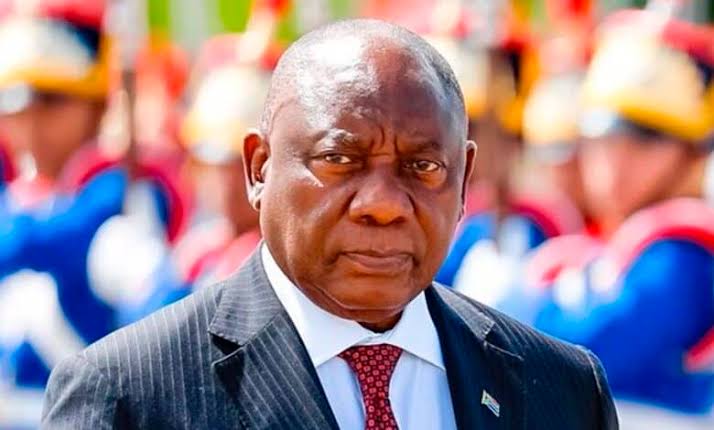
President Cyril Ramaphosa
CAPE TOWN, South Africa
South Africa's long-running Phala Phala saga took its most consequential turn in four years on Wednesday, when a full bench of the Western Cape High Court unanimously set aside the independent panel report that had found President Cyril Ramaphosa may have a case to answer over the 2020 theft of foreign currency from his Limpopo game farm. The court also set aside every step the National Assembly had taken on the strength of that report, which effectively halts the impeachment inquiry that Parliament revived only this year.
The ruling matters immediately because Parliament's impeachment committee was due to meet on Thursday to finalize its terms of reference and appoint an evidence leader. Instead, its chairperson said the committee would first seek legal advice on whether it could lawfully meet at all. The judgment does not clear Ramaphosa of wrongdoing, and the parties that pushed for his removal are already weighing an appeal. But it removes, for now, the only document that gave Parliament a constitutional basis to try to remove him from office.
What the court decided
Judge President Nolwazi Mabindla-Boqwana delivered the judgment on behalf of the full bench. The court declared the Section 89 panel's report unlawful, set it aside in its entirety and ordered each party to pay its own costs.
The panel, chaired by former Chief Justice Sandile Ngcobo, was appointed in 2022 under Section 89 of the Constitution, which sets out how a sitting president may be removed. Its job was to decide whether there was sufficient evidence to show that Ramaphosa might have committed a serious violation of the Constitution or the law, or serious misconduct. It concluded that there was prima facie evidence that he may have.
The High Court found that the panel got the test wrong. According to the judgment as reported by The National and the Mail & Guardian, the panel wrongly equated the "sufficient evidence" requirement in the National Assembly's rules with a prima facie case to answer, and it considered material that went beyond the charges it had been asked to assess. Those additional matters, raised by the Economic Freedom Fighters and the African Transformation Movement, included the source of the foreign currency found at the farm and Ramaphosa's alleged activities in Cape Town and Namibia.
The court was also sharply critical of the panel's reliance on the affidavit of Arthur Fraser, the former State Security Agency director-general whose criminal complaint in June 2022 brought the theft to public attention. Much of that affidavit, the court found, "did not relate to the charges" and amounted to hearsay or "mere say-so," because Fraser had no personal knowledge of the incident.
Mabindla-Boqwana wrote that the panel had "fundamentally misconstrued its functions" and "went beyond its lawful remit, asked itself wrong questions." A flawed report, she warned, could force a president into an impeachment inquiry without a lawful basis.
How the case got here
The underlying events date to February 2020, when foreign currency was stolen from Ramaphosa's Phala Phala wildlife farm. Fraser's complaint alleged that the theft was not properly reported to police, that Ramaphosa had his head of presidential protection, Maj. Gen. Wally Rhoode, investigate it privately, and that the president sought help from then-Namibian President Hage Geingob. The amount involved has been disputed ever since: some reports put it at about $580,000, while ActionSA's criminal complaint focuses on a gap between the roughly R8.7 million initially reported stolen and court information from the National Prosecuting Authority suggesting transactions above R15 million. Ramaphosa has consistently said the money came from the legitimate sale of buffalo and has denied wrongdoing.
In July 2022, ATM leader Vuyo Zungula tabled the motion that led to the Ngcobo panel. When the panel reported in late 2022, the African National Congress, which then held an outright majority, voted down its recommendations in December of that year, ending the process.
That vote did not stand. In May 2026, the Constitutional Court, ruling on an EFF application, set aside the 2022 parliamentary vote as unconstitutional, which sent the report back to the National Assembly and revived the impeachment process. Speaker Thoko Didiza moved to establish an impeachment committee days later.
Ramaphosa then went on the offensive. He filed papers in May asking the High Court to review and set aside the panel's report itself, and on July 24 he won an interim interdict halting public impeachment hearings until that review was decided. Judge Diane Davis, writing for the majority in that ruling, said: "The national interest requires stability in the functioning of the presidency." The review was argued over several days from Sept. 2. Wednesday's judgment is the result.
The reactions
The ATM, which began the process, said it "strongly disagrees" with the judgment and would consult its lawyers about an appeal. "For ATM, this is no longer just about Phala Phala, it is a direct blow to the heart of our constitutional democracy," the party said in a statement reported by African Times News. Zungula said the ruling "sets a dangerous precedent" and pointed to paragraph 369 of the Constitutional Court's May judgment, which he said found that sufficient evidence existed. He also argued that Parliament could simply appoint a new panel.
The party accused the courts of applying a different standard to the president. It contrasted Ramaphosa's interim interdict with a 2022 decision by the same court that refused former Public Protector Busisiwe Mkhwebane an interdict against her own removal inquiry, on the grounds that the public interest in parliamentary accountability outweighed her personal harm. "The identity of the person occupying the Office of the President must never determine the standard of accountability," the ATM said.
The EFF was blunter. Secretary-General Marshall Dlamini, speaking at the inaugural council sitting of the City of Ekurhuleni, said, "That ruling is madness. And those Western Cape judges, they know it. Because they have not responded to the key issues," according to Briefly News. He argued that the parliamentary route remained the correct process.
The ANC, by contrast, presented the ruling as vindication. Cameron Dugmore, the party's whip on the impeachment committee, said MPs who voted against the panel's recommendations in 2022 had argued that the report was flawed and that "the court has now upheld that particular view." He added that aggrieved parties were free to take the matter further. The ANC's National Executive Committee met on the ruling and resolved to stand behind Ramaphosa; the president did not attend because he was the subject of the discussion.
Official responses were cautious. Didiza said she had noted the judgment and would study its implications for the National Assembly and the committee "with a view to giving effect to the court's order," according to a Parliament statement. Committee chairperson Makashule Gana said the committee would respect the judgment, would ask Parliament's legal services whether Thursday's meeting could proceed and would "act in accordance with the judgment." The Presidency said only that Ramaphosa would study the ruling.
Analysis: a reprieve, not an acquittal
The most important thing the judgment does is procedural. By voiding the report and everything built on it, the court leaves the impeachment committee without a lawful basis to continue. It does not find that the allegations are false, and it does not touch the separate criminal complaint ActionSA laid in May, which alleges perjury, fraud and a contravention of the Prevention and Combating of Corrupt Activities Act and remains with law enforcement. The NPA declined to prosecute an earlier complaint.
Political analyst André Duvenhage told The National that the ruling stops the legislative investigation but "does not establish" Ramaphosa's innocence. He said a motion of no confidence was possible but unlikely under the government of national unity, and suggested Ramaphosa could serve out his term as ANC president.
That arithmetic is central to what happens next. During the review hearing in September, Ramaphosa's senior counsel, Wim Trengove, told the court that if the report were set aside, the matter would return to Parliament to decide whether to appoint a new Section 89 panel, according to Daily Maverick. The governing coalition's parties, including the ANC, the Democratic Alliance, the Inkatha Freedom Party, the Patriotic Alliance and the Freedom Front Plus, hold a majority of the National Assembly's 400 seats. If they vote together, they can block a new panel, much as the ANC alone did in 2022.
Whether they will hold together is the open question. Siseko Maposa of Surgetower Associates called the ruling a major victory for Ramaphosa and his ANC supporters, but said the DA's posture bears watching after it was left out of coalition talks in Gauteng's metros and KwaZulu-Natal following this year's local government elections. A DA that feels squeezed by the ANC locally has less reason to shield the president nationally, although it has so far shown little appetite for an impeachment fight that could destabilize the coalition it entered in 2024.
The ruling also hands the opposition a narrative. The ATM's argument that the courts treated Ramaphosa more gently than Mkhwebane will resonate with supporters who already regard the Phala Phala matter as evidence of a two-tier justice system. The EFF's attack on the judges, meanwhile, risks reviving the long-running dispute over whether politicians respect judicial independence, a debate in which the courts have generally commanded more public trust than Parliament.
What to watch
The immediate signal is whether the impeachment committee meets at all this week and what legal advice Parliament receives. Any ATM or EFF appeal would likely go to the Supreme Court of Appeal or directly to the Constitutional Court, and the apex court's May ruling, which revived the process in the first place, gives the challengers an obvious argument.
If no appeal succeeds, the decisive arena shifts back to the National Assembly floor and a vote on whether to establish a new panel. That vote would test the cohesion of the unity government more directly than any budget debate has. In the meantime, the ActionSA criminal complaint remains a separate, slower-moving threat that this judgment does nothing to remove.
For now, Ramaphosa has secured a significant legal reprieve. But after four years in which the Phala Phala affair has been buried and revived more than once, few in Cape Town expect this to be the last word.