PRAIA, Cape Verde
Cape Verde's President José Maria Neves has won a second five-year term by a wide margin, according to provisional results from Sunday's election. The victory gives his African Party for the Independence of Cape Verde (PAICV) control of both the presidency and the government for the first time in more than a decade. Neves won about 64% of the vote, comfortably clearing the 50% threshold needed to avoid a runoff. His main challenger, former Justice Minister Joana Rosa, the first woman to run for the country's presidency, took about 31% and conceded on Sunday night.
The result itself was widely expected. What sets this election apart, and what both Neves and outside observers are now talking about, is the turnout. Only 31.7% of roughly 418,000 registered voters cast ballots, the Associated Press reported. In one of Africa's most stable democracies, a re-elected president now governs with an unusually narrow base of active voters, and his party controls the national government with little institutional counterweight.
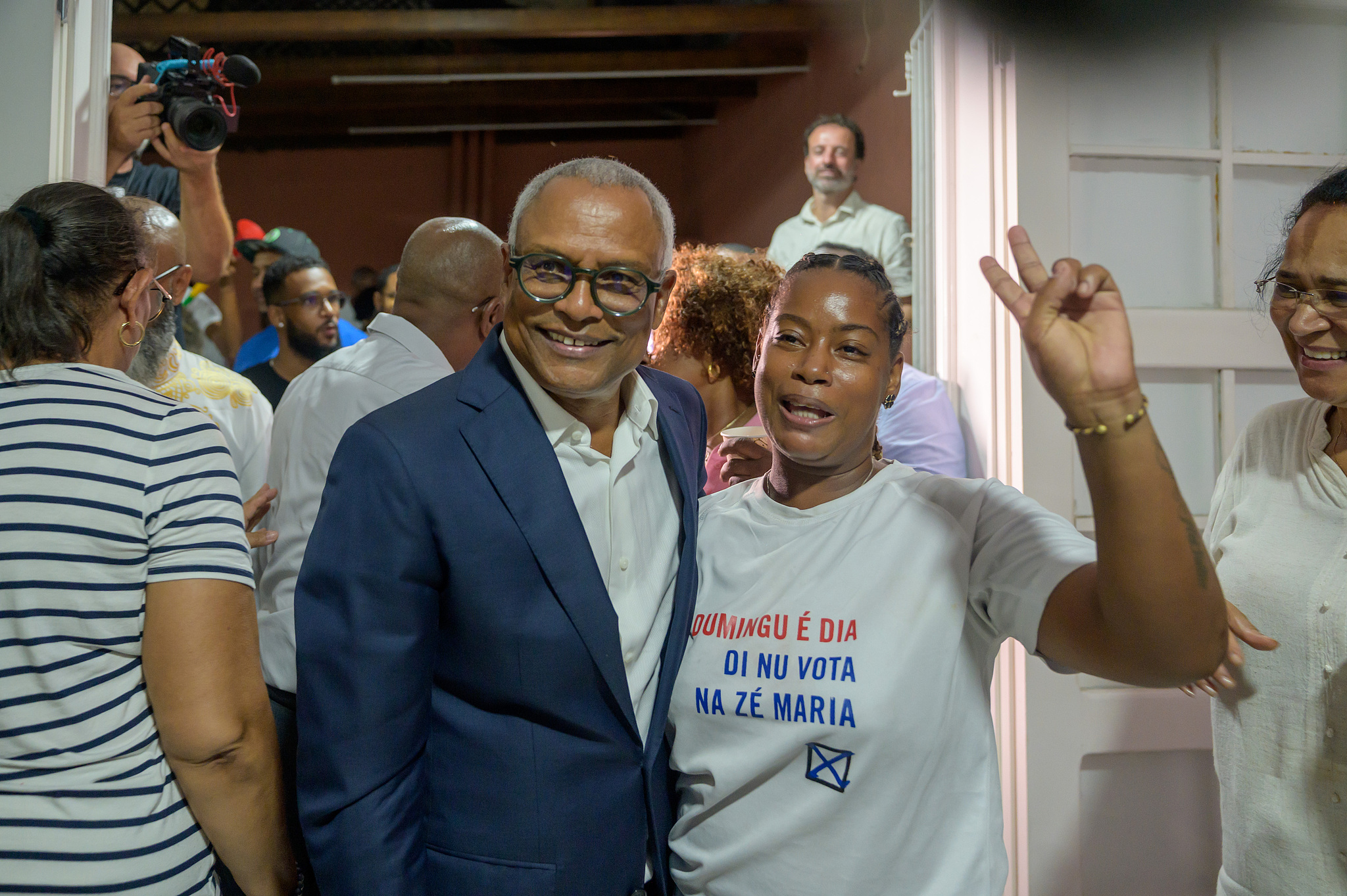
The result
New African magazine reported preliminary figures giving Neves nearly 63.8% and Rosa 31.6%. Four other candidates shared the remainder: Antero Tavares, Casimiro de Pina, Gilson Alves and Loisito Sousa. Because Neves passed the majority threshold in the first round, the runoff that had been scheduled for Nov. 29 will not take place. The national electoral commission is expected to publish official results this week.
The margin is a clear improvement on Neves's first victory. In 2021 he won in the first round with about 52%. That win came while the Movement for Democracy (MpD) held the government, producing a period of cohabitation between a PAICV president and an MpD prime minister, Ulisses Correia e Silva.
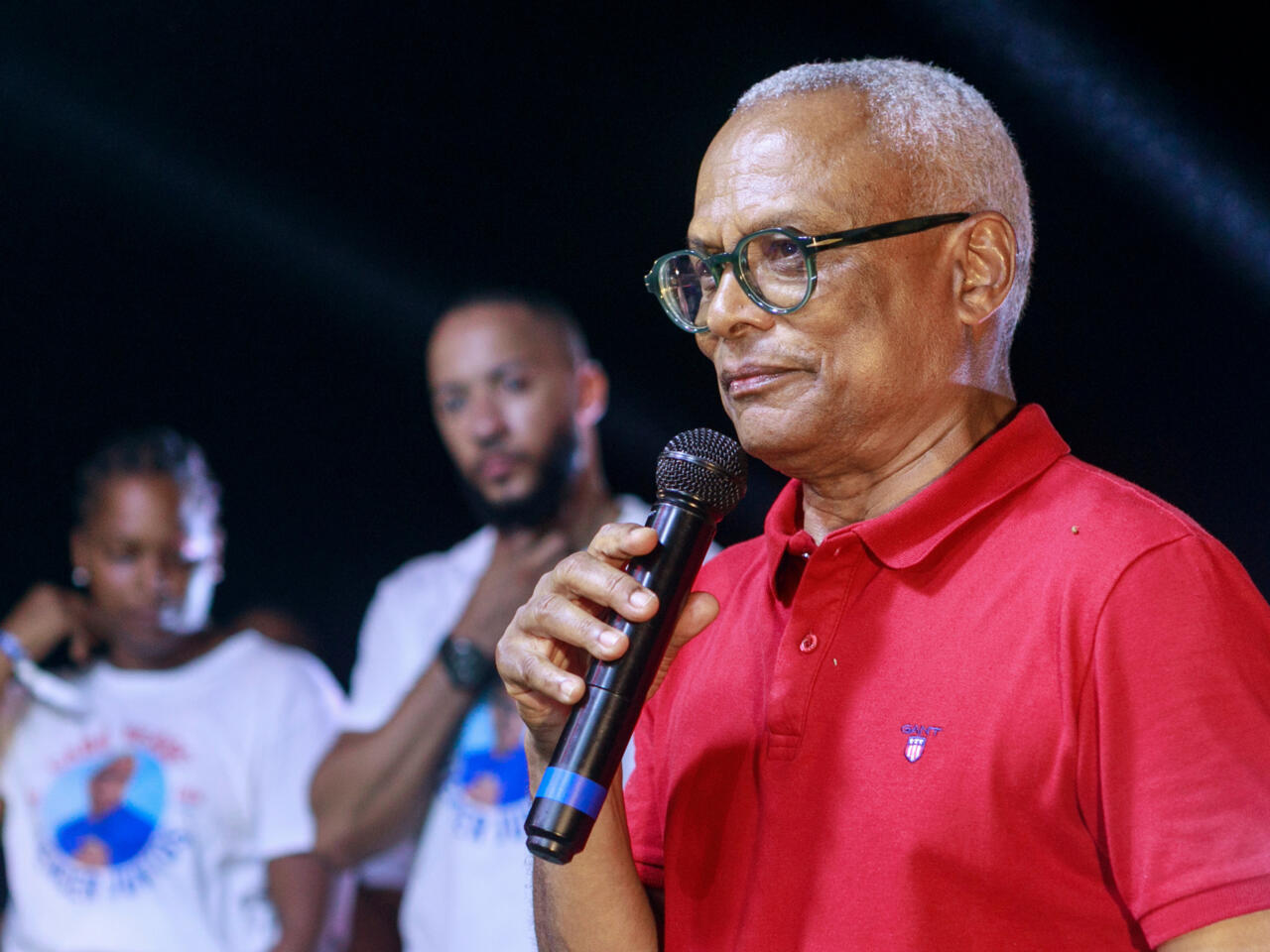
In a televised address late Sunday, Neves declared victory and pledged to remain "an independent, impartial president, an arbiter and moderator of the political system," New African reported. Rosa called him to concede and offer congratulations, continuing the archipelago's record of orderly transfers and acceptance of results since its first multiparty elections in 1991.
How the PAICV rebuilt its dominance
The presidential vote completes a political turnaround that began in May. In the May 17 parliamentary election, the PAICV won 37 of the National Assembly's 72 seats with 48% of the vote, ending a decade of MpD government. Party leader Francisco Carvalho, a former mayor of Praia, became prime minister.
Under Cape Verde's hybrid presidential-parliamentary system, the prime minister leads the government and holds most executive power. The directly elected president has a mostly moderating role but can veto legislation. That veto has kept the presidency politically significant, especially in periods of cohabitation. Rosa's campaign was built largely on that point. Reuters reported that she presented herself as a guarantee of a balance of power rather than what she described as total control by the PAICV.
Voters chose the other path. With the presidency, the government, a parliamentary majority and, according to the AP, most of the country's municipalities, the PAICV now holds an unusually broad concentration of power. Neves's promise to act as an "independent, impartial" arbiter is partly a response to that criticism. Over the coming term, it will be judged by whether he is willing to check a government led by his own party.
Who Neves is
Neves, who was born in 1960, has been a PAICV member since the 1980s. He served as prime minister for 15 years, from 2001 to 2016, which makes him one of the defining figures of Cape Verde's post-independence politics. New African described the second term as the final chapter of his long career.
In his first term, he focused on what he called "taking the presidency to the islands," with visits across the 10-island archipelago and outreach to the diaspora in Africa and the United States, Reuters reported. For a second term, he has promised a "Youth Convention" on employment needs and a national forum to set development priorities up to 2050, framing his goal as working "to accelerate progress towards inclusive economic growth."
The turnout problem
The low turnout reflects a structural problem the country has long recognized: a large share of its people live abroad. Cape Verde has a population of about half a million, and New African reported that more Cape Verdeans live abroad, mainly in the United States and Portugal, than at home. Nearly 77,000 citizens abroad were registered to vote this year, almost a fifth of the electorate, according to the AP.
Neves acknowledged the problem on election night. He blamed low participation on emigration, movement within the country and outdated voter rolls, and promised a study. The diagnosis matters. If the rolls are inflated by citizens who have emigrated or moved without updating their registration, the 31.7% figure overstates how far participation has really fallen. It still shows a gap between the electorate on paper and the voters who actually take part.
Regional observers had flagged the risk in advance. Before the vote, the Economic Community of West African States (ECOWAS) and the U.N. envoy for West Africa warned about voter apathy, especially among young people. The ECOWAS observer mission was led by Fatoumatta Jallow-Tambajang, a former vice president of The Gambia, and had deployed long-term observers across all nine inhabited islands from Nov. 3. Before polling day, it said it saw "no significant threat" to a peaceful vote. The mission also discussed reforms such as automatic voter registration with Neves. ECOWAS said it would issue a preliminary statement after the vote, but none had been published by Monday morning.
Voters' frustration was audible at polling stations. "I see many promises that are not fulfilled. I am tired, but I am still voting," Aderito Cardoso, 44, told the AP after casting his ballot in Praia.
Emigration and jobs at the center
Emigration was not only the cause of low turnout. It was also the main campaign issue. Both leading candidates presented youth unemployment and the departure of young people as the country's central challenge. Rosa promised to "prevent the continued exodus of young Cape Verdeans abroad," telling Reuters that "this outflow creates domestic problems and slows down our development process." Neves campaigned on continuity, economic growth and protecting the diaspora, and pledged a youth summit on emigration.
That consensus leaves the new PAICV-led state with no one else to blame. With the government and presidency aligned, Carvalho's cabinet and Neves's office will be judged together on whether they can create enough work to slow the outflow. They also face high unemployment, a high cost of living and the vulnerabilities of a small island economy.

A barrier that held
Rosa's candidacy was historic even in defeat. Cape Verde has never had a woman as president or prime minister, although women have held senior cabinet posts. Her roughly 31% share is a substantial base for the MpD, which is regrouping after losing both national contests in a single year. Still, the gap between her and Neves was more than 30 percentage points. Rosa had said she was running to "demonstrate women's capabilities." Writer Rosário Luz told the AP that representation alone is not enough: "We have a lot of women in politics, but we don't have the policies for women that we should have."
Why it matters beyond the islands
Cape Verde's election matters beyond its size. New African noted that the country ranked third of 54 nations in the 2025 Ibrahim Index of African Governance, behind Seychelles and Mauritius. In a West African region shaken by military takeovers in recent years, the archipelago has held two national elections in 2026 with peaceful results, accepted outcomes and an opposition that conceded on election night.
Weak turnout is a reminder, though, that stability is not the same as engagement. A democracy in which fewer than one in three registered voters takes part has a legitimacy problem that grows over time if it goes unaddressed, even when the counting is clean.
What to watch
The immediate next steps are procedural: the electoral commission's official results and ECOWAS's preliminary assessment, both expected this week. Over the longer term, there are three tests. The first is whether Neves follows through on voter-roll reform, including the automatic registration discussed with ECOWAS observers. The second is whether he uses, or credibly threatens to use, his veto against a PAICV government, which would show what his promise of impartiality means in practice. The third is whether the promised youth convention and 2050 development forum produce policies on jobs and emigration, the issue that dominated a campaign in which most voters stayed home.
Published By | News Editor